
We are just four days into 2026, and there is a lot to follow.
Yesterday, the Trump regime invaded Venezuela, killing 40 people, including military and civilians, and abducting the country’s sitting president, Nicolás Maduro. The reasons for this blatantly illegal action are many, contradictory, and unconvincing. After months of saber-rattling about the (mostly fictitious) flood of drugs coming into the U.S. from Venezuela, Trump acknowledged that the reason for deposing Maduro was to control the country’s vast oil reserves. Marco Rubio, the Secretary of State, said that Venezuela was a hub of terrorism and had allied with Iran and Hezbollah. It goes without saying that no evidence of this has been presented, and it is unlikely that any will ever be. This is, once again, a U.S. government leading us to a war over oil. This time around, the basic foundations of international law may not survive. The Israeli government, supposedly the U.S.’s vassal state, is no doubt gleeful at this action, having desired the unraveling of international law for decades in order to further escape accountability for its actions toward the Palestinians. This is truly dire stuff.
Zohran Mamdani was sworn in as the new mayor of New York City on January 1, elevating Palestine as a central issue in our national politics to a degree that it has never been. Within hours, Eric Adams, the ex-mayor, and the state of Israel were attacking Mamdani for his repeal of executive orders meant to punish BDS support and to lock the city into the IHRA definition framework that treats certain critiques of Israel as antisemitism; he also moved to unwind Adams’ push to restrict protests near houses of worship. Michael Arria has this story.
Mitchell Plitnick looked back at 2025 and reviewed the shifting politics on Palestine in both the Democratic and Republican parties. There is clearly momentum now towards a fundamental shift in the U.S. relationship with Israel. After a year when cracks widened in both parties’ default deference to Israel, you can see the new terrain taking shape where officials start treating pro-Israel loyalty tests as political baggage instead of political protection. Cameron Baillie’s 2025 review of the global student movement found that students still managed to secure real institutional concessions, including divestment and cuts to partnerships with Israel, despite a surge in repression. Both stories show the importance of organized movements applying pressure on political and social institutions.
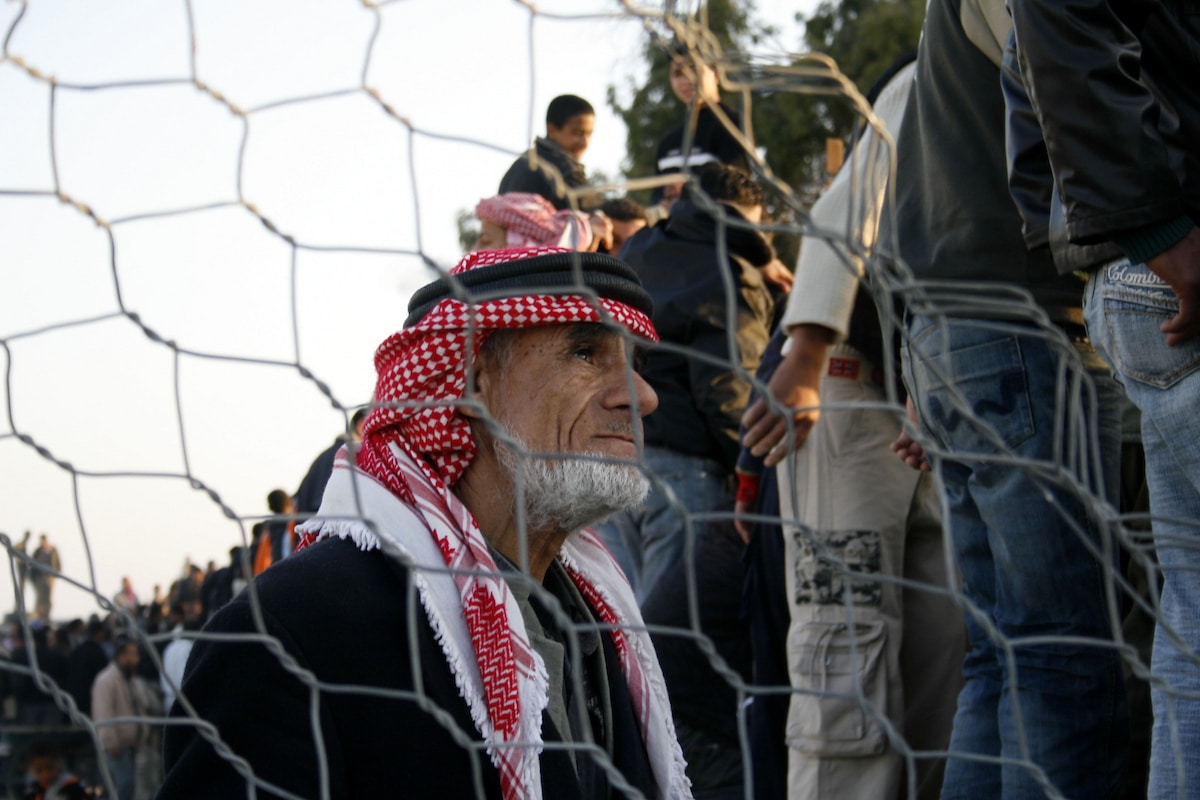
That political shift matters because right now, Palestinians are being forced to live under horrific conditions imposed on them by the Israeli occupation. In Gaza, Tareq Hajjaj reports catastrophic winter flooding in displacement camps has been made deadlier by Israel’s long-running blockade of basic shelter supplies. On January 1, Israel moved to ban 37 international humanitarian organizations from operating, threatening the fragile systems that are keeping people alive. In the West Bank, Majd Jawad covers the village of Yanoun being emptied out after escalating settler violence and military pressure. Omar Zahzah interviewed Sang Hea Kil, potentially the first tenured professor fired specifically over Palestine-related repression. This story underlines how U.S. institutions have capitulated to the Trump regime’s crackdown on dissent. Qassam Muaddi filed an excellent piece exploring the political crisis Palestinians face, as foreign powers move to decide their future, and a lack of leadership leaves a vacuum for them to do so.
Thanks for reading. We just wrapped our end-of-year fundraising campaign, and thanks to our loyal readers, it was a great success. Thank you so much for supporting our work and joining us in this movement! – Dave Reed, Publisher
Michael Arria: New York City Mayor Zohran Mamdani rescinded nine executive orders that his predecessor, Eric Adams, had issued before he left office. Among the orders Mamdani rolled back were a BDS ban, and the adoption of the IHRA definition of antisemitism.
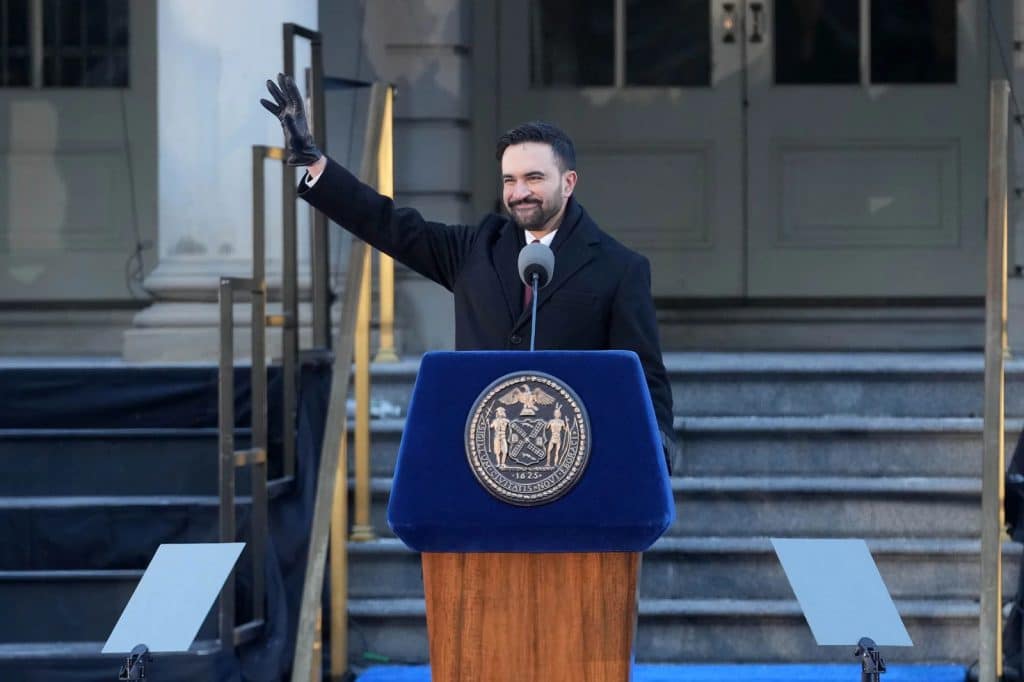 Zohran Mamdani speaks at his inauguration as Mayor of New York City (Photo: NYC Mayors Office)
Genocide in Gaza
🇮🇱 Tareq Hajjaj: As winter storms batter Gaza and cause catastrophic flooding for millions of displaced Palestinians, Israel has banned 37 international humanitarian organizations from working in the Strip, which is reliant on these organizations for survival.
Catch-up
🇵🇸 Qassam Muaddi: Palestinians are in a political crisis. With Palestinian society divided, and no unified national leadership to represent it, regional and global powers are drawing up plans for the future of Gaza and Palestine – without any say from Palestinians.
🏚️ Majd Jawad: The last family in the Palestinian village of Yanoun left their home last week, joining a growing list of communities that have been erased from existence through the establishment of Israeli “shepherding outposts” in their place.
📢 Omar Zahzah: San Jose State professor Sang Hea Kil was suspended over allegations related to a Palestine protest, and now the university plans to fire her. Omar Zahzah speaks with Kil about the precedent set by her case and the implications for academic freedom.
🇮🇷 Michael Arria: Days after his meeting with Israeli Prime Minister Netanyahu, President Trump threatened to intervene in Iran if the country killed any protesters. We broke down recent events and whether another U.S.-Israeli aggression on Iran may be on the horizon.
🇺🇸 Mitchell Plitnick: In 2025, there was notable momentum in both the Democratic and Republican parties toward substantive change in U.S. policy on Palestine.
🧑🎓 Cameron Baillie: In 2025, students around the world came together to challenge their schools’ complicity in the Gaza genocide. Despite heavy repression, they won major victories, including divestment and commitments to cut ties with Israeli institutions.