
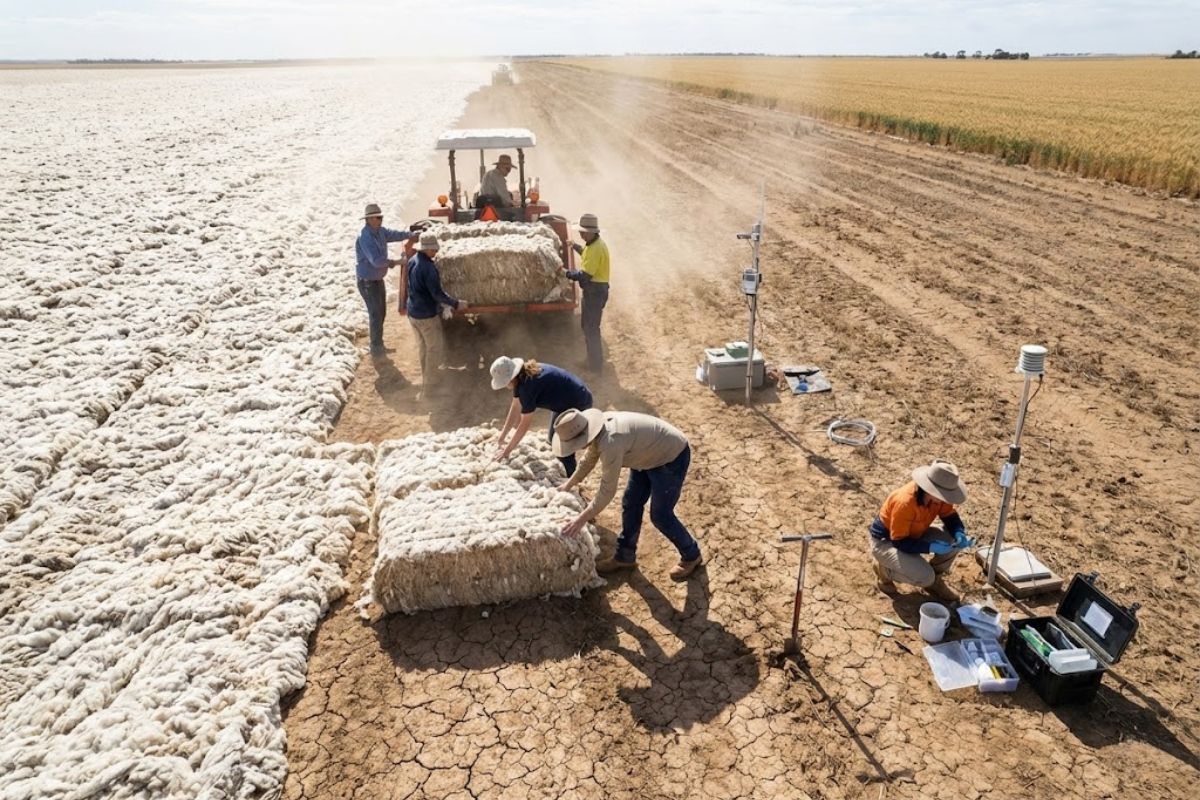
Australia sustains a continent-scale agriculture, with vast grasslands that generate over $90 billion annually. At the same time, the agricultural land is experiencing accelerating soil degradation: after decades of intensive cultivation, the loss of organic matter exceeds 60%, and approximately 4 million hectares suffer severe degradation each year.
The new experiment with wool waste targets precisely this critical point. The proposal is simple in form and complex in effect: to use organic wool that accumulates on farms as mulch or as a processed input to recover degraded land, reduce evaporation, restore moisture to the soil profile, and create conditions for the return of microorganisms, with a direct impact on harvests.
The scale of the problem: when the earth loses carbon, water, and productivity.
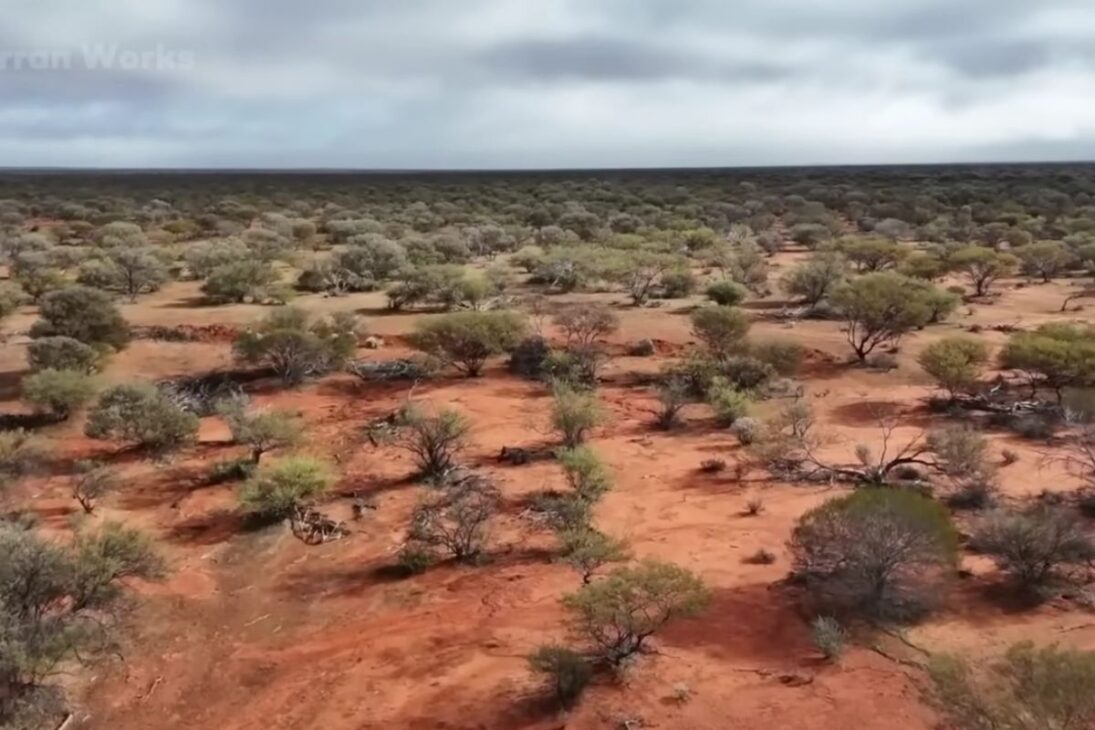
The crisis described has a physical and biological basis.
— ARTICLE CONTINUES BELOW —
Are you in favor of US military intervention in Venezuela and the arrest of Nicolas Maduro?
— Click Oil and Gas (@clickpetroleoeg) January 3, 2026
In New South Wales, soil organic carbon levels have fallen. more than 3,1% in 14 years, between 2006 and 2020This is a sign that the land is losing its ability to retain water and nutrients.
In even more exposed regions, such as Western Australia, wind erosion has even removed… up to 1,8 tons of soil per hectare per year, washing away a layer that takes hundreds of years to form.
The picture widens on the map.
More than 6 million hectares They are classified as being at very high risk of erosion and another 3,2 million hectares They face water-induced degradation.
In Queensland, farming families have abandoned areas that once produced crops because the soil structure has collapsed, unable to retain enough moisture to sustain a growing season.
It is in this type of scenario, of degraded lands that turn to brittle red dust, that woolen coverings began to be tested.
The other side of the equation: wool becomes expensive and abundant waste.
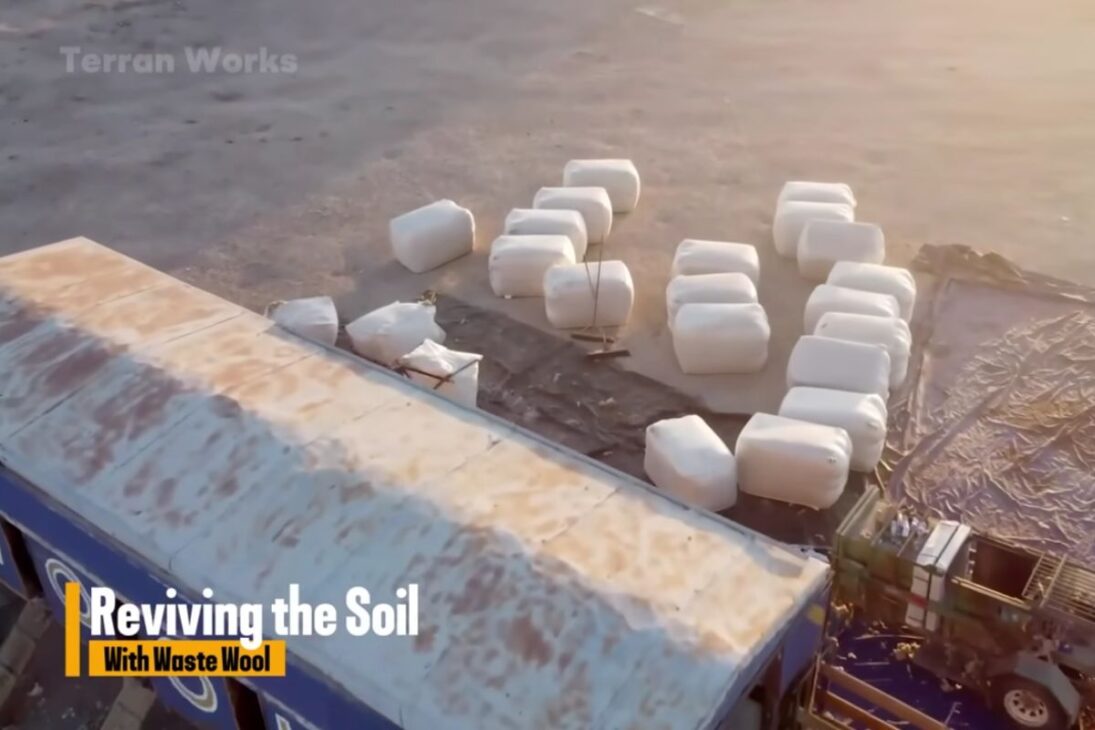
The solution arises from a parallel paradox.
Australia is also associated with the wool industry, which for years generated export revenues exceeding… 4 billion dollars annually.
Over the past two decades, global demand has fallen, factories have closed, and raw wool prices have plummeted.
The direct consequence was the accumulation of unused material.
No period of 2024 to 2025national wool production was projected to fall to 279 million kilos, but of 12% below the previous year.
Even so, about 200.000 tons of waste wool They accumulate on the farms each year.
Disposing of it is expensive, and if left outdoors, the wool can lead to… from 3 to 5 years to decompose completely.
What was once an environmental and financial liability has become raw material for revitalizing degraded lands.
Why wool works: keratin, water retention, and soil oxygenation.
The technical explanation begins with the fiber structure.
Each strand of wool contains keratin scales capable of retaining 1,5 to 2 times its own dry weight in water.
At the same time, the fiber creates small air pockets that allow oxygen to enter the soil, something that is lacking in impoverished and compacted soils.
This mechanism combines two effects that are usually separate in degraded lands: maintaining moisture and preserving aeration.
Instead of simply “covering” the soil, the wool acts as a physical reservoir, helping to reduce evaporation and prolong the time the soil remains moist, a necessary condition for microorganisms to re-establish themselves.
What changed in the tests: up to 35% less evaporation and up to 50% more microorganisms.
The initial tests mentioned took place in New South Wales.
A layer of wool just a few centimeters thick was spread over degraded land and produced a measurable effect: evaporation on the surface decreased. up to 35%.
Soil moisture remained stable for almost twice the time observed with conventional organic mulch.
The biological response followed.
In just a few months, the microbial density of the soil, which had plummeted after years of intensive cultivation, increased. between 30% and 50%.
The return of microorganisms, coupled with increased humidity, initiated a new recovery cycle, with faster formation of organic matter and a gradual return of the vitality needed to sustain crops.
Queensland as a testing ground: a dry season and signs of reversal.
In Queensland, the technique was applied to abandoned fields, where farmers reported that the soil did not retain even a drop of water.
After only a dry season With experimental application, visible improvements were reported: greater moisture retention, absence of topsoil carried away by the wind, and recovery of soil structure.
The account describes a change of state.
The area ceases to be brittle red dust and begins to behave like friable, arable soil, ready to be planted.
For degraded lands, the practical difference lies in the restoration of the ability to retain water, a basic condition for any recovery strategy.
The limits of brute force solutions: why simply spreading wool without preparation isn’t enough.
The use of organic wool is not described as indiscriminate waste disposal.
There is a physical problem: if left unprocessed, wool tends to form clumps and thick mats, decomposes very slowly, and can hinder water permeation into the soil.
In degraded areas, this can mean trading one problem for another, creating physical barriers that hinder infiltration.
To “unlock” the potential, two application methods were developed: wool granules e organic wool compound.
The difference between the two solutions lies in their objective: one focuses on water, the other on nutrition and long-term recovery.
Wool granules: the biological battery that extends soil moisture.
The granules are ground wool residue compacted into small particles that can be mixed directly into the soil.
Keratin, which expands and contracts with moisture, transforms each granule into a reservoir: it absorbs water when the soil is moist, stores it internally, and gradually releases it when the soil begins to dry.
The measured effect is an increase in 25% a 40% moisture retention time.
In a country described as the driest nation on Earth, this expansion reduces irrigation pressure and helps stabilize the microenvironment necessary for microorganisms to remain active, especially in degraded lands.
Wool compound: slow-release nutrients and up to 18% higher yields.
When sheep’s wool is composted with microorganisms and organic matter, the keratin decomposes slowly and releases a constant source of nutrients, including nitrogen, sulfur, organic carbon, and trace elements.
This input favors the return of microorganisms, raising the microbial density again in 30% a 50% in a few months.
The agricultural consequence is evident in the harvests.
In test regions, the addition of wool compound helped increase productivity of 12% a 18% without requiring additional chemical fertilizers.
In degraded lands, where the soil loses organic matter and retention capacity, an input that delivers moisture and nutrition changes the baseline of the system.
Economic side effect: waste becomes a product and creates rural jobs.
The transformation is not limited to the land.
With the prospect of agricultural use, residual wool changes its status and begins to be treated as a raw material.
Em 2024The state of Victoria saw more than 40 Wool recycling startups have emerged, creating approximately 2.500 New jobs in rural areas.
The conversion also has an industrial scale.
From every ton of leftover wool, workshops are able to produce almost 900 kilos of granules, a material described as being worth three times more than raw wool.
What was once a disposal cost becomes a chain of products associated with the recovery of degraded lands.
Why the change is relevant: water, microorganisms, and organic matter in the same equation.
In degradation processes, three losses reinforce each other: water, biology, and organic matter.
The proposal using organic wool is to attack these three fronts at the same time, first reducing evaporation, then stabilizing humidity and, with that, allowing microorganisms to return.
From there, the formation of organic matter accelerates, creating a recovery cycle.
The result described is neither instantaneous nor automatic.
It depends on proper application, processing when necessary, and monitoring of soil behavior throughout the dry season.
Still, the set of indicators, up to 35% less evaporation, microorganisms 30% to 50% larger e harvests 12% to 18% higherThis places the recovery of degraded lands on a measurable level, with clear parameters for comparison.
The Australian strategy of covering degraded land with organic wool waste transforms a problem into an resource: a waste product that accumulates and is costly to dispose of now reduces evaporation, stabilizes moisture, and reactivates microorganisms.
The data cited indicate consistent gains, with up to 35% less evaporation, a 30% to 50% increase in microbial activity, and 12% to 18% higher yields when the application is done properly.
For those involved in soil restoration, this case sets an objective benchmark for discussing efficiency in degraded lands: measuring evaporation, moisture, microorganism response, and productivity throughout the dry season, differentiating the use of raw wool, granules and wool compound according to the purpose.
Do you think that the use of wool to restore degraded land in Australia is scalable enough to become common practice, or is it likely to remain limited to pilot projects?