
After director Michael Premo found himself filming on the ground at the U.S. Capitol on Jan. 6, 2021, he started getting offers. In the wake of the attempted insurrection, buyers came calling with the hopes of turning Premo’s harrowing footage, captured in the crush of an irate and screaming crowd, into a one-off story about the historic attack.
But Premo was looking to do something different. “We wanted to make something more evergreen that we felt would have a longer-lasting impact and be a more nuanced record of the events leading into that day and out of it,” he says.
He had gotten to the Capitol that day by following various members of the Proud Boys — the far-right group that touts its “Western chauvinism” ideology — as part of an effort to examine why some people are attracted to political violence. And he wanted to keep documenting their journeys after the events of Jan. 6.
But that complicated, character-driven story turned out to be a difficult vision to sell to major U.S. distributors when the finished film premiered in 2024. Though significant projects about Jan. 6 were released in the year or two after the event, in the last two years major distributors have largely shied away from knotty stories that might generate political controversy or conversation. (Just last year subjects of another Jan. 6 documentary, The Sixth, went public with concerns that studio A24 was burying the project. A24 did not comment on the claims.)
And so, after a long festival run and still no U.S. distributor, Premo decided to go straight to his potential viewers.
On Jan. 6, the fifth anniversary of the riot, Homegrown will be available to rent in partnership with Gathr, a tech company that facilitates screenings for filmmakers. Homegrown is following the lead of documentaries like Union and The Bibi Files, which have used Gathr and a similar alternative distribution tool, Jolt, to reach U.S. viewers in the absence of traditional U.S. deals. Gathr allows filmmakers to retain rights to their projects while also gaining access to viewership data.
Premo admits the decision was in part made due to the fact that the film couldn’t find U.S. home. But he also believes that this initial release with Gathr can give him more insight into the audience for this story. “Talking to other filmmakers who have gone this route, it seems like a really productive way to bring the film to audiences in a way that can bring a little bit of revenue and also help us understand how people are responding to the film,” the filmmaker says.
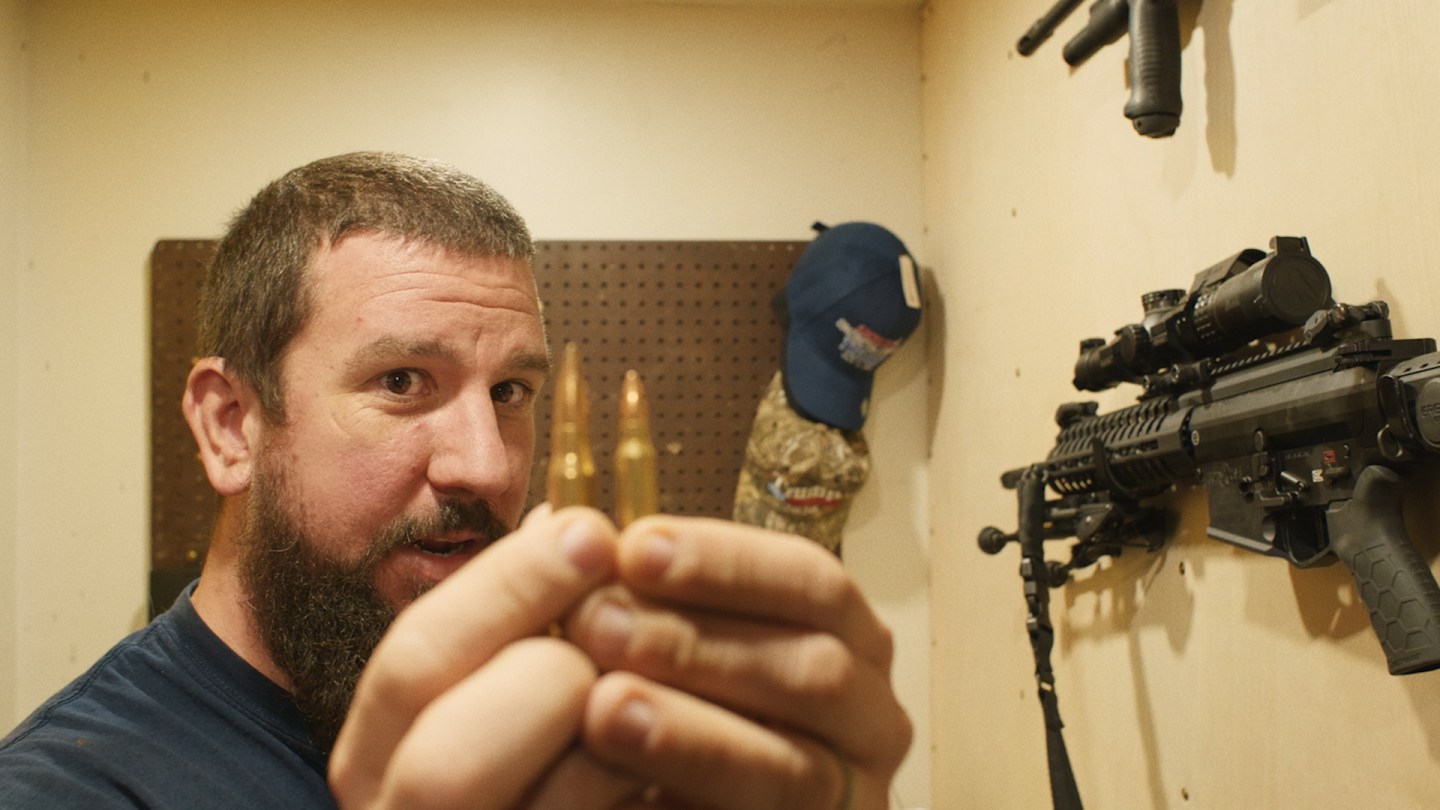
Those who pay to view the title won’t have an easy watching experience. With an observational approach, the film follows three main characters: There’s Chris Quaglin, a New Jersey man and expectant father who ends up being convicted, and later pardoned by President Donald Trump in his second term, for his actions on Jan. 6. Thad Cisneros is the chief of the Proud Boys’ Salt Lake City chapter who forges an unusual alliance with a Black Lives Matter activist. Randy Ireland, a veteran from Long Island, coordinates Proud Boys events in New York.
Premo says he’s found an unusually engaged audience for their story at screenings: He notes that “virtually 90 percent of the audience” stays for the Q&A after the film.
But Gathr promises to give him and his team detailed information about viewers who stream the film online. The company furnishes filmmakers with the names, emails, IP addresses and locations of viewers, according to founder and CEO Scott Glosserman, which can help inform marketing and community engagement strategies.

Michael Premo is the director of ‘Homegrown.’
Kisha Bari/Storyline Media
Right now, this direct-distribution approach is particularly valuable for politically-tinged projects that major distributors don’t want to touch, Glosserman argues. “Movies like Homegrown and others that are provocative and partisan, that ask questions, are right now pariahs among the mass-market platforms and the traditional distributors,” he says. “[They] have an opportunity to demonstrate that they have audiences, that they can find audiences and that they can drive value.”
Premo has heard a couple different rationales from U.S. companies about why they haven’t been interested so far. After Homegrown’s premiere at the Venice Film Festival in late August 2024, “The interest at that moment was tepid in some ways because folks couldn’t imagine Trump winning again,” he says. Distributors from other countries didn’t have the same hangups: Premo notes that the film has aired in Germany, Spain, the Netherlands, New Zealand and Australia.
But once Trump was elected later in 2024, the conversations with U.S. buyers were different. “It felt like broadcasters, streamers in some instances were counter-programming the apocalypse in some ways,” Premo says. “They were just looking for lighter fare, trying to stay away from provocative thought-provoking things, and that was our conversation.”
Still, the filmmaker isn’t giving up. An additional reason to partner with Gathr on an initial release is to prove that an audience for the film exists, he says. In the meantime, he adds, “We continue to take it to some courageous buyers out there that are looking to have thought-provoking documentaries on their platforms and TV networks.”