
Small private Indian shipyards have raised concern over the Centre reducing incentives for electric and green vessels (solar, electric and green) to 15 per cent from 25 per cent stating this would discourage shipowners from adopting clean technologies.
The Shipbuilding Financial Assistance Scheme (SBFAS) Guidelines issued on December 25 policy shift risks slowing innovation, discouraging shipowners from adopting clean technologies, and undermining the decarbonisation of coastal and inland waterways, said sources.
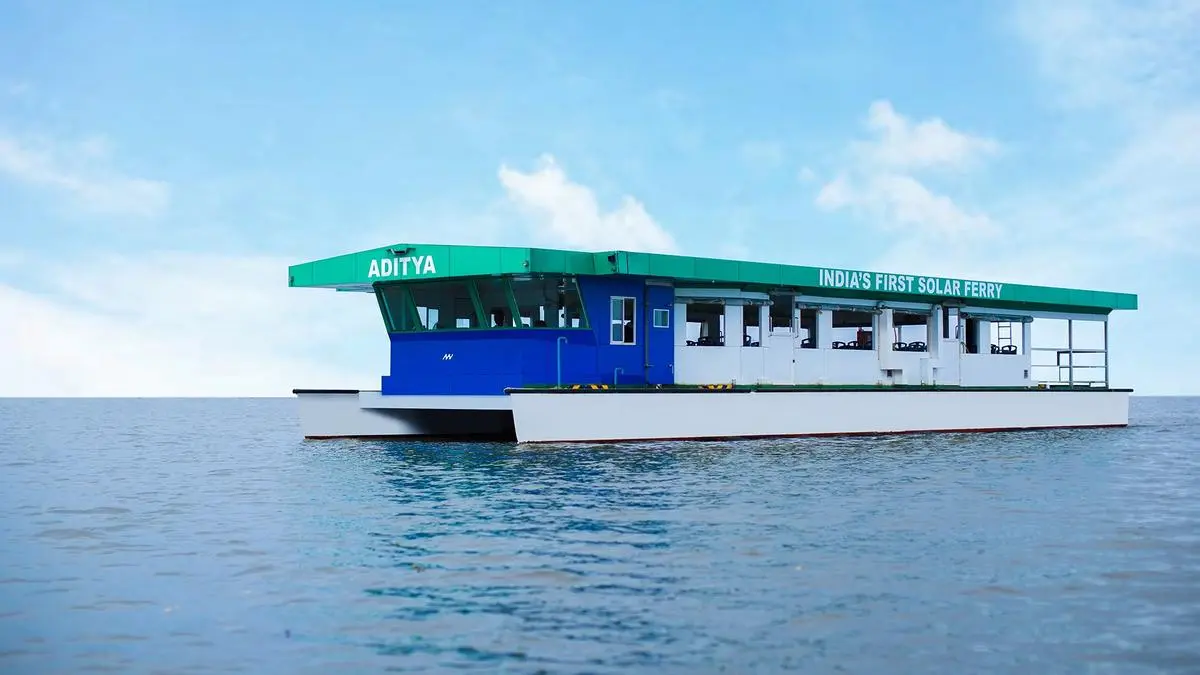
“SBFAS 2025 is one step forward, two steps back for India’s electric boat revolution,” said Sandith Thandasherry, Founder of the Kochi-based Navalt, the largest solar electric boat manufacturer in the country with 40 boats currently in operation and 37 under construction. In 2017, it built Aditya, India’s first solar ferry.
The original Shipbuilding Financial Assistance Policy (SBFAP, 2016) focused on ocean-going vessels over 24 m with declining rates: 20 per cent (2016–19); 17 per cent (2019–22), 14 per cent (2022–25) and 11 per cent (2025–26), Small boats and electrics were largely sidelined, he told businessline.
In September 2025, the Union Cabinet approved SBFAS wherein electric/hybrid vessels were rightly classified as “Specialized” in Schedule-II (“Green Vessels: electric batteries; Hybrid: conventional + batteries”). The specialized rate was 15 per cent on the first ₹100 crore + 25 per cent on excess. All electric boats (typically ₹20 crore to ₹80 crore) get 15 per cent effective – identical to diesel with no green uplift, he said.
Contracts signed from September 2025 to March 2026 can opt for SBFAP’s 20 per cent, but post-2026 approvals default to SBFAS. Policymakers’ signal is that green tech gets no special treatment anymore, he said.
“SBFAS delivers a bitter pill: subsidy slashed from a flat 20 per cent to 15 per cent, erasing the green premium and treating batteries like diesel engines. This is policy regression at its worst, explaining why innovation stalls in India,” he said.
Sanjiv Walia, CEO, Shipyards Association of India that represents the private shipyards said despite India’s commitment to IMO’s Net-Zero 2050 goals, the current SBFAS Guidelines do not provide any additional incentive or uplift for electric, solar, or green vessels. On the contrary, there is an effective reduction of 5 per cent in subsidy, which is likely to discourage the adoption of EV and green technologies for ocean-going and coastal vessels, it said.
Nearly 90 per cent of India’s 11,000 km inland waterways network requires small vessel operations. Electric and solar vessels can reduce emissions by 80-100 per cent and therefore must be actively promoted to meet IMO’s ambitious decarbonisation targets while also reducing dependence on imported diesel. Most small and medium shipbuilders located in Kerala, Goa, and Gujarat primarily specialise in ferries and tugs below ₹100 crore, he said.
The Association has taken up the issue with the Shipping Secretary to suitably review the new guidelines and suitable amendments be Incorporated to ensure meaningful encouragement for electric, solar, and green vessels under the SBFAS scheme, he said.
A government source said the rationale is that if you are making a big commercial green ship, you have a larger share, and if you are making a small green ship, it is only 15 per cent, which is a fair policy. Industry needs to think big and realistic.
Published on January 6, 2026