
There are too many revolutionary rock albums to list in just one place. From Elvis Presley‘s first, self-titled album to Pink Floyd‘s Dark Side of the Moon, countless rock musicians have released generation-defining, genre-shaping work that have entered the canon of classic rock and paved the way for those who came after them. Still, some albums stand out as start-to-finish bangers, allowing even the pickiest listeners to throw the record on without keeping a watchful eye on the track listing.
These types of no-skip albums are a music fan’s dream. They tend to maintain a consistent energy throughout, shying away from lengthy interludes or tracks filled with dialogue. Ahead, ten classic rock albums filled with flawless tracks that are made for easy, enthusiastic listening.
10
‘Cheap Thrills’ (1968)
Big Brother and the Holding Company
Janis Joplin may be best known for her 1971 solo album, Pearl, but her work with Big Brother and the Holding Company is among the rawest, most powerful work in her portfolio. On the band’s second album, Cheap Thrills, listeners can hear the shadows of Ma Rainey, Big Mama Thornton, and the other early blues rock icons Joplin idolized. “Ball and Chain,” for instance, is a Thornton cover, infused with Joplin’s distinctive raspy vocals and nine minutes of the band’s psychedelic, bluesy experimentation.
While both Cheap Thrills and its band have yet to receive the recognition they deserve, the album does boast a number of enduring hits. “I Need a Man to Love, and “Summertime,” for instance, remain some of Joplin’s most beloved tracks. Meanwhile, the band’s version of “Piece of My Heart” has well eclipsed the Gershwin original.
9
‘Santana’ (1969)
Santana
Today, Carlos Santana is hailed for the musical visionary he is, but when his band, Santana, released its eponymous debut album in 1969, this wasn’t the case. The release was originally panned, with one Village Voice critic calling it “a lot of noise.” It’s possible, though, that the white-dominant American music community simply failed to understand or appreciate Santana’s revolutionary melding of traditional Latin rhythms with jazz, blues, and hard rock elements.
With songs like “Persuasion” and “Evil Ways,” Santana blends these genres so effortlessly that it’s almost impossible to believe it’d never been done before. In doing so, the band made a statement that was both artistic and political: They demonstrated not only that Latin music deserves a place within the American cultural canon, but also that American Latinos are powerful, meaningful consumers who rightfully demand acknowledgment.
8
‘The Velvet Underground & Nico’ (1967)
The Velvet Underground and Nico
When The Velvet Underground released their first studio album alongside German singer and actress Nico, they immediately faced backlash. The album dove into issues like drug abuse, prostitution, homosexuality, and violence. Many record stores and radio stations around the country banned it, scandalized by its unapologetic grit and deviation from traditional musical composition.
However, The Velvet Underground & Nico has since become the stuff of legends. Considered the first wholly punk rock album, it kickstarted a musical and artistic movement in which the grime of urban life is embraced rather than hidden away. Indeed, in “Heroin,” Lou Reed explores the mindset of a drug user without explicitly taking a stance on drug abuse or condemning it for its detrimental effects. The end of the seven-plus-minute track devolves into screeching and increasingly rapid, non-melodic vocals and instrumentals before suddenly returning to the slow tempo it opened with. In challenging the conventions of rock music so strongly, the album paved the way for punk, heavy metal, and hardcore.
7
‘Born In The U.S.A.’ (1984)
Bruce Springsteen
Although Bruce Springsteen’s Born in the U.S.A. incorporates the spirited, synthesizer-heavy beats of the 1980s, the album remains timeless, clever, and uniquely relevant today. The album’s name, along with its cover and titular track, are tongue-in-cheek, utilizing instrumentals to poke fun at the bravado of American patriotism while simultaneously criticizing the country with its lyrics.
This thread of intelligence, reflection, and angst runs through the entire album, conjuring visions of working-class New Jersey that are both romantic and bleak. By delving into his upbringing and his own anxieties, Springsteen hits a universal nerve, revealing that beneath the decadence of the 1980s lay a subtle, unacknowledged rot. In spite of these serious themes, he also uses his dynamic vocal delivery and infectious instrumentals to keep the tracks catchy and light. Born in the U.S.A. is an album that takes hold of its listener and never lets go—and one that gets better and deeper with each listen.
6
‘Green River’ (1969)
Creedence Clearwater Revival
In the realm of classic rock, Creedence Clearwater Revival is criminally underrated. Their third album, Green River, features some of the most culture-defining American music of the twentieth century, like the country-tinged titular track “Green River” and the hit single “Bad Moon Rising.” Packed with astute cultural references, literary lyrics, and references to American history and mythology, Green River may just be the ultimate synthesis of country and blues rock.
While Creedence Clearwater Revival is often associated with the hippie movement because of its rebellious, often political themes, the band took a more disciplined approach to musicianship than many of its contemporaries. Enamored with the 1950s rockabilly music they’d grown up with, John Fogerty and Tom Fogerty decided to infuse the music of yore with country blues. This sharply contrasted the experimental, psychedelic work that bands like The Grateful Dead, The Beatles, and Led Zeppelin were releasing at the time. “I didn’t like the idea of those acid-rock, 45-minue guitar solos,” John Fogerty admitted to Uncut. “I thought music should get to the point a little more quickly than that.” Booming and dynamic, Green River certainly does just that.
5
‘Are You Experienced’ (1967)
The Jimi Hendrix Experience
With the opening notes of its first song, “Purple Haze,” The Jimi Hendrix Experience‘s Are You Experienced sets the tone as a hard rock, guitar-heavy album made for jamming. Can one expect anything else from a Jimi Hendrix album? On the 17 songs that comprise this 1967 release, Hendrix proves over and over again why he’s been hailed as the greatest guitarist of all time.
Are You Experienced also puts Hendrix’s passionate singing on display, particularly in songs like “Hey Joe” and “The Wind Cries Mary.” With its combination of hard rock and rhythm and blues, Are You Experienced opened up new possibilities for rock music and took experimental forms mainstream. Reuben Jackson, a writer and archivist for the Smithsonian Institution, even compared the album to James Joyce’s Ulysses, explaining that it “altered the syntax of the music.”
4
‘American Beauty’ (1970)
The Grateful Dead
Before The Grateful Dead released American Beauty in 1970, they’d already come out with four other studio albums. This one, however, has endured as the band’s most popular, boasting songs like “Ripple” and “Friend of the Devil,” which sit at the heart of contemporary American music. The Grateful Dead’s combination of folk, country, and psychedelic rock came to define the sound of the hippie movement, and American Beauty perfectly embodies that unique blend.
The recording American Beauty is representative of The Grateful Dead’s “jam band” style, as it features guest artists like mandolinist David Grisman, jazz pianist Ned Lagin, and keyboardist Howard Wales on various songs. Indeed, bassist Phil Lesh described the studio as “jammer heaven” in his autobiography, and that attitude—and the eclectic sound that accompanies it—continued to set the tone for both The Grateful Dead and its successor, Dead & Company.
3
‘Abbey Road’ (1969)
The Beatles
The Beatles’ penultimate studio album, Abbey Road, marks a shift in the legendary band’s musical style. In addition to the rock and psychedelic genres they’d been experimenting in since Sgt. Pepper’s Lonely Hearts Club Band, Abbey Road delves into blues rock, particularly in songs like “Come Together” and “I Want You (She’s So Heavy).” The album is filled with abrupt, intentionally jarring changes in tone as well as long instrumental interludes and creative uses of static and other non-melodic “noise,” demonstrating The Beatles’ refusal to be confined by a signature sound.
In many ways, Abbey Road is to The Beatles as Rumours is to Fleetwood Mac. Recording sessions with filled with tension and resentment caused by creative disagreements, the members’ competing time commitments, and, notoriously, the presence of John Lennon’s new wife, Yoko Ono, who did not get along with the rest of the band. Before the album was even released, Lennon had secretly left The Beatles. The band’s official breakup, however, wasn’t announced until the following year, just before the release of their final studio album, Let It Be.
2
‘Rumours’ (1977)
Fleetwood Mac
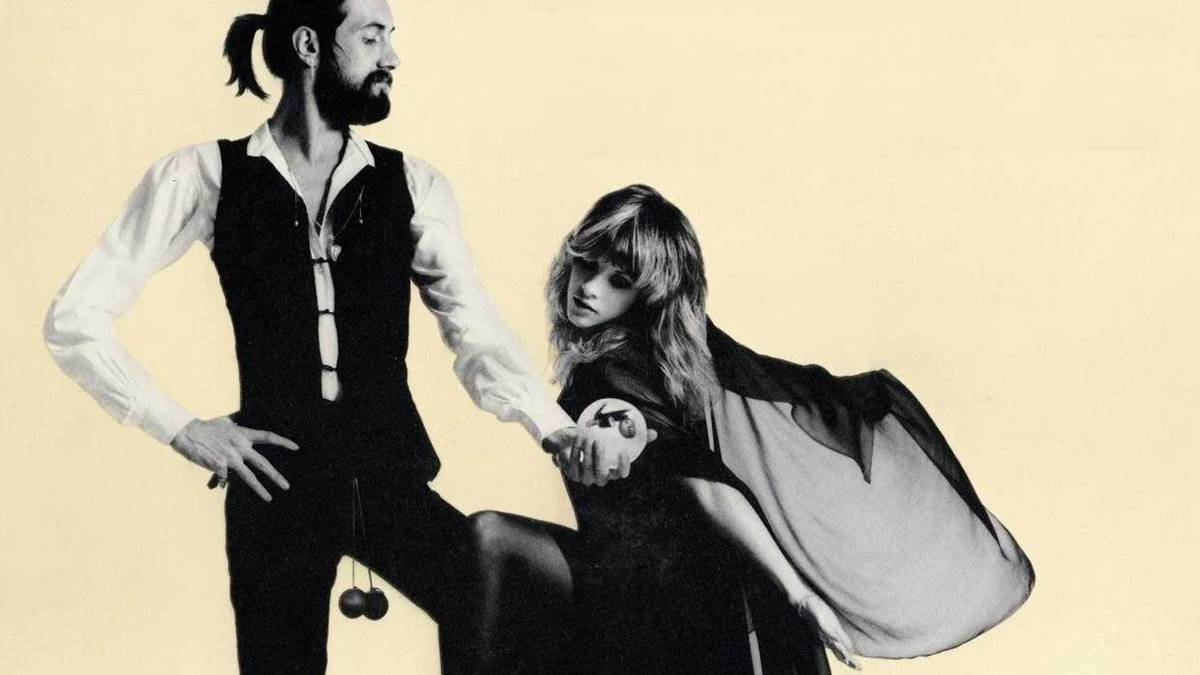
Rumours has been hailed as a masterpiece since it’s 1977 release and still retains its cultural cache. Fleetwood Mac’s eleventh studio album, it was infamously recorded amid—and inspired by—intense professional and interpersonal tension among the band’s members. Stevie Nicks and Lindsey Buckingham, for instance, wrote songs about their on-and-off relationship, while Christine McVie and John McVie struggled through their divorce. Nicks was also involved in a relationship with drummer Mick Fleetwood, both complicating the artists’ recording experience and adding to Rumours’ visceral genius.
While Rumours was always intended to be a commercially successful pop rock album, its mass appeal certainly doesn’t point to a lack of artistry or originality. The artists’ talents are laid bare in quiet ballads such as “Never Going Back Again” and “Songbird,” while catchy hits like “You Make Loving Fun” and “The Chain” show off the singers’ vocal range and impressive harmonies. Timeless and passionate, Rumours reached a level of greatness that is seldom reached.
1
‘Led Zeppelin IV’ (1971)
Led Zeppelin
Led Zeppelin’s fourth studio album is perhaps its best known. Not only does it contain the band’s most popular song, “Stairway to Heaven,” but it also contains other fan favorites like “Rock and Roll” and “Black Dog.” One of the most critically acclaimed and commercially successful releases of all time, Led Zeppelin IV demonstrates the band’s versatility, spanning blues, folk, hard rock, metal, and even soft acoustic ballads.
While the album was never officially named—and has been referred to by fans as Led Zeppelin IV, Zoso, Runes, Four Symbols, and more—it made a lasting impact on music. It set the stage for the heavy metal movement that swept America the following decade. Its final track, “When the Levee Breaks,” also contains the most sampled drum beat of all time. Led Zeppelin IV also gave birth to the Celtic and Norse symbols that would forever be associated with the band and with the nostalgic psychedelia of the era itself.