
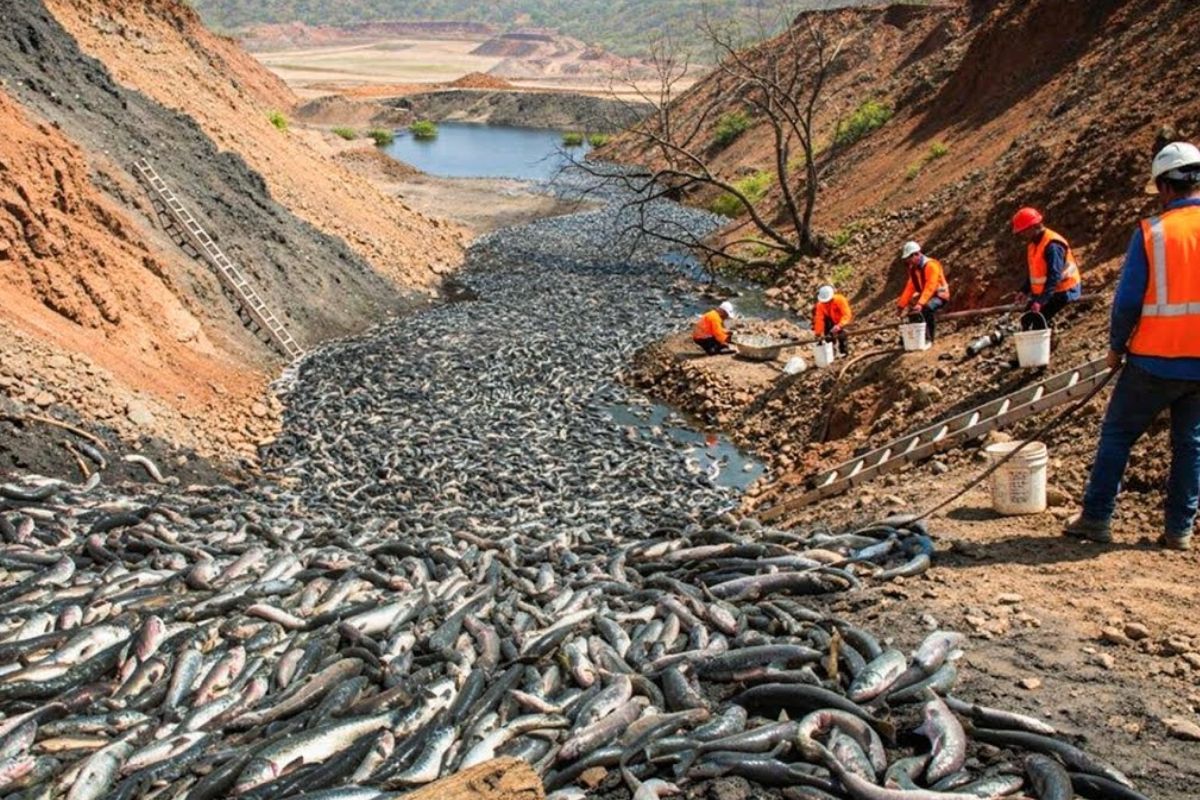
After nearly a century of being blocked, fish and salmon are once again migrating up the Elwha River: two hydroelectric dams, completed in 1913 and 1927, have been removed. Migration has fallen from over 400 to a few thousand per year. Dismantling began in 2011 and remains debated due to sediment and governance issues.
At the beginning of the 20th century, two hydroelectric dams built in 1913 and 1927 on the Elwha River did not provide passage for fish and helped disrupt a natural cycle that sustained the return of mass salmon populations. Decades later, the decision to dismantle the structures, initiated in 2011, came to be seen as a real test of river restoration.
The most visible result now is the increase in migration: where before they returned hundreds of thousands of salmon per year, the flow had fallen to just a few thousand at the end of the 20th century. With the reopening of the corridor, previously inaccessible sections They have been used again, reigniting an inevitable debate: How far is it worth going to restore a river to its natural flow?.
What dams have changed for fish and salmon.
The two dams were designed to provide electricity in an era of industrialization, serving factories and a growing city.
— ARTICLE CONTINUES BELOW —
See also other features
The automaker surpasses Toyota and BYD by launching a hybrid engine with 48,09% thermal efficiency, a hybrid turbo, 15,5:1 compression ratio, and technology capable of increasing range by 100 km without consuming more fuel.

Scientists can’t believe what they’ve seen: a newly discovered galaxy cluster is five times hotter than it should be and could change what we know about the universe.

Hundreds of European bison are being released into the Tarcu Mountains in Romania after the species disappeared from the wild; the plan seems like a last resort, faces local conflicts, but in 10 years has created a self-sustaining herd and increased vegetation by 30% in the region.
Australia created a plague by releasing frogs to save crops, lost control of the experiment, devastated entire ecosystems, and ended up resorting to cannibalism among its own species as a last resort against the environmental disaster.
Are you in favor of US military intervention in Venezuela and the arrest of Nicolas Maduro?
— Click Oil and Gas (@clickpetroleoeg) January 3, 2026
The critical point, however, is that none of them included a passage for fishAnd the very geography of a narrow, steep canyon made the installation of crossing structures practically unfeasible with the technology of the early 20th century.
Even later, when the state of Washington passed laws requiring ladders to fishThe dams remained and received exemptions.
In just a few years of operation, over 70 miles of upstream habitat They became isolated from the salmon’s life cycle, precisely where many of the natural spawning grounds were located.
From hundreds of thousands to a few thousand per year.
The material describes the Elwha River as one of the most robust salmon ecosystems on the US West Coast before the dams.
Each year, more than 400 Pacific salmon They migrated upstream to spawn, including species such as Chinuk, Coo, Sakkeye, Rosa, and Chum.
After the lockdown, this dynamic collapsed: the races that previously returned to hundreds of thousands They stopped arriving at the breeding areas, and the number of fish fell to only a few thousand per year at the end of the 20th century.
The impact wasn’t just “fewer fish,” it was the breakdown of an entire ecological engine.
The ecological cascade when the fish disappear.
The decline in salmon stocks meant more than just less food available.
A sequence of effects: nutrients of marine origin ceased to be transported back to the riparian forests, the riverbed became “simpler,” without large woody debris and without the natural disturbance of sediments.
Insects have decreased, and birds and mammalian predators have become rarer….and a system that was once synchronized with the salmon’s rhythm began to drift away from its own equilibrium.
This relationship becomes even more apparent when the material explains that salmon carcasses, after spawning, returned nitrogen and phosphorus from the ocean to the river and surrounding forests.
There are references to studies indicating that, in rivers such as the Elwha, up to 20% to 25% of nitrogen Found in riparian vegetation, it could have originated from salmon.
Why removal has become a “last resort” and also a controversy.
In the 20th century, the United States built more than 90 damsAnd that, in Elwha, restoration was for a long time treated as a lost cause.
The turning point came when the benefits of the dams began to seem smaller than what they took from the river, leading to the central question: remove or preserve.
Complete removal is described as a rare decision And for that reason, it is controversial: it trades the predictability of a structure for a long process of natural rebalancing, with short-term ecological costs and disputes over how to manage the river’s new phase.
What happened after the dismantling began in 2011?
A few years after the dismantling, something considered extraordinary happened: salmon began to reappear in stretches of the river where they had been absent for generations.
The return of the fish wasn’t instantaneous, but it was fast enough to be surprising.
The recovery is also described as something that “overflows” the riverbed. The material states that mammals such as river otters and black bears have begun to appear more frequently along the banks, taking advantage of the seasonal supply linked to salmon, and that scientists have detected nitrogen derived from salmon reappearing in riparian trees, a sign of reconnection between river and forest.
The challenges: sediment, turbidity, and fish management.
However, the restoration is not portrayed as an “automatic happy ending.” With the return of salmon in large numbers, the ecosystem had to adjust to sharp increases in nutrients after each spawning season.
In some areas, this stimulated strong growth of algae and microorganisms, seasonally reducing dissolved oxygen.
At the same time, the removal released large quantities of sediment that had been retained for a long time, making the river more turbid in the first few years and reshaping its mouth.
And, in addition to natural processes, management concerns have arisen: fishermen fearing more dispersed migrations and managers weighing the balance between conserving wild salmon and maintaining the role of hatchery programs.
What could this case mean for river restoration?
The Elwha case is presented in the material as an example that restoration is not a destination, but a complex process that does not immediately return an ecosystem to an “idealized state.”
The message is straightforward: Releasing a river after decades of control requires time for readjustment and to find a new equilibrium.
And that’s where the topic becomes a public debate: removing dams that don’t allow passage for fish It impacts energy, the local economy, the landscape, fishing, and tourism. biodiversity and how a society decides what to prioritize when infrastructure and nature clash.
Are you in favor of removing dams that block fish passages to accelerate the return of salmon and restore rivers, even with turbidity, sediment, and years of adaptation ahead?