

Listen to this article
Estimated 3 minutes
The audio version of this article is generated by AI-based technology. Mispronunciations can occur. We are working with our partners to continually review and improve the results.
Water levels in the reservoirs in the Summerland, B.C., area are the lowest they have been in decades, according to a district official, raising concerns about the local salmon population.
The Okanagan community moved to Drought Level 4 in November, the second-highest level for measuring drought.
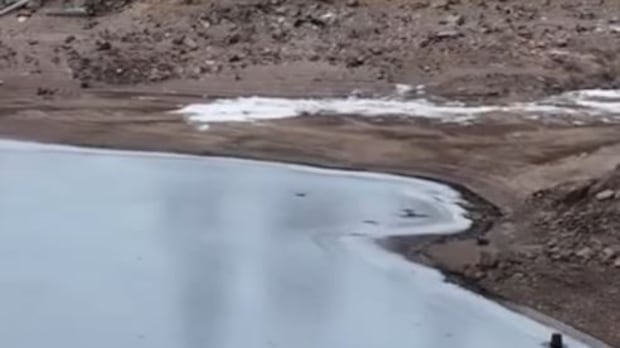
The Okanagan Basin Water Board recently posted drone footage of the Thirsk Dam and Reservoir captured last month.
Jeremy Storvold, the director of utilities for the District of Summerland, says the footage shows lower than usual water levels.
“Normally we have three times that amount of water in the reservoir at that time of year when that footage was taken,” Storvold said.
“Really what we need there is another couple metres of water to be at our typical [level].”
Storvold says there are several dams and reservoirs in the district “and they’re all low currently.”
“Actually they haven’t been this low since the 1980s.”
The District of Summerland council decided to move to drought Level 4 in November, which Storvold says gives them the ability to reduce the flow in Trout Creek.
“Drought conditions are not uncommon in the Okanagan, and even with our dams, Summerland is not immune to the same environmental factors that affect water quantity in the region,” Summerland Mayor Doug Holmes said at the time.
Level 4 restrictions prohibit lawn watering and exterior washing, among other things.
“It kind of gives everyone an early warning: hey, we’re dry right now,” Storvold said.
“And it may not seem dry because down in the valley here we’ve been getting rain, but we need that snow cover. We really need that snow cover in the watershed in order for us to be ready for next year.”
He said a lot could change with one big snowfall, or a big rain event in the spring and the district will have a better understanding of the situation by the end of June.
Impact on wildlife
Elinor McGrath, a fisheries biologist at Okanagan Nation Alliance, says the dry conditions can have an impact of salmon populations, saying it’s important to maintain sufficient water levels from spawning in September through to March or April.
She said drought conditions had an impact on last year’s salmon run.
“We’re really hoping that conditions will improve and that we can maintain sufficient flows for salmon in Trout Creek — for kokanee, for sockeye — and for all the other species that also occupied Trout Creek year-round.”