
Grider doesn’t have a walk-in cooler to be able to hang a whole deer for aging. He quarters the deer and places it in large ice chests.
“I place the meat in the coolers so that it doesn’t get wet,” he said. “I use metal trays to keep the venison above the ice, and I keep the drain open to let the water drain as the ice melts.”
Grider is a proponent of aging deer for a considerable length of time to allow the tissue to break down and tenderize.
“I usually keep it in the cooler for seven to 10 days,” he said. “In the cattle industry, they will let a side of beef hang for three weeks or more. When I’m aging the venison, it could be in the 50s or higher in Alabama, so I’ll have to add ice to the cooler every day or every other day.”
After the deer quarters are aged, Grider starts to process the meat into backstraps, tenderloins, roasts and ground venison. When he gets ready to put the meat in the freezer, he makes sure the meat is packaged correctly to prevent freezer burn.
“We use a lot of ground venison for a lot of different applications,” he said. “It’s a very versatile product. If there’s no trauma to the shoulder, I will keep them whole because I find it cumbersome to cut the shoulders up to grind them. I got a really good recipe from a friend to prepare the shoulders.”
That shoulder recipe came from Swanny Evans of Pheasants Forever. He takes the shoulder, salts it and puts it in the refrigerator overnight. Use the barbecue rub of your choice to coat the shoulder and then place it on the smoker at 220 degrees for up to four hours, depending on the size of the shoulder. Place the shoulder in a large roasting pan on a bed of onions, celery, carrots, bell peppers and jalapenos to add a little spice. Add 2 cups of apple cider vinegar, cover with foil and put it in the oven at 240 degrees for seven hours. Grider says you can also use vegetable broth instead of the apple cider vinegar if desired.
“When it’s done, the meat from the shoulder will just shred apart,” Grider said. “It’s delicious. You can use it for anything that you would use shredded beef or shredded pork – sandwiches, soups or stews.”
Sometimes the best-case scenario does not play out for hunters, and the animal will have to be tracked for a considerable amount of time before it is recovered.
“If an animal has been gut-shot, I make sure to clean up the cavity really well and make sure any of the gut contents are completely removed,” Grider said. “If an animal has been under any stress, it produces cortisol, which can affect the end product. When that happens, I just grind up the whole animal and use it in dishes like spaghetti, lasagna or chili. If it’s above 50 degrees and it’s been more than four hours since it was shot, that is an animal I’m not comfortable eating. That’s the worst-case scenario.”
Of course, most hunters relish consuming venison backstraps, which can also be prepared in a variety of ways. Most often, the backstrap with all the silverskin removed will hit a hot grill. Grider said he loves to use a product left over from the holiday celebrations – Martinelli’s sparkling cider, a champagne alternative.
“I’ve been doing this for about 15 years, and it’s a crowd pleaser,” he said. “I found this when we had some Martinelli’s left over from a New Year’s party. I was looking for something to soak the meat in to tenderize it, so I used the sparkling cider. I’ll soak the whole backstrap in the leftover Martinelli’s for a few days. I’ll cut the backstrap into 2- to 3-inch sections and wrap them in bacon. I put it on the grill and cook hot and fast on both sides. Then I’ll sear the bacon in a hot skillet. The Martinelli’s is sweet and the bacon is salty. You get a little bit of salt, a little bit of sweet and a little bit of crispy, and I don’t cook my venison past medium rare.”
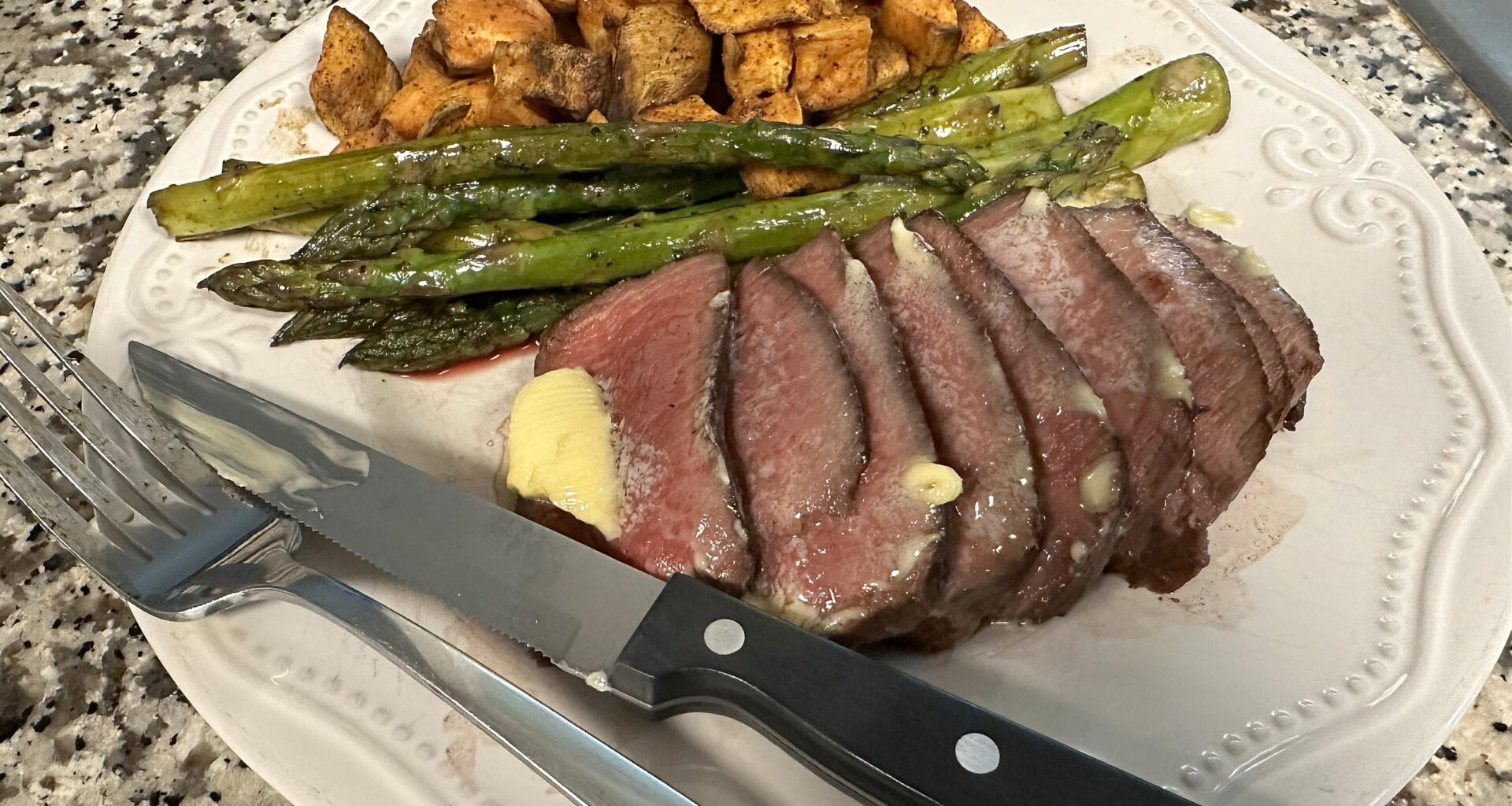
Grider’s simplest backstrap preparation involves only salt, pepper, butter and high heat.
“I let it get to room temperature and cover it with salt and pepper,” he said. “I get a cast iron skillet really, really hot and sear the backstrap on both sides so it gets a nice crispy outer coating. I leave it medium rare. I slice it thin and melt butter to pour over it. It’s as good as any steak you’ll get at a steakhouse.”
Visit www.outdooralabama.com/WildEats for more ways to prepare wild game for delicious table fare.
###