
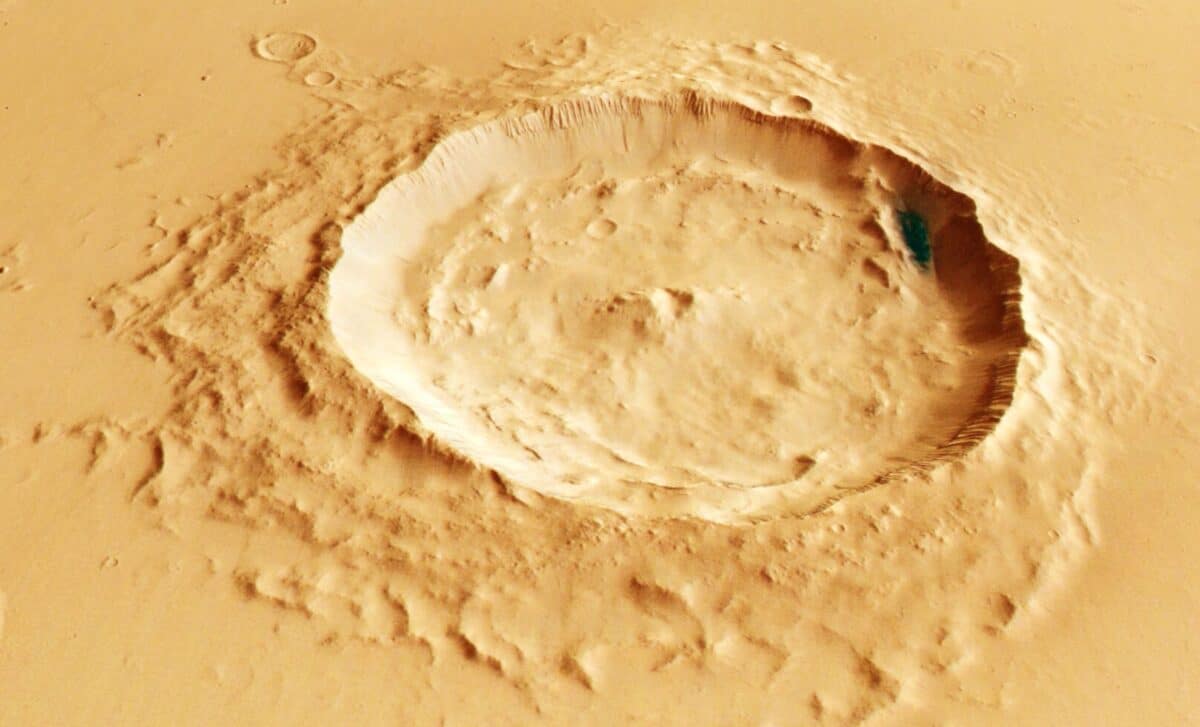
Martian winds, which seem like something out of a sci-fi story, have been relentlessly shaping the Red Planet’s surface for millions of years. New images from Mars Express reveal just how powerful these winds are, acting like cosmic sandblasters and carving striking landforms. One such feature is the yardang, elongated ridges that stand tall after the surrounding material has been eroded away. It’s like Mars’ winds are constantly at work, sculpting the planet in ways we’ve only just begun to understand.
For over two decades, the European Space Agency’s Mars Express spacecraft has been orbiting the planet, capturing stunning high-resolution images of its surface. These images continue to challenge our assumptions about Mars, revealing a landscape that’s much more dynamic than we ever thought.
Yardangs: Nature’s Wind-Carved Sculptures
Yardangs are one of those cool-sounding geological features that don’t get nearly enough attention. Essentially, they are elongated ridges or mounds left behind after wind erosion has removed the surrounding material. According to ESA, these formations are common on Mars. The space agency added that:
“They’re evidence of powerful Martian winds acting as a cosmic sandblaster, pulling sand grains into the air and sculpting grooves in the surface that extend across tens of kilometers.”
In the latest images from Mars Express, the yardangs are all facing the same direction. This is because the prevailing wind on Mars blows in from the southeast, so the ridges have all been sculpted in that orientation. The yardangs sit at the northern end of the Eumenides Dorsum mountains, a region known for its extreme dust and volcanic activity. It’s part of the Medusae Fossae Formation, a huge geological area that’s key to understanding the Martian environment. It’s almost as if the winds have taken this region and used it as their canvas, painting long, sweeping ridges on the Martian landscape.
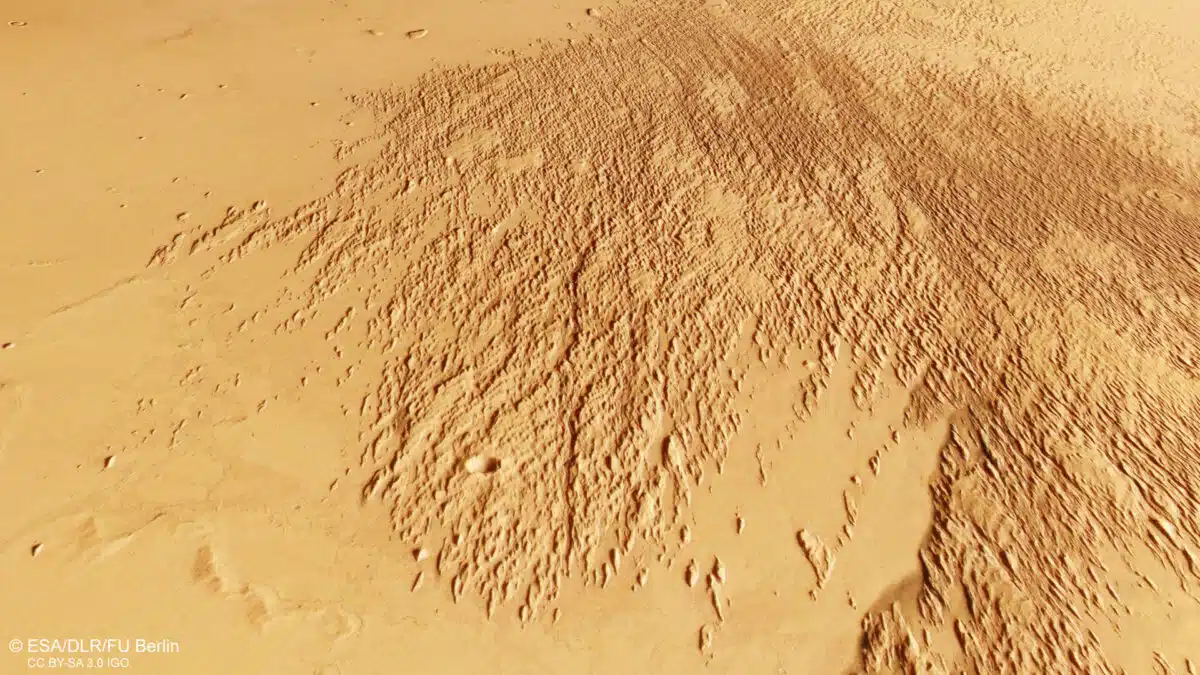 High-altitude view of the sand-sculpted trenches near Eumenides Dorsum on mars. Credit: ESA/DLR/FU Berlin
Volcanic and Wind-Eroded Features Come Together
The images also reveal a crater, which looks relatively young, surrounded by ejecta, the debris that was thrown out when the crater was formed.
“Visible only upon closer inspection (and marked in the annotated view): just below and beside the main bulk of yardangs lies so-called ‘platy flow’, which is somewhat reminiscent of floating ice sheets – or floes – seen here on Earth,” as stated in ESA’s report.
As lava spread across the surface, it created a crust that eventually cracked and broke into large chunks. These chunks were carried away by the wind, much like ice floes drifting on a lake. The interaction between volcanic forces and the wind shows just how dynamic Mars’ geology really is. The yardangs may have formed atop this platy flow, suggesting that they are relatively recent features in the Martian timeline.
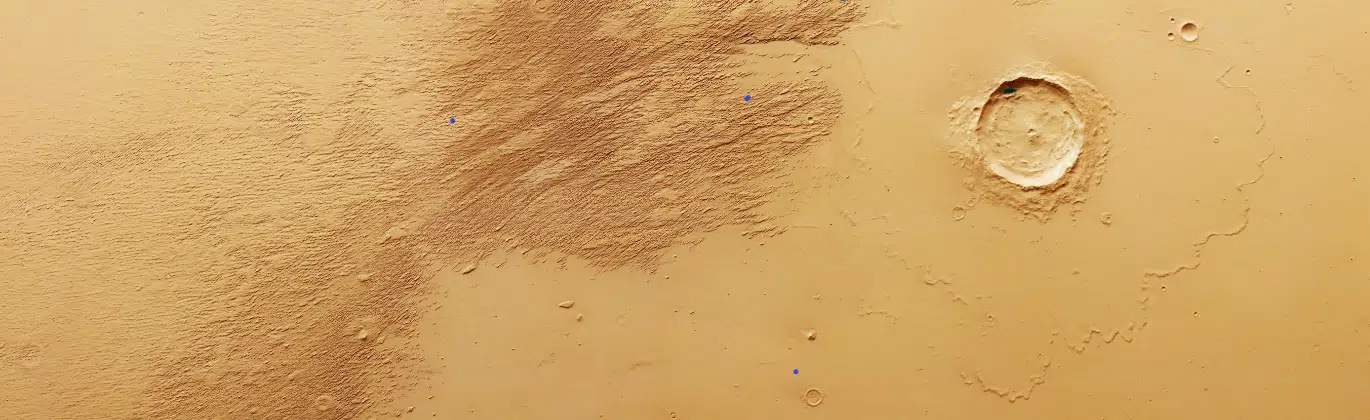 Mars express spots incredible wind-carved sculptures close to Eumenides Dorsum. Credit: ESA/DLR/FU Berlin
Two Decades of Mars Exploration: What We’ve Learned So Far
For Mars Express, it has been a two-decade journey of mapping the Red Planet in stunning detail. Launched in 2003, the spacecraft has provided some of the highest-resolution images of the planet’s surface ever captured. These detailed observations, including color images, 3D maps, and high-res photos, have been instrumental in uncovering the planet’s complex geological history.
Over the years, the ESA Mars Mission has helped scientists piece together the history of wind and erosion on the fourth planet of our Solar System. It’s also opened our eyes to how active Mars still is, despite being millions of miles away from Earth.
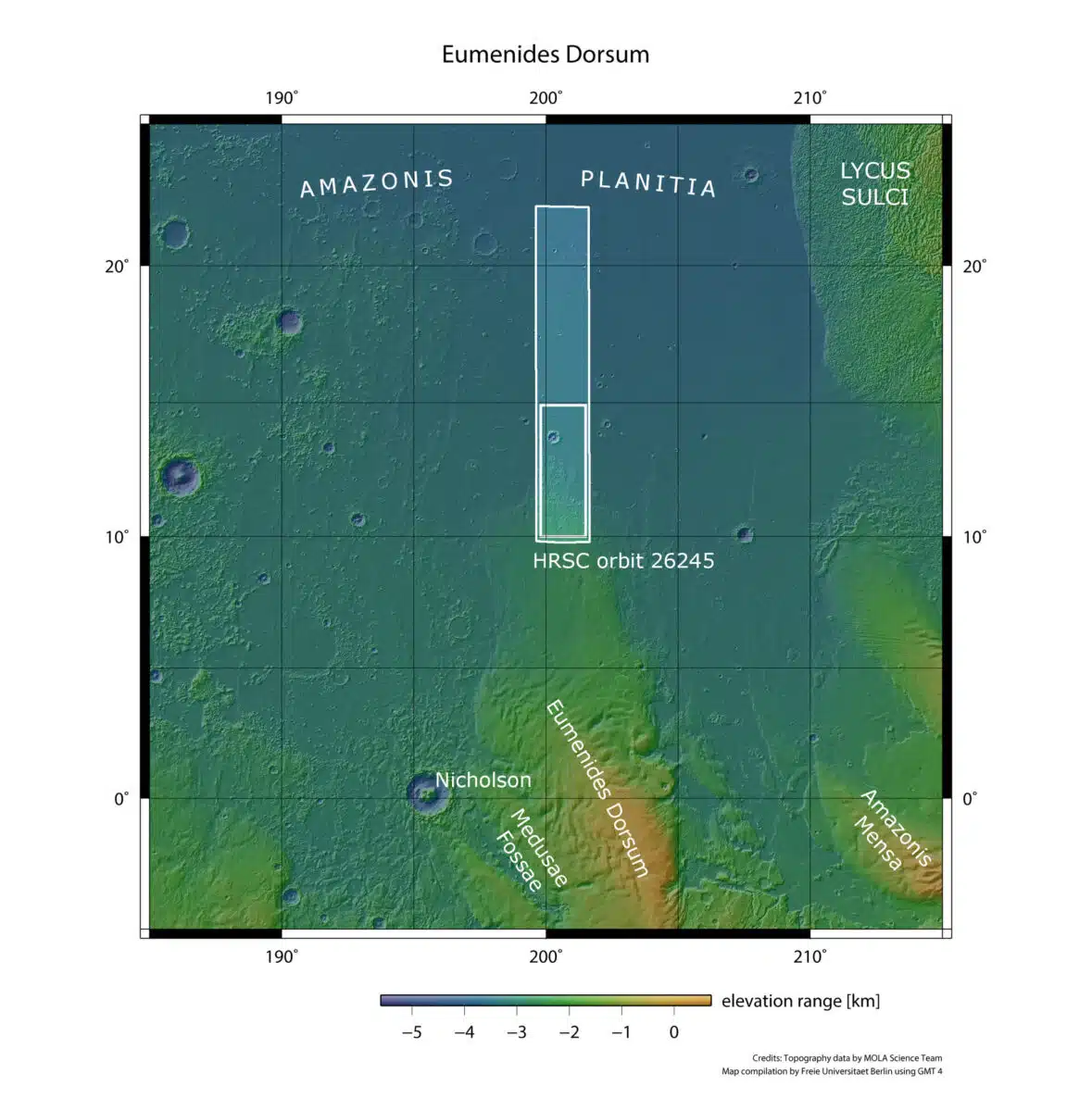 The image captures the northern section of the Eumenides Dorsum mountain range on Mars in a wider context. Credit: NASA/MGS/MOLA Science Team