

Listen to this article
Estimated 4 minutes
The audio version of this article is generated by AI-based technology. Mispronunciations can occur. We are working with our partners to continually review and improve the results.
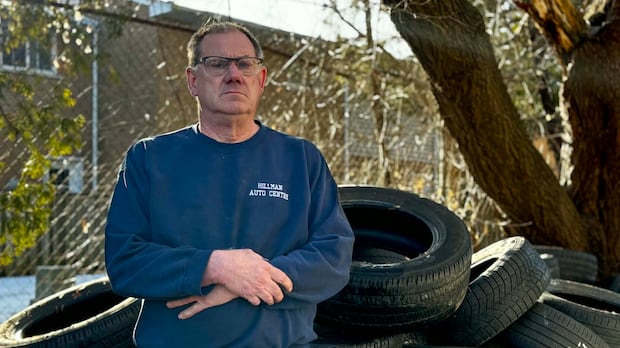
It’s a less-than-beautiful sight outside the back doors of Hillman’s Auto Centre in London’s Southcrest neighbourhood. More than 100 used car tires are piled around a tree, damp from this week’s melted snow.
Tire piles are growing across the province as some of the companies responsible for tire recycling have slowed or stopped processing tires following Ontario’s cuts to the industry’s recycling targets.
Jamie Hillman, the owner of Hillman’s Auto Centre, said it’s been months since any of his tires were taken for recycling.
“It’s a good pile. There’s probably a good 100 to 150 tires here, and normally in the past, it never got that large,” he said.
Since 2019, tire producers in Ontario have been responsible for recycling individually, and are required to meet annual collection targets for used tires.
Many producers outsource that responsibility to “producer responsibility organizations” (PROs), who contract haulers and recyclers to collect and process those tires on the company’s behalf.
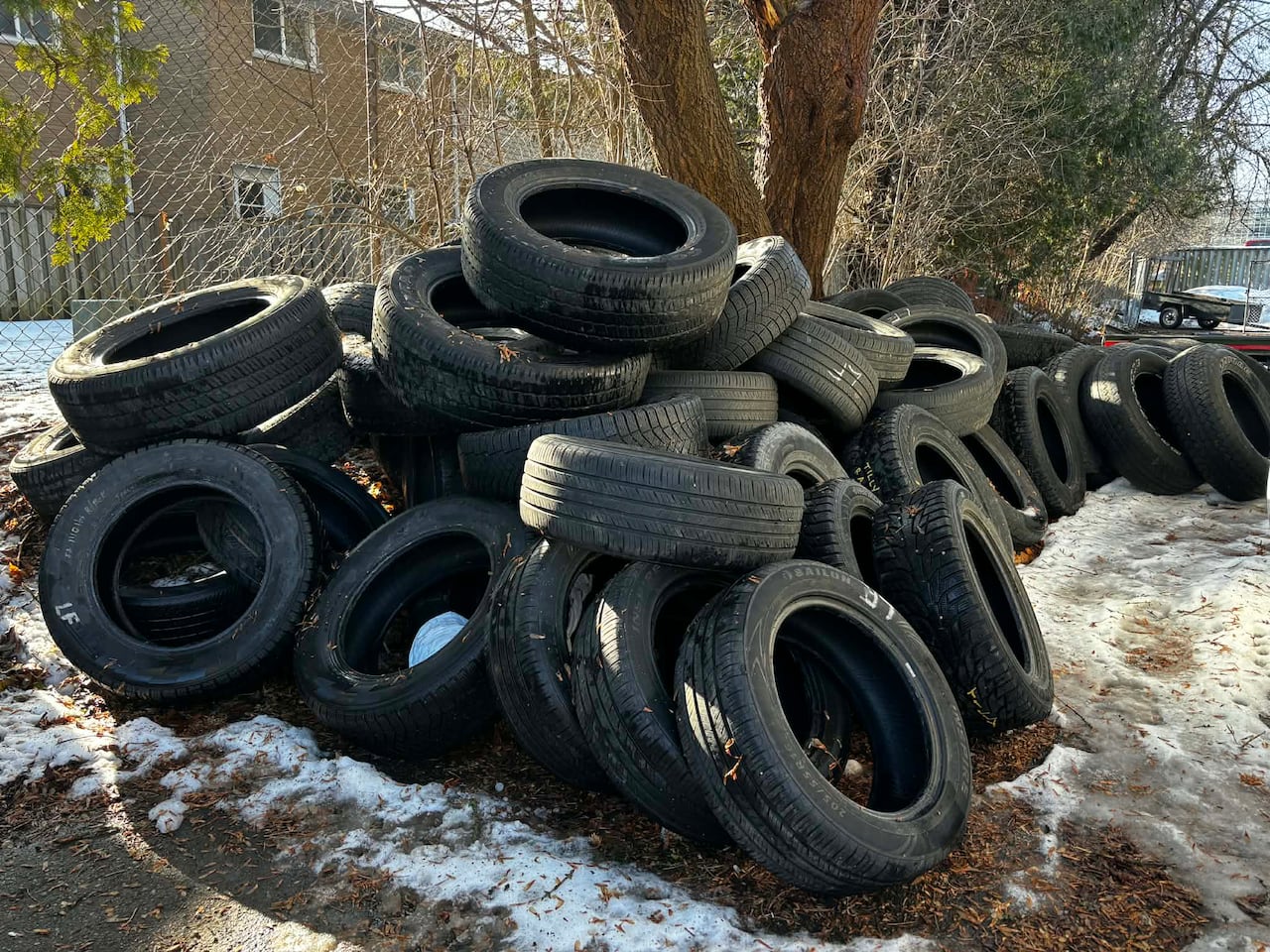 Tires are piling up behind Hillman’s Auto Centre. Owner Jamie Hillman says he changed about 50 tires a week when snow tire season started, and many of those are still behind his shop. (Kendra Seguin/CBC News)
For years, tire producers were required to recycle 85 per cent of tires collected by weight, but in January 2025, that target dropped to 65 per cent.
Since then, some auto shop owners say it feels as though there’s less urgency from companies to pick up the recyclables.
“In the past two or three years since the Ontario program had come out, [recyclers] were showing up without any call at all. The drivers that were in town were told by their companies to swing by places of constant pickup,” said James Wands, who is a manager at Ron’s Quality Auto Centre.
“About a month ago, I was wondering what had happened. We hadn’t been getting any service at all, we hadn’t heard from anybody, we didn’t know where our pickup went,” Wands said.
Wands accumulated about 140 tires over five months before they were finally picked up on Wednesday.
Added pressure for auto shops
Both Wands and Hillman typically have their tires picked up by a not-for-profit PRO called eTracks.
In an email to CBC News, a spokesperson said eTracks has never stopped managing recycling collection for producers, but confirmed there has been a backlog in pickups.
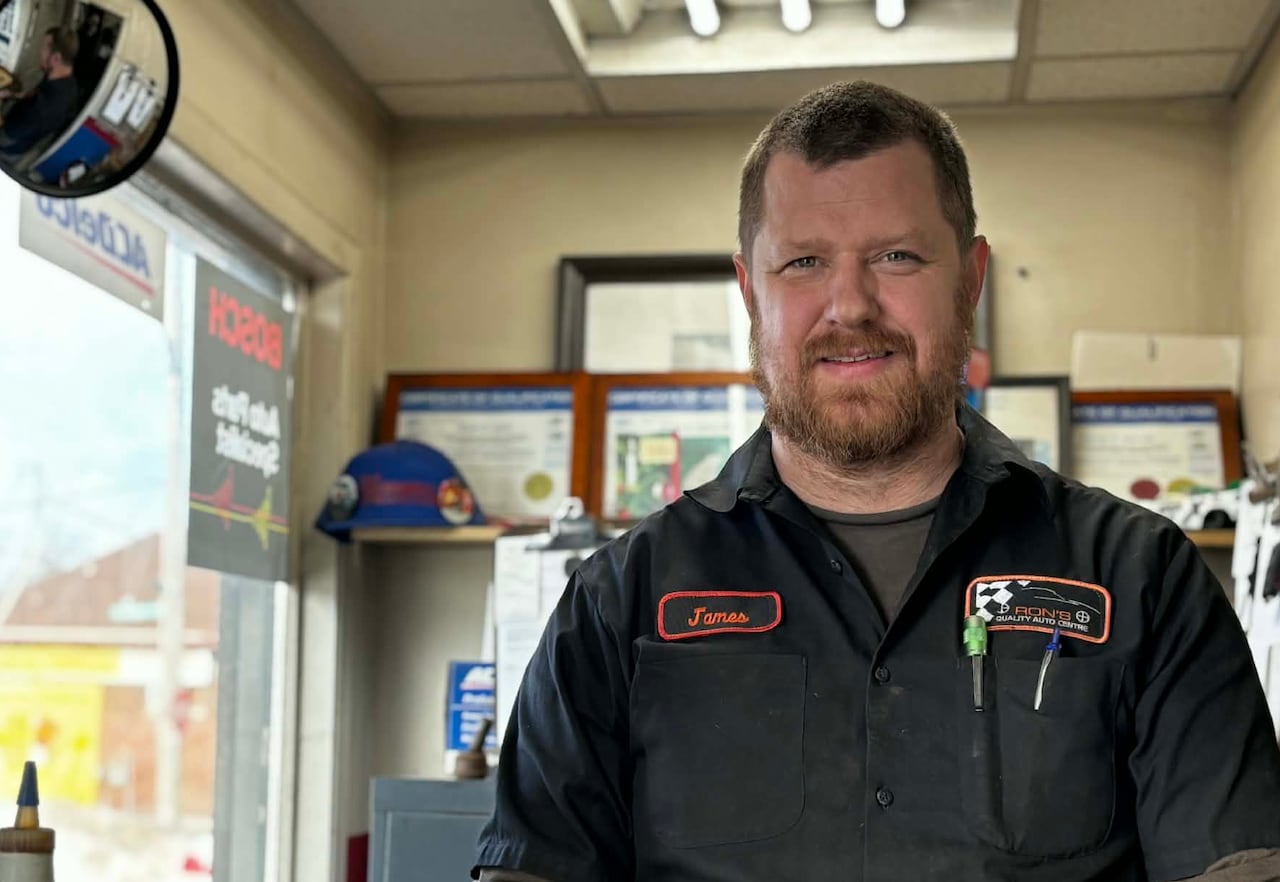 James Wands is a manager at Ron’s Quality Auto Centre on Wharncliffe Road South. He says used tires used to be picked up from his shop every two months, but it took six months for his most recent tire pickup. (Kendra Seguin/CBC News)
“As a not-for-profit, eTracks is not funded to collect more than what its producer customers are required to recycle and repurpose,” said eTracks vice president of communications and sustainability Melissa Carlaw.
She said the company collected approximately 20 per cent more than provincial regulations required in 2025.
However, Wands said the delay can still be an inconvenience.
“Space in a lot of shops around the city is limited. Bigger garages definitely have better places to store them [than we do],” he said.
If the problem continues into the summer, Wands said there will be another challenge: “These tires are holding a lot of stagnant water. They’re going to be a breeding ground for mosquitoes and everything else that goes along with it.”
Hillman expressed the same two challenges and said that if pickups don’t resume as they used to, he will need to independently hire somebody to pick up and recycle the tires.
“If we have to dispose of them ourselves, it’s going to be a cost of consumer because we can’t afford to eat the price if we have to pay to have them disposed of,” Hillman said.
Consumers already pay about $5 in eco fees per new tire — a rate set by tire producers — to cover the costs of recycling. Hillman said that this mandatory cost continues, regardless of whether the tires are actually picked up at the shop.
He said the disposal of tires cannot be put off forever.
“In the past, there have been tire pile fires, or they get thrown away with the consumer into ditches. They’re just not good for the environment whatsoever,” Hillman said. “They can’t just be thrown into the landfill.”
The Ministry of Environment previously told CBC News it is working with the RPRA to address the disruptions to tire collection.