
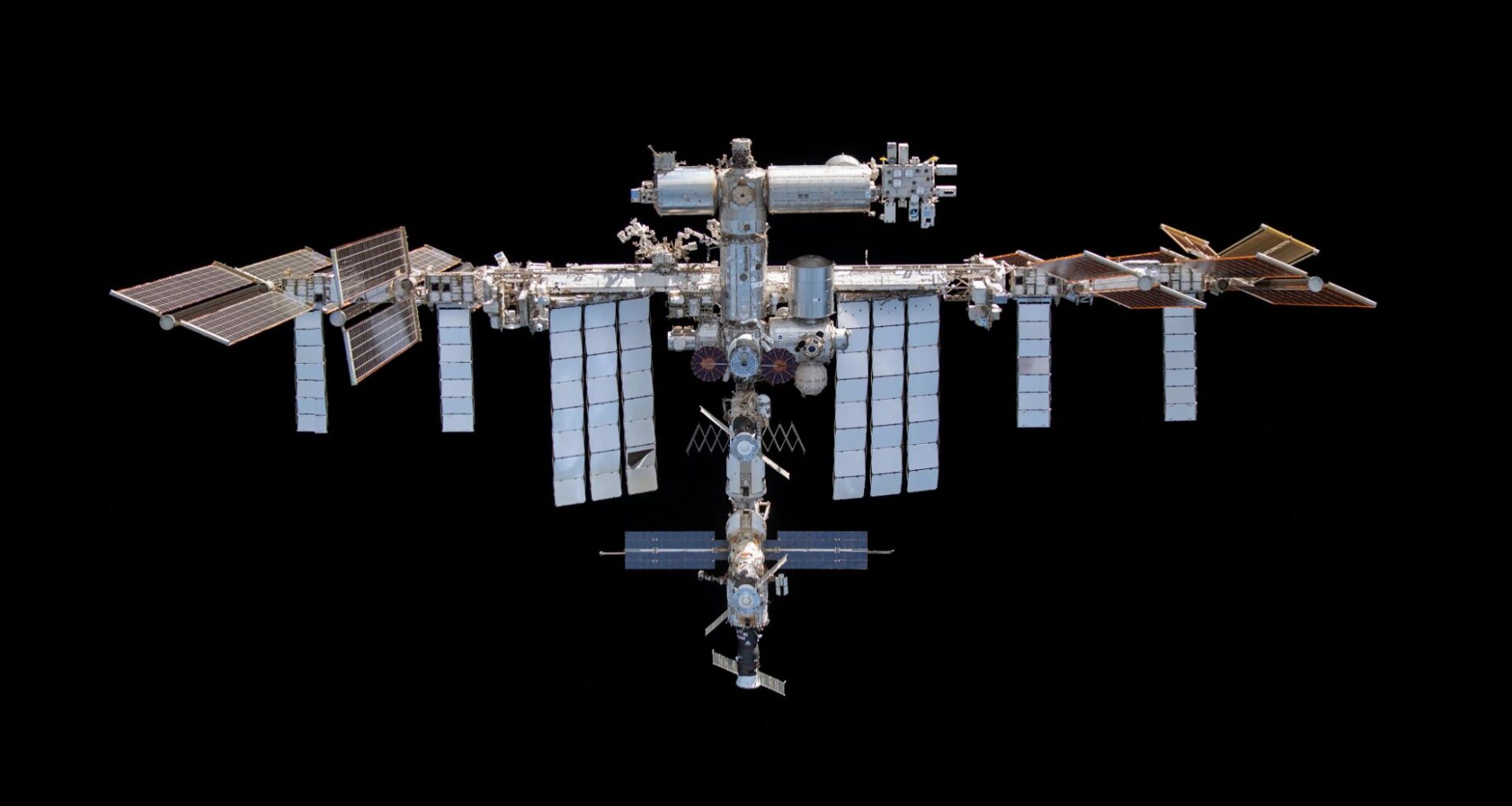
We now know when the first medical evacuation in the history of the International Space Station will take place.
On Friday night (Jan. 9), NASA announced that it’s targeting Wednesday (Jan. 14) for the earlier-than-expected departure of SpaceX’s four-person Crew-11 mission from the orbiting lab.
You may like
Crew-11 consists of NASA astronauts Mike Fincke and Zena Cardman, Japanese spaceflyer Kimiya Yui and Oleg Platonov of the Russian space agency Roscosmos. The quartet arrived at the ISS on Aug. 2 for a roughly six-month stay, but they’ll end up falling a bit short of that goal.
On Wednesday (Jan. 7), NASA announced that it was postponing a Thursday (Jan. 8) spacewalk slated to be performed by Fincke and Cardman because an ISS astronaut had experienced a “medical concern.”
On Thursday, the agency said it would bring the Crew-11 astronauts home early, to better diagnose and treat that medical issue. NASA has not told us which astronaut is affected or what exactly the issue is, citing privacy concerns.
Dr. James Polk, NASA’s chief health and medical officer, did give a vague description during a press conference on Thursday, however.
“This is not an operational issue. This was not an injury that occurred in the pursuit of operations,” Polk said. “It’s mostly having a medical issue in the difficult areas of microgravity, and with the suite of hardware that we have at our avail to complete a diagnosis.”
On Thursday, NASA officials said that they’d work out a Crew-11 departure date soon, and that information did indeed come in short order — on Friday night.
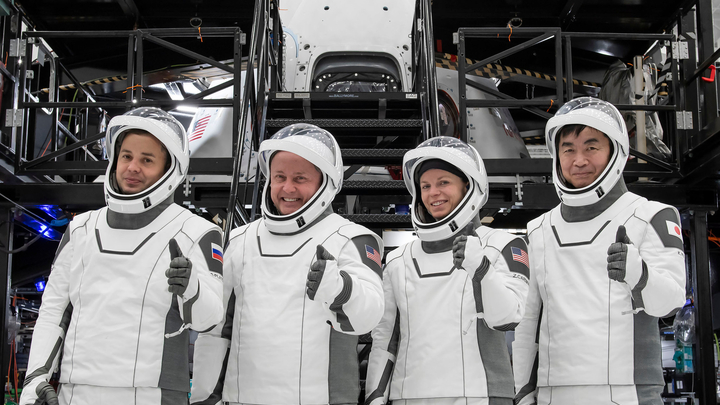
The crew of NASA’s SpaceX Crew-11 mission pose for a photo during a training session before their launch to the International Space Station. From left: Oleg Platonov, Mike Fincke, Zena Cardman, and Kimiya Yui. (Image credit: SpaceX)
The Crew-11 astronauts were supposed to stay aboard the ISS until the arrival of their replacements, the four spaceflyers of SpaceX’s Crew-12 mission. Crew-12’s liftoff is currently targeted for mid-February, though NASA is looking into moving that up a bit if possible.
After Crew-11 leaves, just three astronauts will remain aboard the orbiting lab: NASA’s Christopher Williams and cosmonauts Sergey Kud-Sverchkov and Sergei Mikayev, all of whom flew to the ISS on Nov. 27 aboard a Russian Soyuz spacecraft.
That’s definitely a skeleton crew, as the current nominal crew size for the ISS is seven. But it’s far from unprecedented; three was the baseline crew size for the station until 2009, when it was doubled to six. (The current baseline is seven.)
The ISS has been continuously staffed by rotating astronaut crews since November 2000. It’s a bit surprising that it’s taken a quarter-century to see the first medical evacuation from the orbiting lab: Statistical models suggest that such events should recur on roughly three-year intervals, according to Polk.