
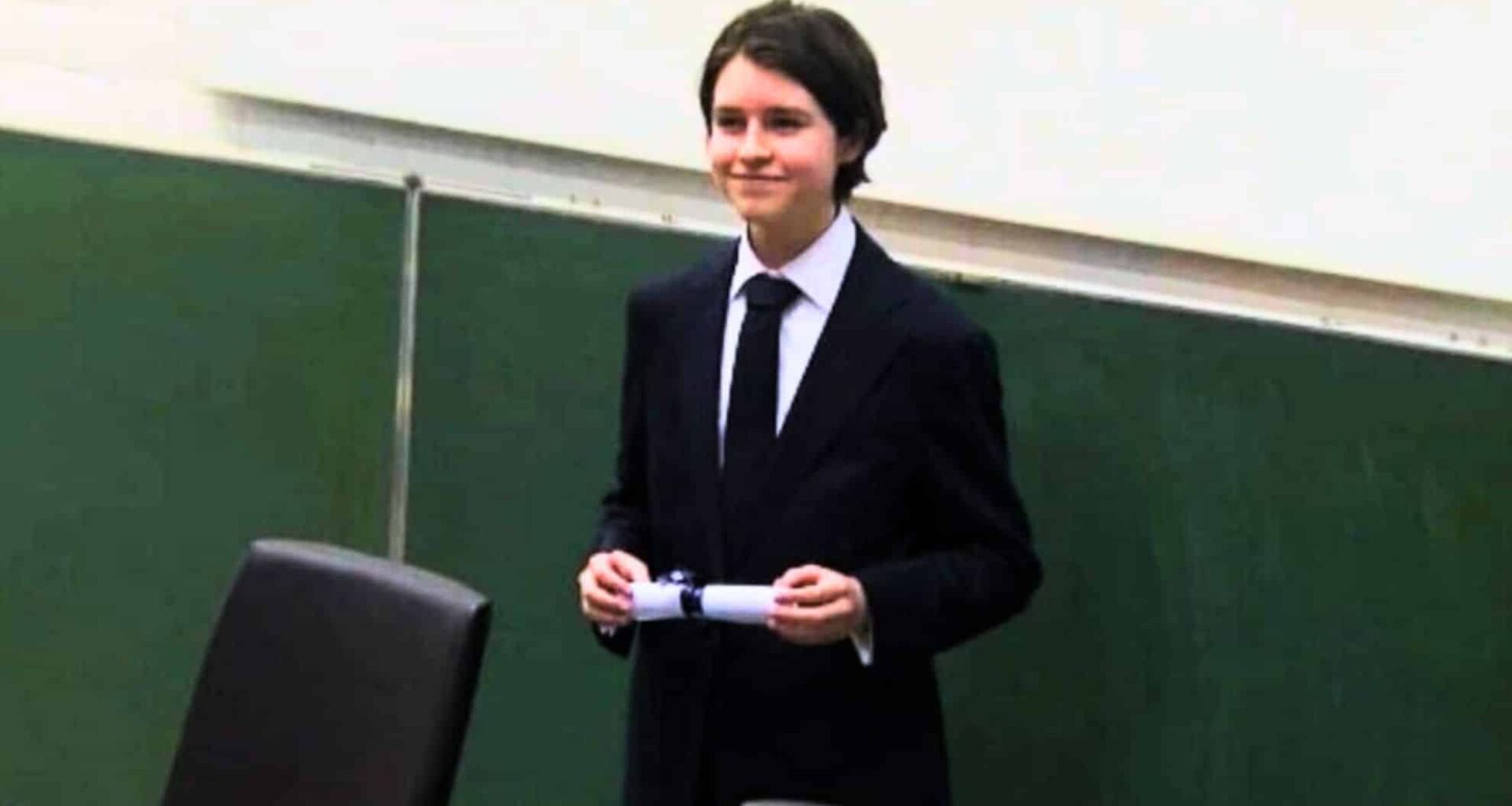
A 15-year-old doctoral graduate is not, in itself, a scientific development. It is a human milestone, occasionally publicised, often exceptional, but separate from the processes of research and discovery. When that graduate turns to artificial intelligence and biomedicine with a stated aim of “creating superhumans,” the distinction becomes less clear.
This case involves no honorary degrees, no accelerated certification programs, and no private laboratories. The work was completed through conventional academic channels, under standard review, at an accredited European university. The doctoral thesis is real. The defence was formal. The researcher is named Laurent Simons.
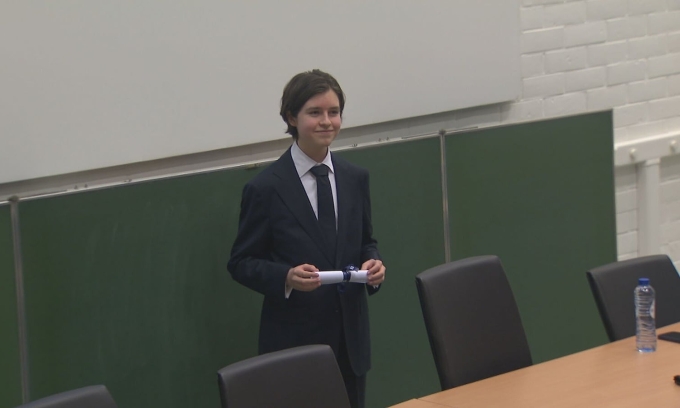 Photo of Laurent Simons. Credit: TV channel VTM
Simons is now enrolled in a second PhD programme, focused on medical science and artificial intelligence, with declared goals that intersect with some of the most contested domains in contemporary bioresearch. His age is striking. His direction, less common still.
The scientific implications are not yet known. But the structure and velocity of his academic trajectory are confirmed.
Verified Academic Record in Quantum Physics
Simons completed his PhD in theoretical physics at the University of Antwerp in late 2025. His dissertation, titled Bose polarons in superfluids and supersolids, examined impurity particle behaviour within Bose–Einstein condensates, a state of matter formed when atoms are cooled to near absolute zero and exhibit coherent quantum behaviour.
This area of research, which lies within the domain of condensed matter physics, has relevance for studies in quantum computing, many-body interactions, and low-temperature systems.
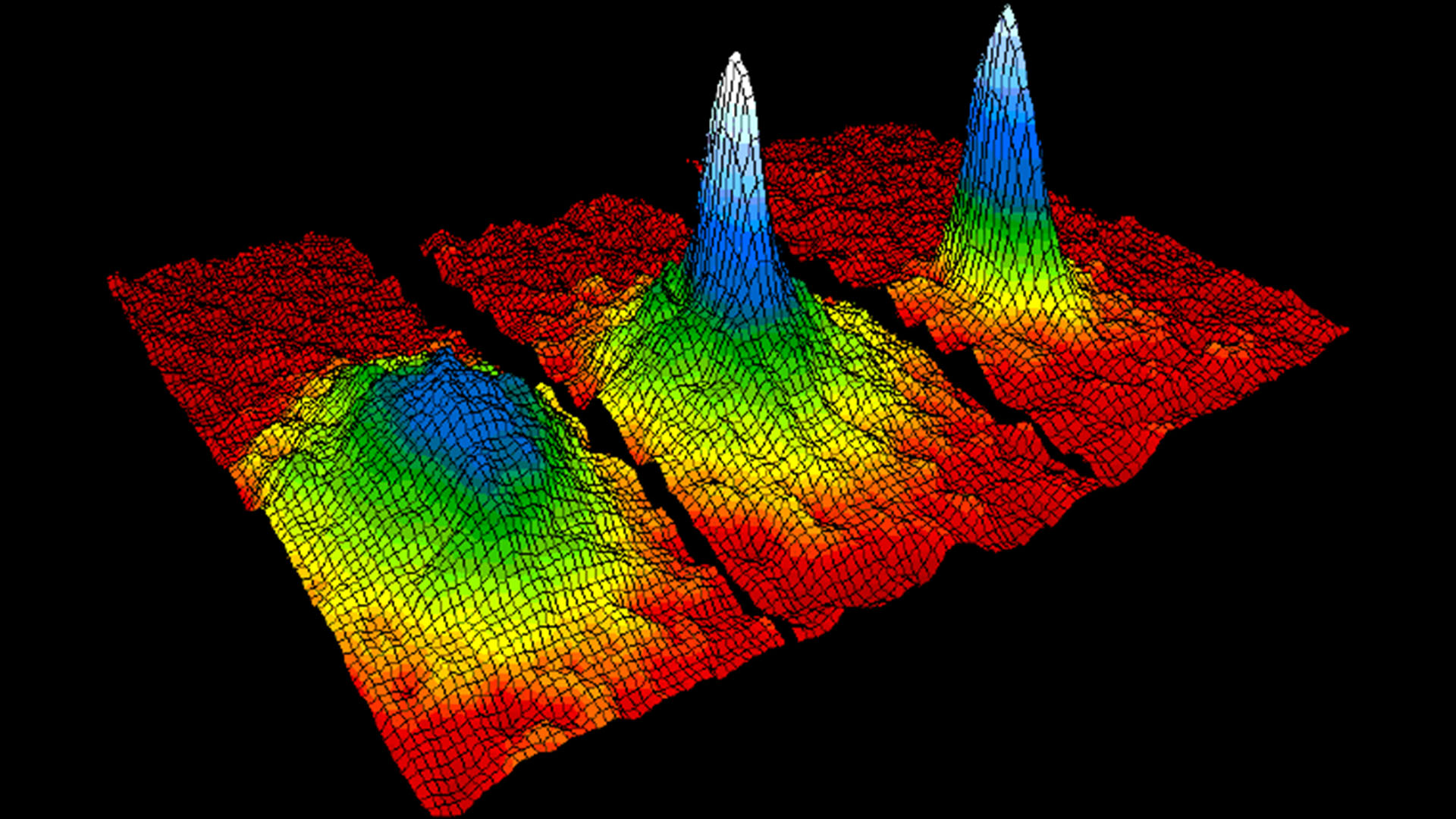 Visualization of Bose–Einstein condensate behavior—Simons’ doctoral research focused on impurity interactions in such quantum states. Credit: NIST/JILA/CU-Boulder
According to documentation provided by the university, Simons fulfilled all academic and research requirements. The work included an internship at the Max Planck Institute for Quantum Optics, where he contributed to investigations into quasiparticle interactions in ultracold atomic environments.
Prior to the PhD, Simons completed both his bachelor’s and master’s degrees in physics at the University of Antwerp. The combined timeline for these degrees was under two years. His early education included the completion of secondary school by age eight.
Transition to Medical Science and Artificial Intelligence
Immediately following his doctoral defence in physics, Simons relocated to Munich to begin a second PhD programme, this time in medical science with a concentration in artificial intelligence. The transition marks a shift from theoretical modelling in quantum systems to applied research in biological and computational health sciences.
In a televised interview with Belgian broadcaster VTM, Simons stated: “After this, I’ll start working towards my goal: creating superhumans.” According to earlier reporting by The Brussels Times, he has described the defeat of aging as a primary objective since age 11.
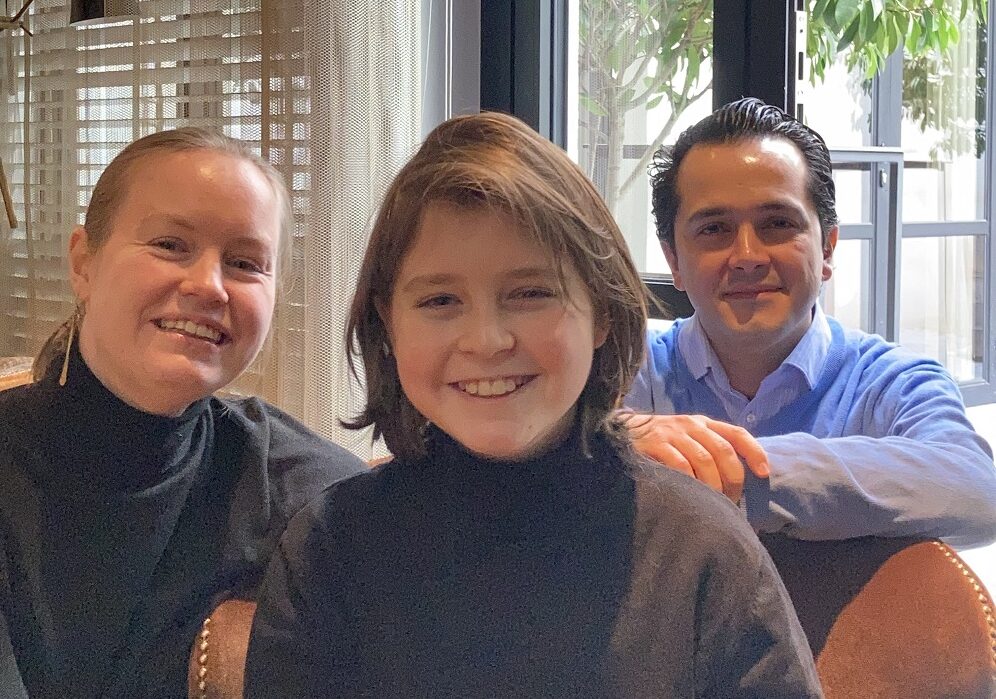 Laurent Simons and his parents. Credit: Justin Stares
The specific focus of his current research has not been made public, but it appears to involve the use of AI in areas such as diagnostic prediction, regenerative medicine, and lifespan modelling. There are no indications that Simons is engaged in laboratory-based clinical research at this stage. Available data suggest that his work is focused on conceptual and computational frameworks rather than direct biomedical experimentation.
The move places Simons at the margin of active debates surrounding human enhancement, a field that includes gene editing, cognitive augmentation, and lifespan extension.
Context of Emerging Longevity Research
Simons’ stated interests intersect with a growing sector of research and investment focused on human longevity and biological enhancement. Companies such as Altos Labs and Calico Life Sciences—backed by significant private capital—are investigating cellular reprogramming, senolytics, and other interventions aimed at extending human healthspan.
 Artificial intelligence is being explored in fields ranging from regenerative medicine to predictive diagnostics—Simons is positioning this as his next research frontier. Credit: Shutterstock
Academic journals including Nature Aging and Cell Reports Medicine continue to publish findings related to machine learning in disease detection, gene expression analysis, and tissue regeneration. While many of these approaches are still in early development, the field as a whole is expanding, attracting interdisciplinary contributions from computational biology, genomics, and AI.
Simons’ entry into this space is unusual not only due to his age but because of the direction of his academic background. Transitions between quantum physics and applied biomedical science are rare, particularly at the doctoral level.
Ethical Boundaries and Institutional Oversight
The concept of “human enhancement” remains both scientifically and ethically unsettled. While research in areas such as gene editing, prosthetic integration, and neural augmentation continues, the idea of engineering “superhumans” lacks formal definition. According to the Stanford Encyclopedia of Philosophy, debates around enhancement often centre on whether such interventions are therapeutic, elective, or transformational in nature.
At present, there is no public evidence that Simons’ work involves human-subject research or exceeds current ethical standards for early-stage academic investigation. His academic affiliations have not expressed concern regarding the direction of his research. His doctoral defence and credentials in physics have been publicly confirmed. The details of his second PhD are not yet fully disclosed.
Nonetheless, the case presents challenges for academic governance, particularly in relation to supervision, peer review, and cross-disciplinary oversight. The convergence of AI, medicine, and long-term biological redesign is a developing area with few precedents. The involvement of researchers below the age of majority introduces further complexity.