
Listen to this article
Estimated 3 minutes
The audio version of this article is generated by AI-based technology. Mispronunciations can occur. We are working with our partners to continually review and improve the results.
The City of Dawson Creek in northeastern B.C. has renewed a local state of emergency over water supply concerns, but says recent snowfall and river conditions have improved its outlook.
In an update on Friday, officials said the state of emergency, extended until Jan. 20, allows the city to act quickly if conditions change, including securing alternative water sources.
The city says it received 24 centimetres of snow last week, equivalent to about 17 millimetres of moisture, with additional snow and rain in the forecast.
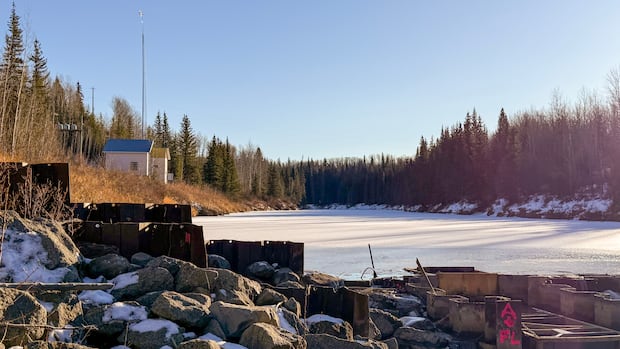
Water is now flowing over the weir crest at the city’s intake on the Kiskatinaw River — the city’s only source of drinking water — and the intake is not freezing, “both positive indicators,” reads the update.
“Dawson Creek is currently in a strong position for water supply, and city staff are actively monitoring conditions to ensure water remains safe and reliable for the community.”
The city estimates it has about 182 days of useable water stored in its reservoirs.
A “strong amount of water stored in the snowpack” is also expected to contribute to supply as temperatures warm this week. Daytime highs are expected to hover between 6 to 8 C.
According to the province’s Jan. 1 snow survey, snowpacks in the the Peace region are 142 per cent of normal so far for the season, with three snow-measuring stations in the region having recorded new all-time highs.
At the Fort St. John airport, the snowpack held 152 millimetres of snow water equivalent, nearly three times more snow than usual.
Closer to Bearhole Lake, the headwaters of the Kiskatinaw River, stations reported the snowpack held between 104 to 113 millimetres of snow water equivalent.
Despite the improved outlook, Dawson Creek says it continues to work on contingency planning, including an overland water line from the Peace River, and it has secured one of five permits needed for that project.
The city says will continue seeking renewals of the emergency order from the province “until all permits and agreements are finalized.”
The emergency was first declared in October after the Kiskatinaw River hit record low levels after four years of worsening drought in the region.
The river supplies roughly 15,000 people in Dawson Creek and the surrounding area, including the village of Pouce Coupe.
In January 2024, the Kiskatinaw froze completely, forcing the city to rely entirely on stored reservoir water for six weeks.
The city continues to push for expedited provincial approval on a permanent new water supply system from the Peace River, roughly 50 kilometres north of the city.
The multi-year project is estimated to cost at least $100 million.
Provincial agencies and First Nations have raised concerns about the proposal and the city’s plan to sell surplus water to industrial users to help offset construction costs.
Subscribe to CBC’s Fort St. John Weekly for a round-up of the best news and stories from B.C.’s Peace and Northern Rockies.