
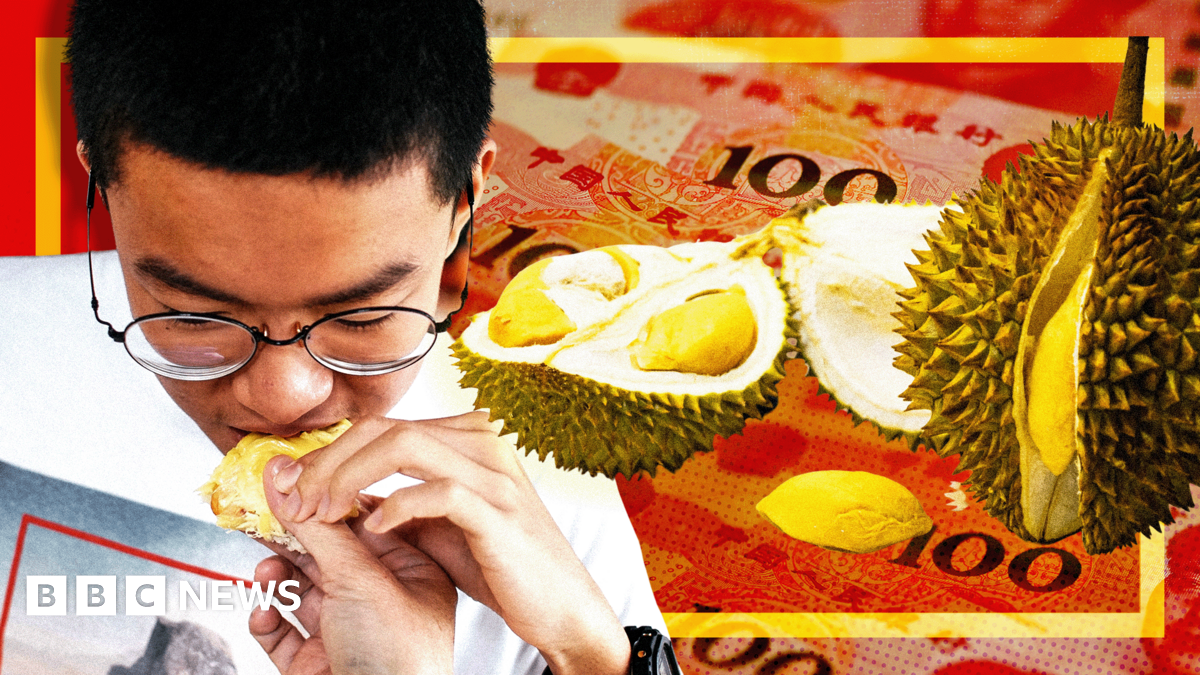
China’s insatiable appetite for durians has shaped up to be a nifty diplomatic tool.
Beijing has signed a flurry of durian trade agreements, touting them as a celebration of bilateral ties — not just with major producers like Thailand, Vietnam and Malaysia, but also budding suppliers like Cambodia, Indonesia, Philippines and Laos.
“In this durian competition, everyone’s a winner,” declared a state media article in 2024.
The deals also dovetail with China’s investments in infrastructure in the region. The China-Laos Railway, launched in 2021, now transports more than 2,000 tonnes of fruit every day, most of them Thai durians.
But this clamour to keep up with China’s appetite comes at a cost.
Food safety concerns about Thai durians erupted last year, after Chinese authorities found in them a carcinogenic chemical dye believed to make the durians more yellow.
In Vietnam, many coffee farmers pivoted to durians, driving up global coffee prices that were already affected by severe weather.
And in Raub, a turf war has broken out. Authorities felled thousands of durian trees they said were planted illegally on state land. Farmers say they have been using the land for decades without any issue, and allege they are now being forced to pay a lease to continue farming there, or face eviction.