
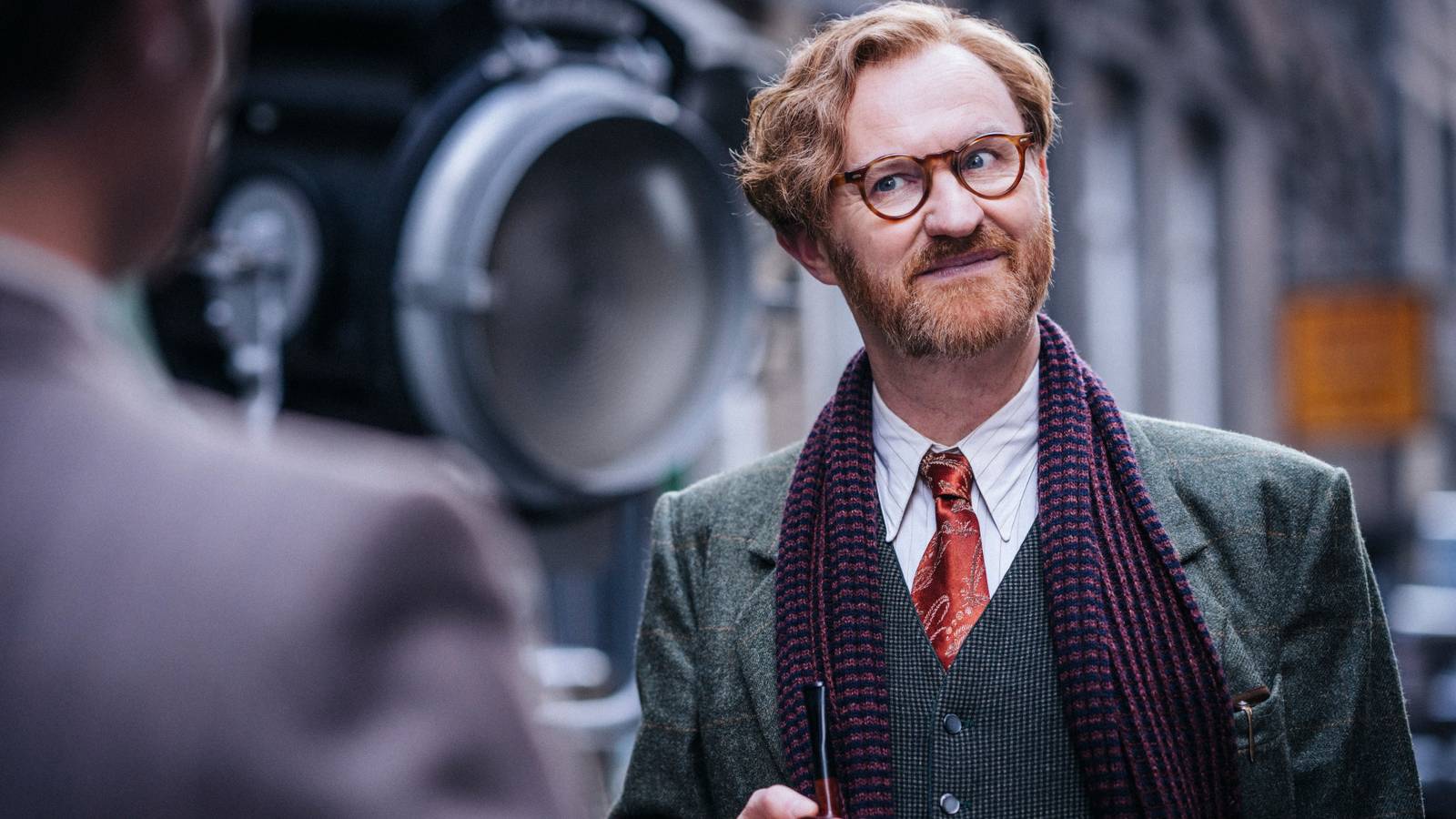
Sherlock co-creator Mark Gatiss delivers an original and eccentric new detective in the hit British mystery drama Bookish. The six-part debut season, which premieres in the US on PBS on January 11, features Gatiss as Gabriel Book, an antiquarian bookshop owner who moonlights as a Winston Churchill-approved investigative consultant for the London police in the aftermath of World War II.
The series became a smash hit when it debuted in the UK in summer 2025, even scoring a season 2 renewal in the UK months before the first season had premiered on U&Alibi. Created and written by Gatiss, Bookish may not be as action-fueled as its predecessor, the BBC’s global hit Sherlock, but Gatiss’ love for Arthur Conan Doyle’s work and the murder mystery genre as a whole shines through in every scene.
During a press roundtable for Bookish attended by ScreenRant, Gatiss revealed that his new detective creation was inspired not only by his “first great love,” Sherlock Holmes, but also the works of Golden Age writer Agatha Christie, one of the most successful novelists of all time, and several other notable writers and creators within the genre.
ScreenRant: “So we know obviously of your connection with the Sherlock Holmes mythos, but were you inspired by any other particular fictional detectives or mystery writers, for Book, the other characters, Inspector Bliss (Elliot Levey), or the story as a whole?”
Mark Gatiss: “Oh, yes. I mean, I’m an avid fan and reader of all of them, really, all the Golden Age ones and lots of new ones too, really. But Christie is obviously predominant still, and there’s a reason. I always quote this, and you can quote it again. Billy Wilder was asked, when he made the film Witness for the Prosecution, a journalist dared to say, ‘Why are you wasting your time with Agatha Christie?’ And Wilder sort of figuratively grabbed him by the throat and said, ‘Listen, my friend, Agatha Christie’s characters, her dialogue I could write in an afternoon, but her plots are like f**king ball bearings.’ And it’s so true. My God, idea after idea, after idea, after idea, and that’s the most amazing thing. And there are other books, particularly Dorothy L. Sayers, I think, who wrote Lord Peter Whimsy, rather beautiful books, much more like literature, but they don’t survive because the plots just aren’t as good.
And I think if you’re lucky, you can get a good combination of memorable characters and a clever mystery which will keep people watching. So that’s definitely … But Christie remains my favorite, everyone’s favorite. But I’ve got loads, obviously, I’m a big fan of locked room mysteries, but John Dickson Carr’s books sort of give me a headache. I like them more in principle than I do in practice… And obviously an awful lot from Sherlock Holmes because he’s my first great love. So yeah.”
While detectives like Sherlock Holmes, Christie’s mustachioed Hercule Poirot, and even Rian Johnson’s relatively new Benoit Blanc — the John Dickson Carr books mentioned by Gatiss play a significant role in Blanc’s latest mystery outing, Wake Up Dead Man — are all seen as some variation of “the world’s greatest detective,” Gatiss’ character, Book, is something else entirely.
At the time of writing on Saturday, January 10, 2026, Bookish season 1 boasts a rare 100% Rotten Tomatoes critics’ score.
It’s easier to classify him as an “amateur” detective, of sorts, a character like Christie’s Miss Marple or G.K. Chesterton’s Father Brown, who investigates crime for the love of the game, rather than it being his sole profession. Even so, Bookish drops viewers into the middle of Book’s story, when he’s already established a rapport with an Inspector and recruited his wife, Trottie (Polly Walker), to his cause.
“I’m a big fan of coming in the middle of anything. I think it’s much more interesting,” Gatiss explained when ScreenRant asked him why he made that particular narrative choice. “Any conversation, any scene really, come in as late as possible. That’s what you should do. Then, actually, you can have a lot of fun with existing relationships.”
Mark Gatiss: “Two things. It gives you the chance to do flashback episodes where you could explain all this much later on, once you’ve got people interested. And secondly, and this is a big practical thing, this is what the letter from Churchill is all about, as I can’t bear shoe-leather in scripts. I can’t bear stuff which is just there for administration. So Book is not a policeman, therefore he would not be allowed on crime scenes. So he has to have, A, a best friend who’s a policeman and also a special letter from Winston Churchill, which gives him special access.
That special letter from World War II-era British Prime Minister Churchill allows Book to attend crime scenes at his own discretion. It’s a smart narrative device, and one inspired not by Conan Doyle, Christie, or Carr, but rather one of Britain’s other most famous TV exports: the long-running sci-fi series Doctor Who.
“It’s explicitly the psychic paper from Doctor Who, which does exactly the same thing. And I told Russell [T Davies, former and current Doctor Who showrunner], and I got permission because that’s what it’s for. And Russell did exactly the same thing in Doctor Who. It’s a brilliant idea. Otherwise, you’ve got to spend ages saying, ‘Well, why is he here?’ And I think that’s just boring. That’s not why you’ve tuned in. So if you come in late, to answer your question, then all that stuff is established. You can get on with the murder, and then you can enjoy unpacking the reasons why he might’ve got there in the first place.”
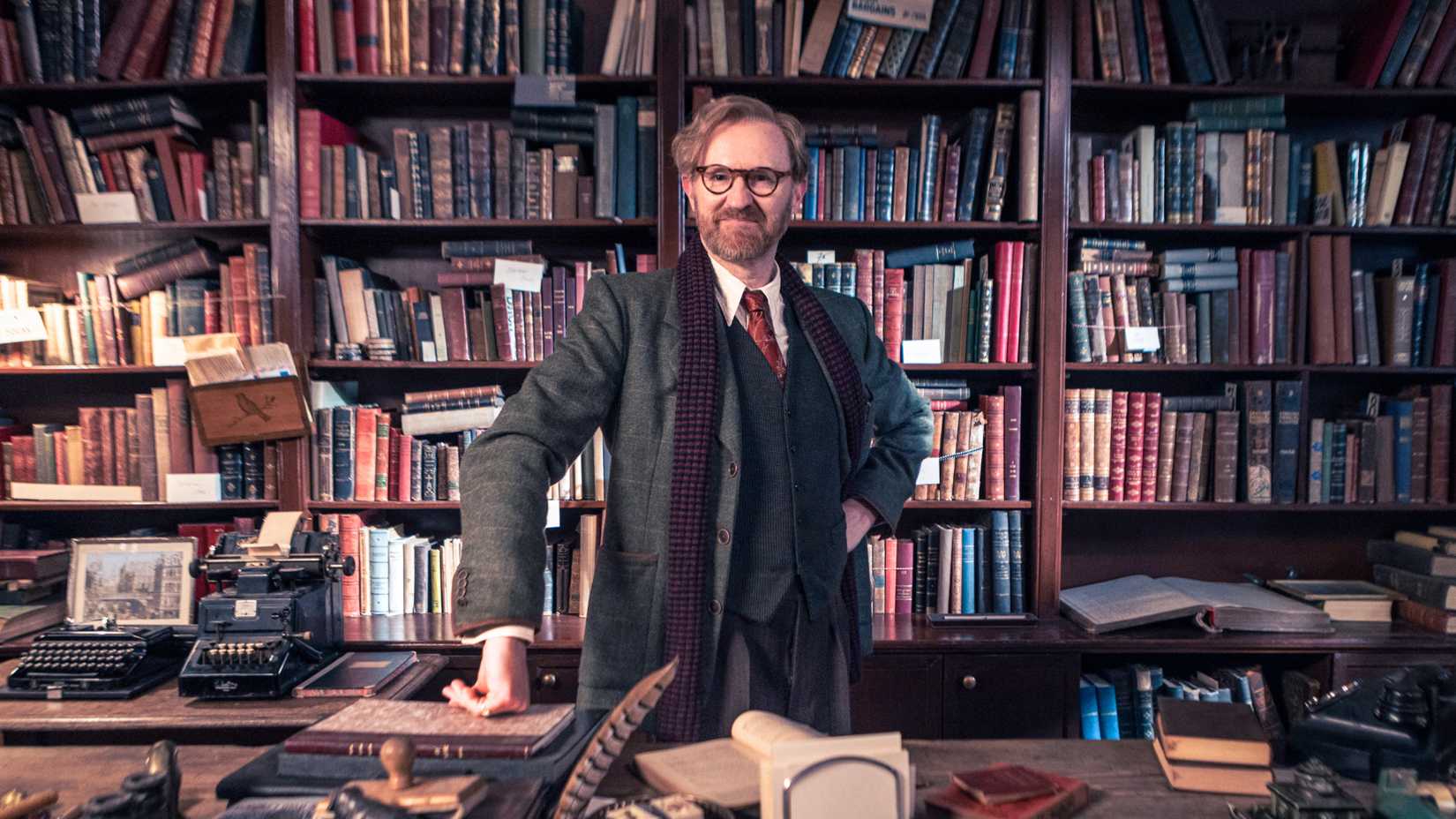
Credit: UKTV/PBS
Gatiss didn’t just deliberately choose to introduce his new detective in the middle of Book’s story, however. He also decided to set the show in a very specific year: 1946, just after World War II. As London recovered from rationing, bombings, and sleepless nights, this particular part of English history influenced how Gatiss approached Book’s compelling backstory as well as the show’s secondary characters.
ScreenRant: “So, you talked a little bit about how this specific time, post-war, is great for writing murder mysteries and crime, but how did it affect how you wrote the characters, specifically?”
Mark Gatiss: “That’s a very interesting question. Well, I think because I feel like I’m immersed in this period so much, in the films of this period and the novels and writing of this period, I had an idea about how people would talk and what sort of characters I wanted to have in it. And as I say, the idea of the bookshop being a sort of raft on a troubled sea and attracting … Having someone like Nora (Buket Kömür) who’s really bloodthirsty, she’s only 15 or something, but she knows far too much, and Book slightly disapproves, but secretly loves it. And then Jack (Connor Finch) is this sort of wide-eyed innocent who walks into this strange new world, and then Book and Trottie have this mysterious relationship, which we then discover more about, et cetera, et cetera. So I think it’s very much influenced by the war. And I think how … I’m just so interested in that, what happens next.
And there are constant callbacks to the war because of what everyone has been through. I find that very interesting. And it’s cast such a huge shadow over everything.
I think it’s a very rich soil to work with because it has implications for so much. There are so many long-buried secrets. The country was awash with guns. The country was awash with servicemen who didn’t know what to do with themselves anymore or were forced back into their old life. I remember reading a memoir from this man who came back from Japan or from the Southeast Asian theater of war. And he worked in an insurance office or something, and he just went back to work. And it was like on Tuesday afternoon, he was just sitting there with his sandwich, and he thought, this time six months ago, I was strangling a man. I was strangling a man, and now I’m here. What am I supposed to do? And there was nothing there in terms of care. And it’s amazing, so many people got through it as they did.
But again, I was reading about James Stewart the other day when he made It’s a Wonderful Life just after he came back from being a war hero. He was a Colonel. A Colonel. And he was never the same again. And you can see it in that film. His emotion is raw. He’s a shattered man. And I think there’s no surprise that we venerated that generation so much because they came back and had kind of gone on with their lives despite the terrible things they’d seen, unforgettable things. So I don’t know if that answered your question, but that was the sort of foundation.”
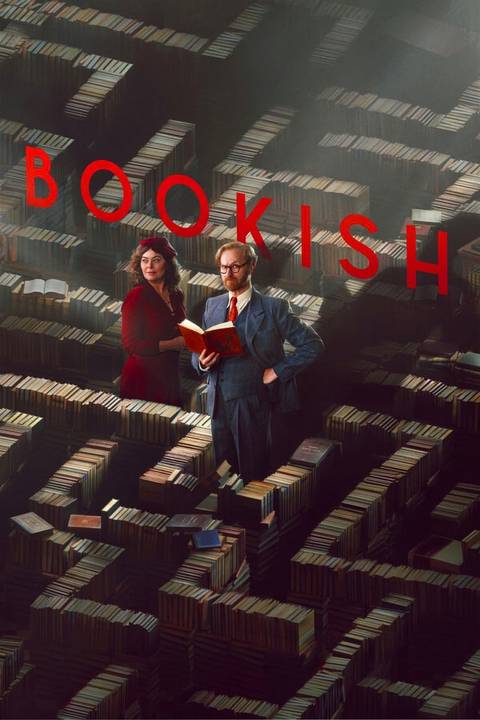
For fans of Golden Age detectives and murder mysteries, Bookish is not to be missed. With three feature-length stories set across six episodes, covering everything from London’s growth after the war to Britain’s burgeoning 20th-century film industry and the city’s most glamorous hotels, Mark Gatiss’ Gabriel Book has all the makings of being pop culture’s next great detective.
Bookish premieres on PBS on Sunday, January 11 at 10 PM ET. New episodes will be broadcast weekly until February 15.
Release Date
July 16, 2025
Network
U&Alibi
Directors
Carolina Giammetta
Cast



Elliot Levey
Inspector Bliss