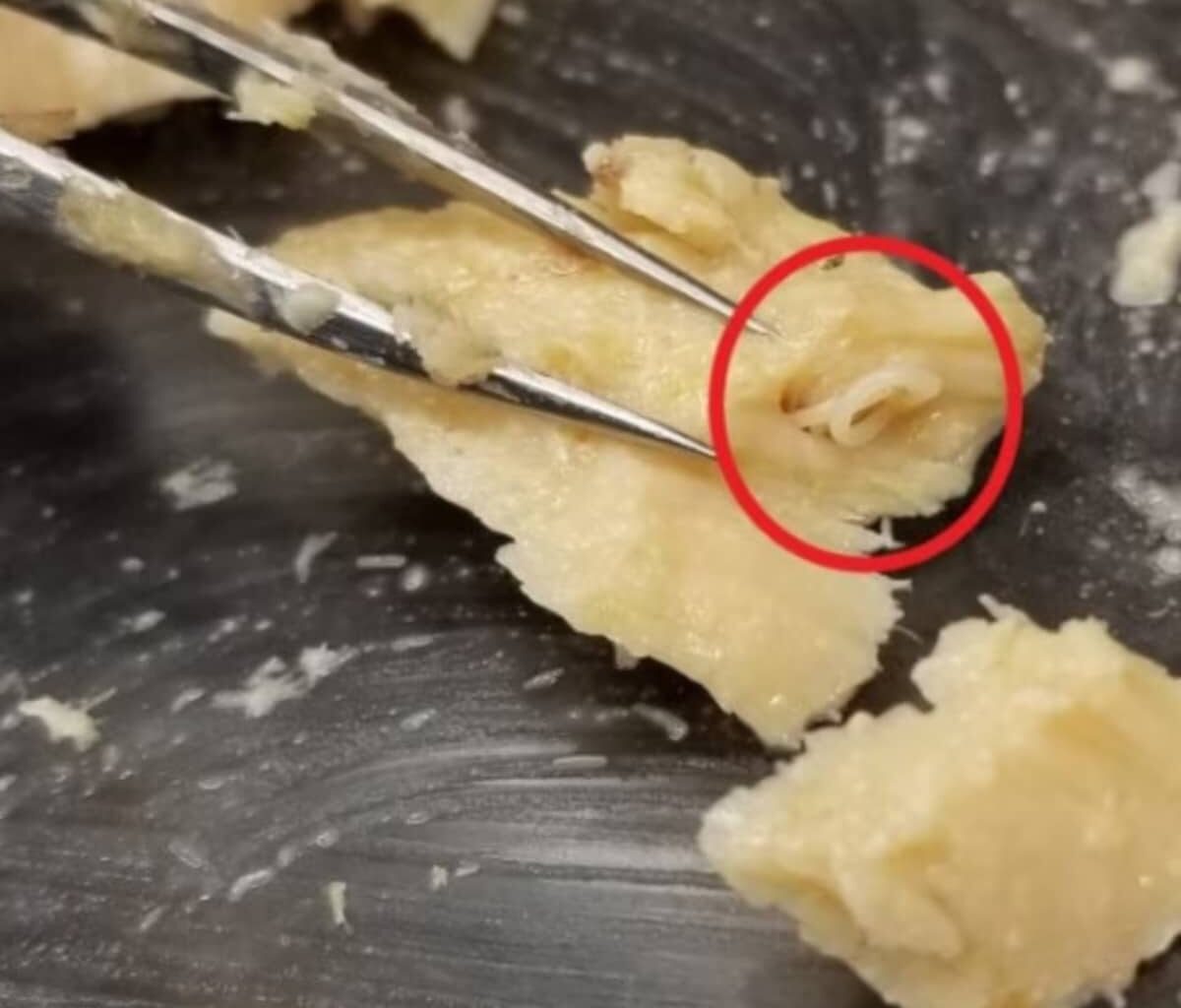
A stash of forgotten canned salmon has turned into an unexpected treasure for science. Inside these tins, researchers found marine parasites preserved for decades, offering a rare glimpse into Alaska’s marine life over more than 40 years. What started as a curious discovery has now sparked new questions about how ecosystems evolve and the role these tiny creatures play in keeping them balanced.
In April 2024, the journal Ecology and Evolution published a study with remarkable results. A batch of long-expired salmon cans, once meant for quality control, turned out to be a priceless time capsule for scientists. By examining these samples, researchers managed to retrace over four decades of change in Alaska’s marine environment – proving that sometimes, even the most mundane items can hold unexpected scientific value.
Parasites as indicators of ecological health
At the University of Washington, a team led by Natalie Mastick and Chelsea Wood made an intriguing find. When they opened the cans, they discovered anisakids – small marine worms roughly a centimeter long – still preserved inside the salmon. Rather than being a bad sign, their presence hinted at something positive.
As Chelsea Wood explained, “the presence of anisakids signals that the fish on your plate comes from a healthy ecosystem.” These worms are an essential link in the marine food chain:
• they begin their journey in krill,
• move on to fish such as salmon,
• and finally complete their life cycle in the digestive systems of marine mammals.
Their abundance, scientists say, tells us a lot about how marine ecosystems function and change. In other words, parasites might just be some of the most overlooked guardians of ocean health.
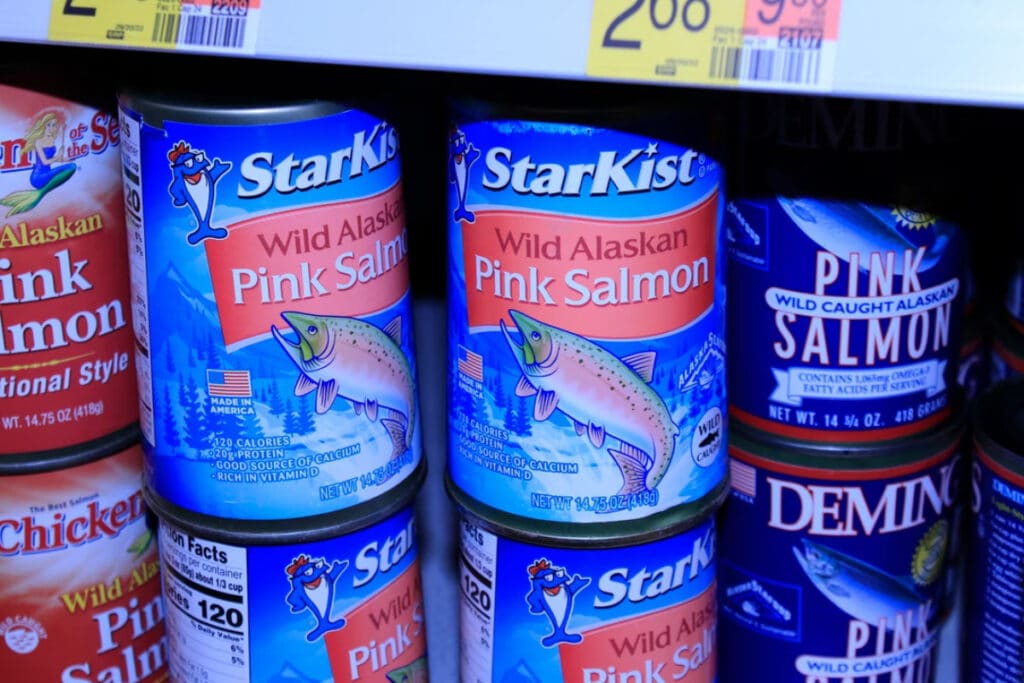
Opening cans of salmon that expired in the 1970s can reveal some fascinating surprises. © Stockphotoman, Adobe Stock
An unexpected ecological archive
The study analyzed 178 cans of four different salmon species, caught between 1979 and 2021 in Alaska’s Gulf and Bristol Bay. This rare collection became a miniature archive of marine life spanning more than four decades.
Researchers catalogued the cans as follows:
Chum salmon (Oncorhynchus keta): 42 samples
Coho salmon (Oncorhynchus kisutch): 22 samples
Pink salmon (Oncorhynchus gorbuscha): 62 samples
Sockeye salmon (Oncorhynchus nerka): 52 samples
Although canning had degraded the parasites, scientists were still able to calculate the number of worms per gram of salmon. This creative method provided a detailed picture of how parasitic populations evolved through time – and, by extension, how Alaska’s wider ecosystem changed too.
Intriguing results and new perspectives
The results were as curious as the cans themselves. Over time, chum and pink salmon showed a clear increase in parasite numbers. According to Mastick, this could mean that the ecosystem is either stable or recovering, with plenty of suitable hosts for anisakids.
Coho and sockeye salmon, however, told a different story. Their parasite levels stayed relatively steady, suggesting other environmental factors might be at play. Scientists now believe that different types of anisakids may prefer specific species of salmon – a subtle reminder of how complex marine biodiversity really is.
Looking ahead, this study could reshape how we explore marine environments. Using expired canned food as an ecological record might one day help track long-term environmental shifts, reveal the effects of climate change, and deepen our understanding of the hidden connections between parasites, fish, and marine mammals.
It’s a perfect example of science finding wonder in the ordinary. What once sat forgotten in a dusty pantry has become a window into nature’s memory – proof that even the most unexpected relics can tell the story of our planet’s living past.