
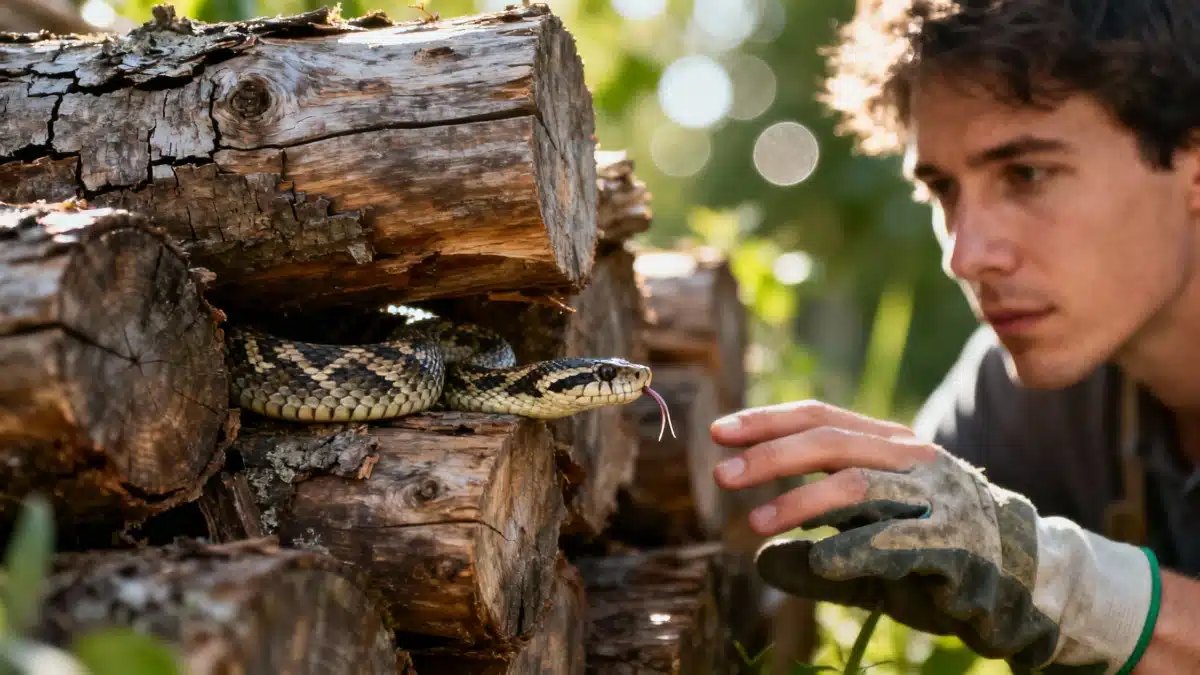
When summer arrives and the temperatures start to climb, life springs back in our gardens—and not all of it is welcome. While we’re sunbathing or barbecuing, some slithery guests could be finding a cozy spot just out of sight. Turns out, those neat stacks of firewood or piles of stones can hide more than just a couple of spiders. Watch your step: a viper might just be warming up in your backyard!
The Secret Lurking in the Woodpile
Many creatures awaken and become active in our gardens when summer’s warmth takes over. Some are charming, others… not so much. Vipers, fairly common around homes in many parts of Europe, usually keep out of sight. Still, there’s one particular area in the garden that can be a hidden danger for both people and pets: woodpiles and stone piles. These spots offer vipers the perfect shelter to stay warm and safe, even as we go about our everyday routines just a few feet away.
Woodpiles: The Viper’s Five-Star Hideout
One of the most popular hiding places for vipers is, indeed, the woodpile. Wood that’s left stacked at the back of the garden, behind a shed or alongside a wall, creates the ideal environment for snakes. As François Mercier, herpetologist, explained to France Bleu Drôme-Ardèche:
“It’s an ideal hiding place: dark, damp, protected from predators, and it retains heat.”
So if you stash your firewood in a shady corner or let it sit undisturbed for months, don’t be surprised if it’s claimed as prime real estate by something with scales.
Why These Areas Are So Risky
Encounters with vipers aren’t exactly an everyday event, but woodpiles and stone heaps are among the most hazardous areas when it comes to snake bites. According to research from the Biodiversity Center in Montpellier, in 70% of cases where vipers have been spotted near buildings, they were found hiding in a woodpile or among rocks.
These reptiles seek refuge in such spots mainly during spring and summer to warm up in the morning, then escape the blazing afternoon heat. Since stacks of wood and stones are rarely moved or cleaned, they remain reliable shelters for snakes all season long—making them the equivalent of a summer timeshare but with much less paperwork and significantly more hissing.
Bites: When and Why They Happen
According to Santé Publique France, 38% of viper bites each year involve dogs, most often when our four-legged friends are sniffing around bushes or areas where wood is stored. For humans, bites typically occur on hands or feet while walking or handling objects left on the ground—think twice before reaching under the woodpile in flip-flops!
The real risk for healthcare professionals is the element of surprise:
“Nearly all bites happen in self-defence. The snake is surprised and reacts; it will never attack without provocation,” says Dr. Sophie Lemoine, emergency physician at CHU in Nîmes.
So if you’re out fetching firewood or tidying up your rock garden this summer, keep your eyes peeled and maybe leave the open-toe shoes in the closet. The local wildlife will thank you… and so will your toes.