
Prime Minister Benjamin Netanyahu’s remarks in an interview with The Economist over the weekend, in which he said that he wants to “taper off the military aid within the next 10 years,” reflect an effort to turn a challenge from the U.S. into a narrative of Israeli strength. Netanyahu seeks to frame the trend, where the U.S. appears poised to reduce the flow of billions of dollars that underpin the IDF’s capabilities, as an independent and proactive move by Israel. According to the narrative he is promoting, this is a reflection of Israel’s growing economic and political power rather than American pressure.
Netanyahu said he discussed the issue with President Donald Trump during a meeting in Florida about a week and a half ago. He expressed his appreciation for the long-standing U.S. security assistance, adding that “we’ve come of age, and we’ve developed incredible capacities,” and that the Israeli economy is expected to reach a trillion dollars in the coming decade.
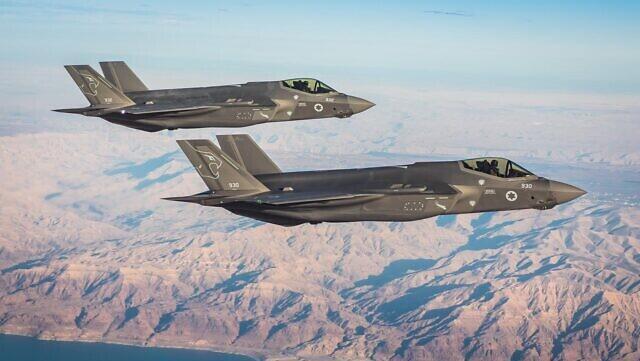
Currently, American security assistance to Israel stands at $3.8 billion per year, as part of a ten-year plan agreed upon at the end of former President Barack Obama’s term, which is set to expire at the end of 2028. The aid is primarily used to purchase weapons systems produced by U.S. defense companies, including fighter jets, tanker aircraft, combat and transport helicopters, unique armaments, and to fund the development and acquisition of air defense systems.
The expiration of the current framework has long been on the agenda of Israel’s defense establishment. In the coming months, Israel and the U.S. will need to negotiate a new aid agreement for the next decade. Security officials remain uncertain about the scope, structure, and conditions of the next arrangement due to the lack of a clear consensus between Israel’s political leadership and the U.S. administration.
The Defense Ministry and the National Security Council have begun assessing Israel’s future security needs to inform the next agreement. A reduction or cessation of U.S. aid would mean that any new fighter squadrons the Air Force seeks to acquire would need to be purchased using Israel’s domestic budget, with all the fiscal implications this entails.
An Israeli source estimated that the next aid framework will likely reflect a “gradual withdrawal” of American funding, combined with initiatives to strengthen cooperation between the Israeli and American defense industries, including joint development of combat systems. This comes against the backdrop of a major initiative promoted by Trump to develop the “Golden Dome” system, designed to protect the U.S. from ballistic and hypersonic missiles, rockets, and other aerial threats. Israeli companies, primarily Israel Aerospace Industries (IAI) and Rafael, possess extensive expertise in this domain and may help accelerate the program.
Trump has also signaled his intention to increase the U.S. defense budget to approximately $1.5 trillion by 2027, up from around $900 billion today. Israel views expanded access to the U.S. defense market as an opportunity to grow its defense exports, a potential source for increasing the defense budget, expanding domestic production, enhancing self-reliance in armaments, and reducing dependence on imports.
Since the outbreak of the October 7 war, the U.S. has increased military aid to Israel and conducted airlifts of weapons. Beyond regular annual assistance, former President Joe Biden authorized approximately $18 billion in direct aid to accelerate the production of missiles and air defense systems in Israeli industries. The U.S. military has also supplied Israel with advanced THAAD interceptor batteries and provided fighter jets to help intercept Iranian drones and cruise missiles. Over the past two years, U.S. military aid to Israel has totaled approximately $32 billion.
Over the past year, Trump has supported Israel against Iran and even deployed B-2 bombers to counter its nuclear facilities. At the same time, he has promoted the sale of F-35 aircraft to Saudi Arabia and declared that such aircraft will also be supplied to Turkey. These steps appear to bypass the traditional U.S. policy of maintaining Israel’s qualitative military edge in the region. At this stage, it is unclear whether Israel will receive compensation to preserve its regional superiority in light of these weapons sales.
American security assistance has long served as a mechanism to subsidize U.S. defense industries, as most aid is allocated to the purchase of American-made systems, guaranteeing these companies a steady stream of orders from Israel. In recent years, amid unprecedented global arms production, U.S. defense manufacturers have been operating at full capacity, and Washington no longer needs to respond urgently to Israeli requests for procurement.