
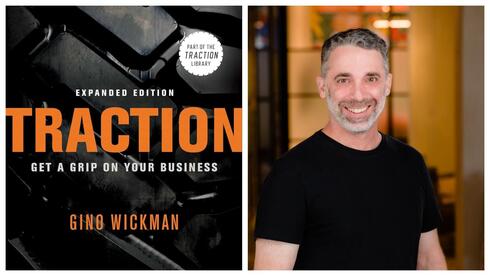
Daniel Kushner is the CEO and co-founder at Oktopost, which offers a B2B social media management platform. He has joined CTech to share a review of “Traction: Get A Grip On Your Business” by Gino Wickman.
1 View gallery
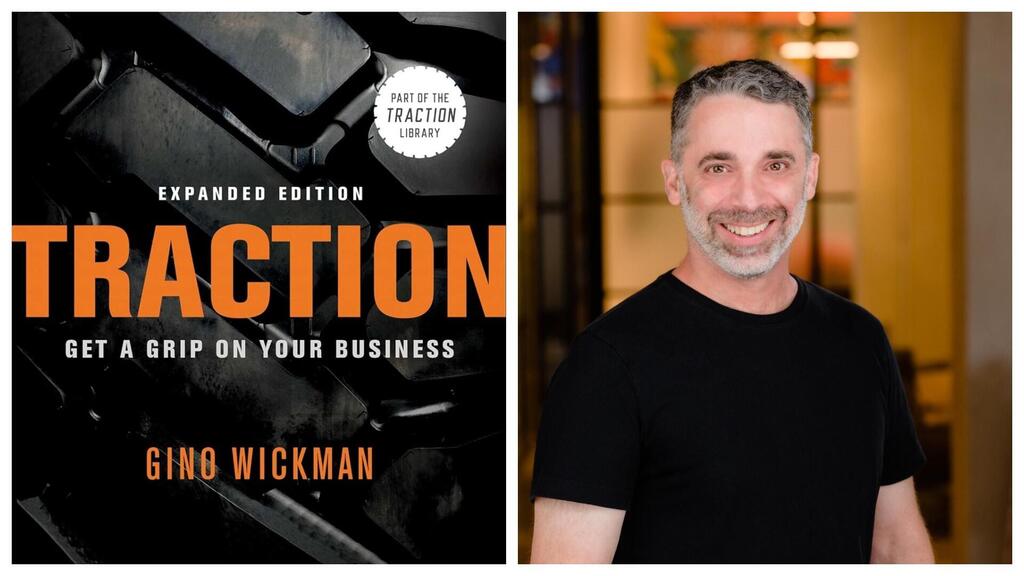
Daniel Kushner
(Photo: Oktopost)
Title: Traction: Get A Grip On Your Business
Author: Gino Wickman
Format: Book
Where: Home
In Traction, Gino Wickman introduces the Entrepreneurial Operating System to help leaders gain control of their businesses by focusing on six key components. By mastering vision, people, data, issues, process, and traction, organizations move from chaotic growth to disciplined execution. The book emphasizes that a clear vision succeeds only when coupled with accountability and a consistent meeting cadence. For B2B leaders, the core takeaway is that scaling requires a repeatable framework that aligns every team member around shared goals and measurable outcomes, ensuring the business operates as a cohesive, high-performing unit.
Wickman’s Traction centers on the Entrepreneurial Operating System (EOS), a practical framework that helps leaders move from chaotic growth to disciplined execution. The book argues that most business problems are symptoms of weaknesses in six core areas.
The Six Key Components of EOS:
Vision: Alignment is the foundation of growth. Leaders must ensure every team member understands where the company is going and how it will get there. This involves defining core values, setting a ten-year target, and developing a specific marketing strategy to ensure the entire organization is aligned in the same direction.
People: Success requires the right people in the right seats. Wickman uses the People Analyzer to evaluate whether staff align with core values, and the GWC framework to confirm they possess the necessary skills, want the job, and have the capacity to perform. This removes the friction caused by talent misalignment.
Data: Managing by gut feeling is a recipe for failure. Organizations should run on a scorecard of 15 to 20 high-level metrics that provide an objective pulse of the business. This shift ensures decisions are based on measurable facts rather than personalities or opinions.
Issues: Most teams talk around problems rather than solving them. Wickman introduces the IDS process, which stands for “Identify, Discuss, and Solve.” This discipline forces teams to dig for root causes and resolve them once and for all, preventing the same obstacles from resurfacing.
Process: Scaling requires consistency. By documenting the “core twenty percent” of processes that deliver eighty percent of the results, businesses create a repeatable playbook. This systemization allows the company to function efficiently without constant intervention from the founder.
Traction: Vision without execution is just a hallucination. This component brings discipline through ninety-day goals called “Rocks” and a weekly meeting pulse known as the “Level 10 Meeting.” These rituals create a culture of accountability where every individual is responsible for specific, high-impact outcomes.
The outcome: mastering these themes transforms a business from a collection of individuals into a cohesive, scalable machine that delivers predictable results and long-term value.
Scaling a B2B organization is often treated as a series of fires to put out, but Traction taught me that sustainable growth is actually a design problem. The most significant takeaway is the distinction between working “in” the business and “on” the company. Without a structured operating system, leaders remain trapped in daily tactics rather than building a scalable machine.
The Power of the 90 Day Pulse: I learned that long-term goals are effectively useless without short-term accountability. Implementing “Rocks” ensures that the team focuses on the three to seven most essential priorities every quarter. This discipline prevents the “shiny object syndrome” that often plagues fast-moving SaaS companies.
Objectivity Through Scorecards: The book reinforced that you cannot manage what you do not measure. By moving away from gut feelings and focusing on a weekly scorecard, we gain an early warning system for the business. This shift to data-driven decision-making ensures that issues are spotted and addressed before they become crises.
The GWC Framework: Hiring is not just about technical skills; it is about alignment. The “Get it, Want it, and Capacity to do it” framework is a pragmatic tool for ensuring the right people are in the right seats. It removes the ambiguity from performance reviews and team restructuring.
Systematizing Success: Finally, I realized that true freedom for a leader comes from documentation. By identifying and simplifying the core 20% of processes, the business becomes more repeatable and less dependent on individual heroics. This creates the stability needed to scale revenue and impact.
The book was written with more traditional business models in mind. It often emphasizes top-down hierarchy and manual processes that can clash with the flat, agile structures found in modern B2B SaaS companies.
Secondly, the “ninety-day Rock” cycle reflects a pre-digital pace. Today, market dynamics and customer needs shift in real time, which can sometimes discourage the rapid pivots necessary for survival in a high-growth tech environment.
Further, Wickman presents EOS as an all-or-nothing system. However, the most successful leaders treat it as a toolbox rather than a dogma, adapting specific elements to work for their unique business rather than following the script verbatim.
Finally, in an era of remote and asynchronous work, the heavy reliance on lengthy weekly meetings can feel like an administrative burden. Teams must find ways to maintain the “Level 10” discipline without sacrificing the deep work time required for innovation.
Who Should Read This Book:
Traction is essential reading for founders, CEOs, and leadership teams who feel like they are hitting a ceiling or losing control of their organization’s growth. It is particularly valuable for leaders transitioning from the “scrappy startup” phase to a more structured scale-up environment.
If you feel like the business cannot run without your constant intervention, this book provides the “operating system” to delegate effectively and regain your time.
For teams experiencing “growing pains,” such as misaligned goals, communication breakdowns, or a lack of accountability, Wickman offers a shared language and framework to get everyone back on the same page.
Anyone responsible for driving results through others will benefit from pragmatic tools such as the Scorecard and the Level 10 Meeting agenda.
Finally, you should read this book because it demystifies the “how” of running a business. While many leadership books focus on high-level theory, Traction provides a tactical toolkit. It teaches you how to stop managing by gut feeling and start working by data and disciplined execution. For a B2B leader, it provides the structure necessary to turn a visionary idea into a predictable, revenue-generating machine that can scale without breaking.