
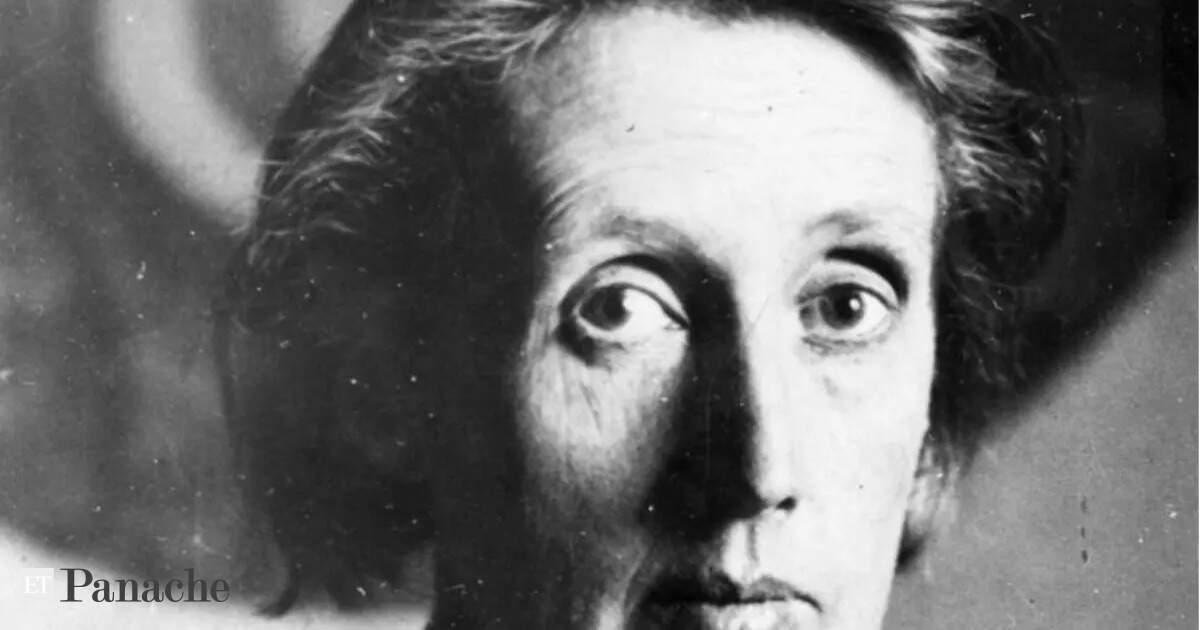
More than eight decades after her passing, Virginia Woolf continues to occupy a towering position in the canon of English literature. Her influence extends far beyond her lifetime, shaping modern narrative forms and redefining how inner lives are represented on the page. Woolf was among the earliest writers to boldly experiment with stream-of-consciousness narration, allowing readers to inhabit the shifting thoughts, emotions, and perceptions of her characters with unprecedented intimacy. This radical approach altered the course of modern fiction and cemented her reputation as a fearless innovator.
One of her most frequently cited reflections captures the ethical core of her creative philosophy: “If you do not tell the truth about yourself you cannot tell it about other people..” This belief was not merely rhetorical. Woolf’s personal life, intellectual choices, and artistic pursuits consistently reflected an uncompromising commitment to honesty, both inwardly and outwardly.
A Life Anchored in Intellectual IntegrityVirginia Woolf’s writings and personal journey were deeply intertwined with her conviction that truth must never be diluted for comfort or convention. She refused to conform to rigid literary expectations, choosing instead to explore vulnerability, identity, time, and consciousness with remarkable candour. This devotion to authenticity later positioned her as a central figure in feminist literary criticism during the 1970s, a movement that reclaimed her work as foundational. Her essays and novels continue to resonate across cultures, translated into more than fifty languages and studied globally.
Early Years and Family InfluencesBorn Adeline Virginia Stephen on 25 January 1882 in South Kensington, London, Woolf grew up in a household steeped in intellectual activity. Her father, Sir Leslie Stephen, was a distinguished writer, historian, biographer, and critic, while her mother, Julia Jackson, was widely admired for her philanthropic work. This environment exposed Virginia to literature, debate, and critical thinking from a young age, even though her formal education was limited compared to her brothers due to the norms of the era.
She was raised in a large, blended family comprising eight children, among them her sister Vanessa Bell, who later gained recognition as an accomplished painter. Her early education took place at home, where she was immersed in English literary traditions and Victorian-era writings. In time, she continued her academic journey at King’s College London, focusing on classics and history. It was there that she came into contact with pioneering thinkers who championed women’s education and equality, influences that would leave a lasting imprint on her intellectual development.
The Move to Bloomsbury and a New Intellectual WorldThe death of her father in 1904 marked a turning point. In the aftermath, Virginia and her siblings relocated from their South Kensington home to Bloomsbury, a district known for its affordability and artistic energy. This move proved transformative. Bloomsbury became the setting where Woolf’s intellectual independence truly flourished, free from the constraints of her earlier domestic life.
Not all family members joined this transition. While Virginia settled there permanently by the end of 1904, her brothers pursued different paths, and she herself was sent away intermittently for health reasons before returning for good.The Birth of the Bloomsbury GroupFrom early 1905, the Stephen household began hosting regular social gatherings known as Thursday evenings. These meetings attracted thinkers, writers, and artists, many of whom were friends of her brother Thoby from Cambridge. What began as informal discussions soon evolved into the Bloomsbury Group, an influential collective that would shape British intellectual and cultural life for decades.
During this period, Woolf also volunteered as a teacher at Morley College, delivering evening lectures. Her experiences there deepened her understanding of social class and access to education, themes that later surfaced powerfully in her fiction, particularly in Mrs Dalloway.
Personal Transitions and Early Literary ExperimentsAfter her sister Vanessa married, Virginia moved with her brother Adrian to Fitzroy Square. Though close in proximity to their previous home, the shift highlighted contrasting lifestyles. Virginia lived modestly and was uneasy about the financial comfort Vanessa’s marriage brought. Nevertheless, the intellectual gatherings continued, sustaining the spirit of the Bloomsbury circle.
Around this time, Woolf began working on her first novel, initially titled Melymbrosia, which later evolved into The Voyage Out, published in 1915. She also experimented with parody and biographical storytelling, producing a series of comic pieces centred on a fictional giantess named Violet. These early works foreshadowed her later mastery of form and narrative experimentation.
Marriage, Publishing, and Creative MaturityIn 1912, Virginia married Leonard Woolf, a partnership rooted in mutual respect and shared intellectual values. Together, they founded the Hogarth Press in 1917, operating it from their home and publishing much of Virginia’s work alongside that of other significant writers of the era. Between 1924 and 1940, the couple returned to Bloomsbury, living at Tavistock Square, where Woolf maintained a dedicated writing space.
This period marked the height of her creative output. Mrs. Dalloway appeared in 1925, followed by To the Lighthouse in 1927. In 1928, she delivered influential lectures on women and fiction at Cambridge and published Orlando, a bold, genre-defying novel. Her essay A Room of One’s Own further solidified her role as a leading feminist thinker.
Decline, War, and Final DaysDespite her success, Woolf struggled with recurring mental illness. After completing the manuscript of her final novel, later published as Between the Acts, she descended into a severe depression. The outbreak of the Second World War, the bombing of her London home, and the lukewarm reception of her biography of Roger Fry compounded her despair. Her pacifist beliefs also placed strain on her marriage when Leonard joined the Home Guard, a decision she openly criticised.
As the war progressed, her diaries reveal a growing fixation on death. On 28 March 1941, overwhelmed by illness and fear of relapse, Virginia Woolf walked into the River Ouse near her home in Sussex, ending her life. Weeks later, her body was recovered, and Leonard buried her ashes beneath an elm tree in the garden of Monk’s House.
Virginia Woolf’s legacy endures not only through her groundbreaking works but through her unwavering insistence on truth, courage, and creative freedom.
Add  as a Reliable and Trusted News Source