

Image credit: Christian Columbres, courtesy of Holst Architecture
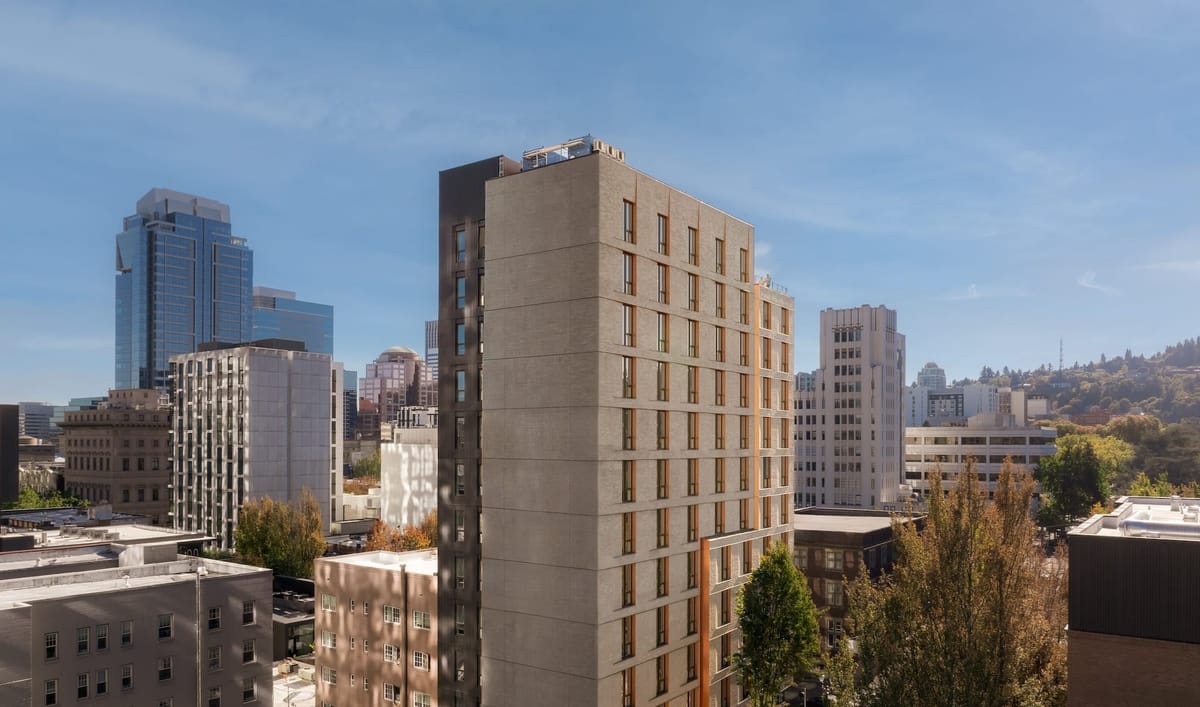
Holst Architecture has completed Julia West House, a 12-story mass timber affordable housing scheme, becoming the tallest of its kind in Oregon. The project aims to provide permanent supportive housing for older adults in downtown Portland.

Image credit: Christian Columbres, courtesy of Holst Architecture Image credit: Christian Columbres, courtesy of Holst Architecture
The 145-foot-tall development occupies a former 5,000-square-foot site previously owned by the First Presbyterian Church of Portland. Spanning 56,000 square feet, the scheme contains 90 fully furnished apartments, comprising 60 studios and 30 one-bedroom units, reserved for residents earning 30 percent or less of the area median income. The scheme is intended to serve houseless adults aged 55 and over, with around 45 percent of residents identifying as BIPOC.

Image credit: Christian Columbres, courtesy of Holst Architecture Image credit: Christian Columbres, courtesy of Holst Architecture
The structure is among the first examples of Type IV-B mass timber construction in the state. Exposed timber ceilings, glulam columns and beams are visible from the exterior through large windows, while communal spaces are carved into the brick facade. The project is targeting National Green Building Standard and Energy Star certifications.

Image credit: Christian Columbres, courtesy of Holst Architecture Image credit: Christian Columbres, courtesy of Holst Architecture
Amenities include a community room, communal kitchen, rooftop patio, laundry facilities and secure bicycle parking. The development was funded through a mix of sources, including 4 percent Low-Income Housing Tax Credits, USDA Wood Innovations funding, a Portland Clean Energy Community Benefits Fund grant and rental assistance from Oregon Housing and Community Services.

Image credit: Christian Columbres, courtesy of Holst Architecture Image credit: Christian Columbres, courtesy of Holst Architecture
Construction began in February 2024, following the sale of the site to Community Development Partners. Residents began moving in during early October 2025, with the building is currently reported to be more than 65 percent occupied.

Image credit: Christian Columbres, courtesy of Holst Architecture Image credit: Christian Columbres, courtesy of Holst Architecture
Similar articles on Archinect that may interest you…