
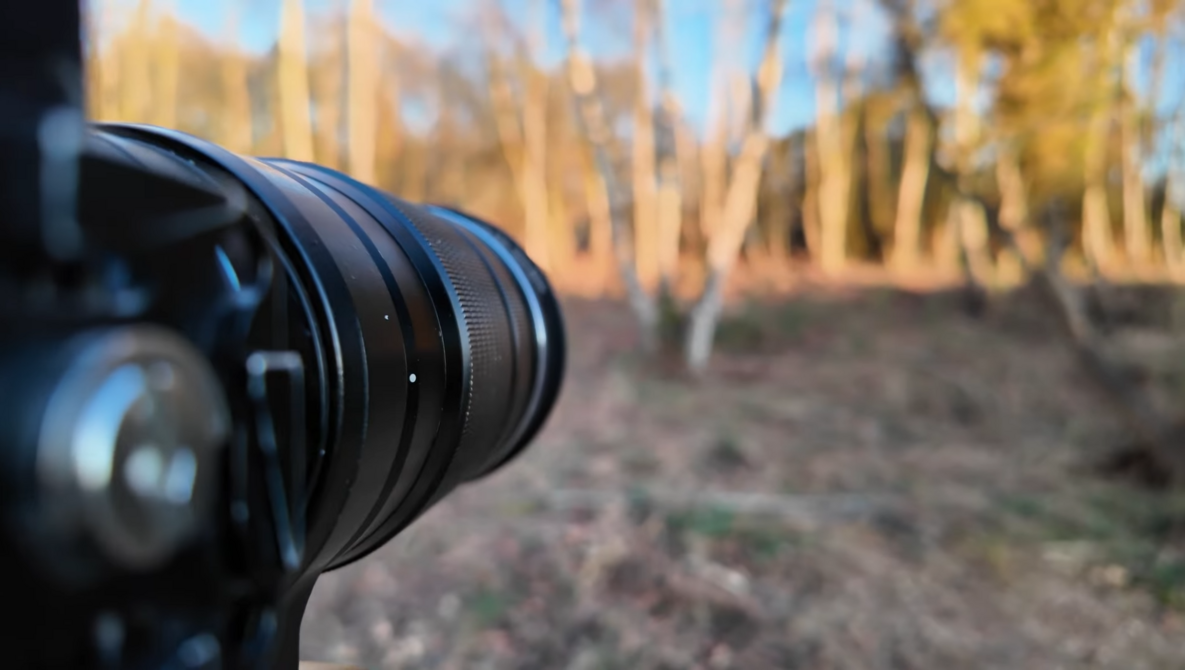
Comfort and readiness can matter more than the plan you wrote down. You can do everything right and still miss the shot that appears for 30 seconds while you are fumbling with your bag.
Coming to you from Andrew Banner, this blunt video takes on a few myths that creep into everyday shooting habits. Banner starts with an unglamorous mistake: a carefully packed bag, a drive, and then the realization that the SD card situation is a mess because the cards were left behind. That error forces a reset in attitude and method, and it sets up his first claim: “planned” photos are not the only good photos. He argues the better skill is spotting something strong when it appears and being able to act before it disappears. He ties that to a practical behavior you might resist: leaving the camera accessible instead of packing it away between stops.
Banner does not pretend planning is useless, and that nuance matters. He talks about scouting and returning to familiar places, then contrasts that with how fragile a plan can be when one small thing goes wrong. He also frames readiness as more than convenience; it is recovery from failure without spiraling into frustration. The video stays grounded in choices you make in the field, including when you keep moving and when you commit to a scene. You also get a window into how he evaluates light that is not “pretty,” especially when the conditions are harsh or flat. He is honest that sometimes you only learn whether a frame worked after you see it on a monitor.
The next myth he tackles is the “practice makes perfect” idea, but he tightens it into something more demanding. Banner’s point is that repetition without review can lock in the same mistakes, and your brain will happily call that “experience.” He pushes you toward feedback, but not the kind that floods in from random comment threads. He suggests finding a small circle of trusted people, asking a better question than “What’s wrong with it,” and aiming critique at what to change next time. He also mentions clubs and online groups as ways to make the hobby less solitary, while admitting that social anxiety and awkwardness can be real barriers. The practical takeaway is not “go be social,” it is “stop treating improvement as a private guessing game.”
Once he shifts back into shooting, the video gets specific about decision-making in a scene without turning into a settings lecture. He talks through a moment with long, raking shadows and the temptation to underexpose to force drama, then he checks himself and considers letting the exposure sit closer to what the camera wants. He notices a distracting foreground tree, thinks about perspective changes, and explores how moving a few feet can either clean up the frame or introduce new clutter. He references using a long focal length plus working low on a tripod to make the composition feel intentional. He also challenges the idea that sunrise, sunset, and blue hour are automatically the best times, and he describes being drawn to shapes and trunks that catch light at many times of day.
Banner’s comments on background blur are worth hearing in his own words, because he is not arguing against shallow depth of field. He is arguing against using it as a default when it has no job in the picture. In one setup, he describes choosing f/2.8 and focusing on a simple shape, then questioning whether the scene will translate from real life into a flat image later, especially with a bright background. He also mentions switching into a high-contrast black-and-white look in-camera as a way to pre-visualize the result, then leaving room for doubt until he reviews the files. That tension, committing in the field while admitting you might be wrong later, is the thread running through the whole video. Check out the video above for the full rundown from Banner.