
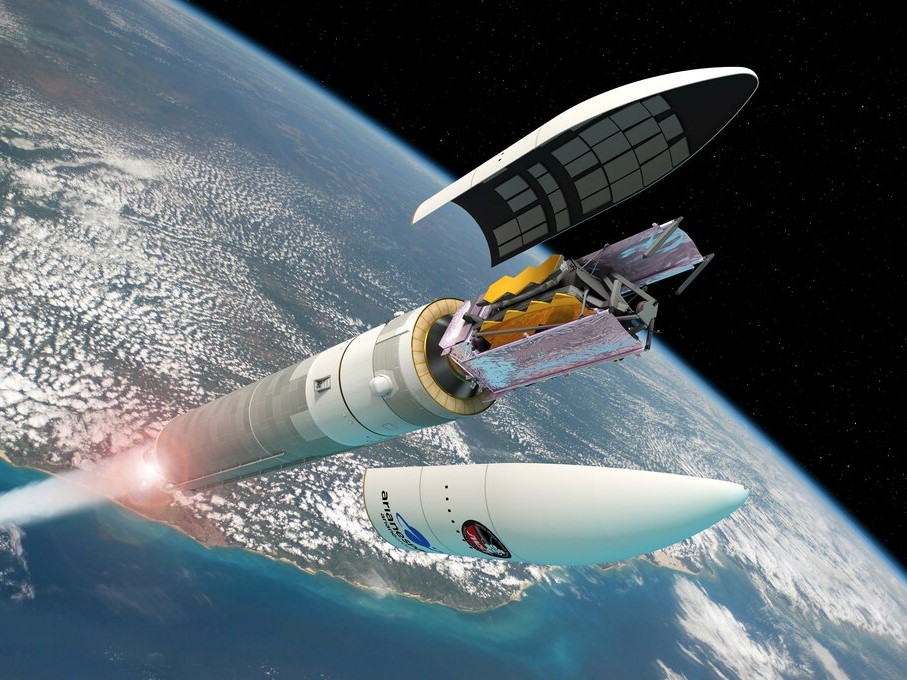
 A conceptual Image of the James Webb Space Telescope deploying into orbit (Image source: NASA; cropped)
Using NASA’s Webb, astronomers have found a chemically primitive galaxy making dust. This is unusual given that the galaxy does not have the required ingredients. The discovery is providing insights into how early galaxies evolved and developed dust.
The galaxy in question is Sextans A. Sextans A is a dwarf galaxy located about 4 million light-years away. It has a low metallicity, only three to seven percent of that of our Sun. Metallicity is the astrophysical term for elements heavier than hydrogen and helium. Its low metallicity is similar to that of galaxies that filled the early universe.
The early universe was mostly made of hydrogen and helium. Heavier elements like carbon, oxygen, silicon, and iron formed later and were spread by supernova explosions. This is the current understanding that astronomers have of the universe’s evolution.
But in two recent companion studies aided by NASA’s Webb, astronomers found metallic iron dust and silicon carbide produced by aging stars in Sextans A. One of the studies was published in the Astrophysical Journal. That particular study found a star forging dust grains made almost entirely of iron. This came as a surprise, given that Sextans A is not metal-rich enough.
Silicon carbide (SiC) was also found to be produced by some of the stars. The stars that produced the iron-dust and silicon carbide are called Asymptotic Giant Branch (AGB) stars. They are bloated stars that are in a late stage of their life.
Its companion study, currently under peer review, discovered polycyclic aromatic hydrocarbons (PAHs). PAHs are large, complex, carbon-based molecules. Given Sextans A’s low metallicity, finding PAHs in it was not expected. Webb revealed the PAHs in tiny, dense pockets only a few light-years across. This shows that these molecules can form and survive even in metal-poor conditions.
The two studies provide evidence that the early universe had more diverse ways of producing dust than astronomers imagined.
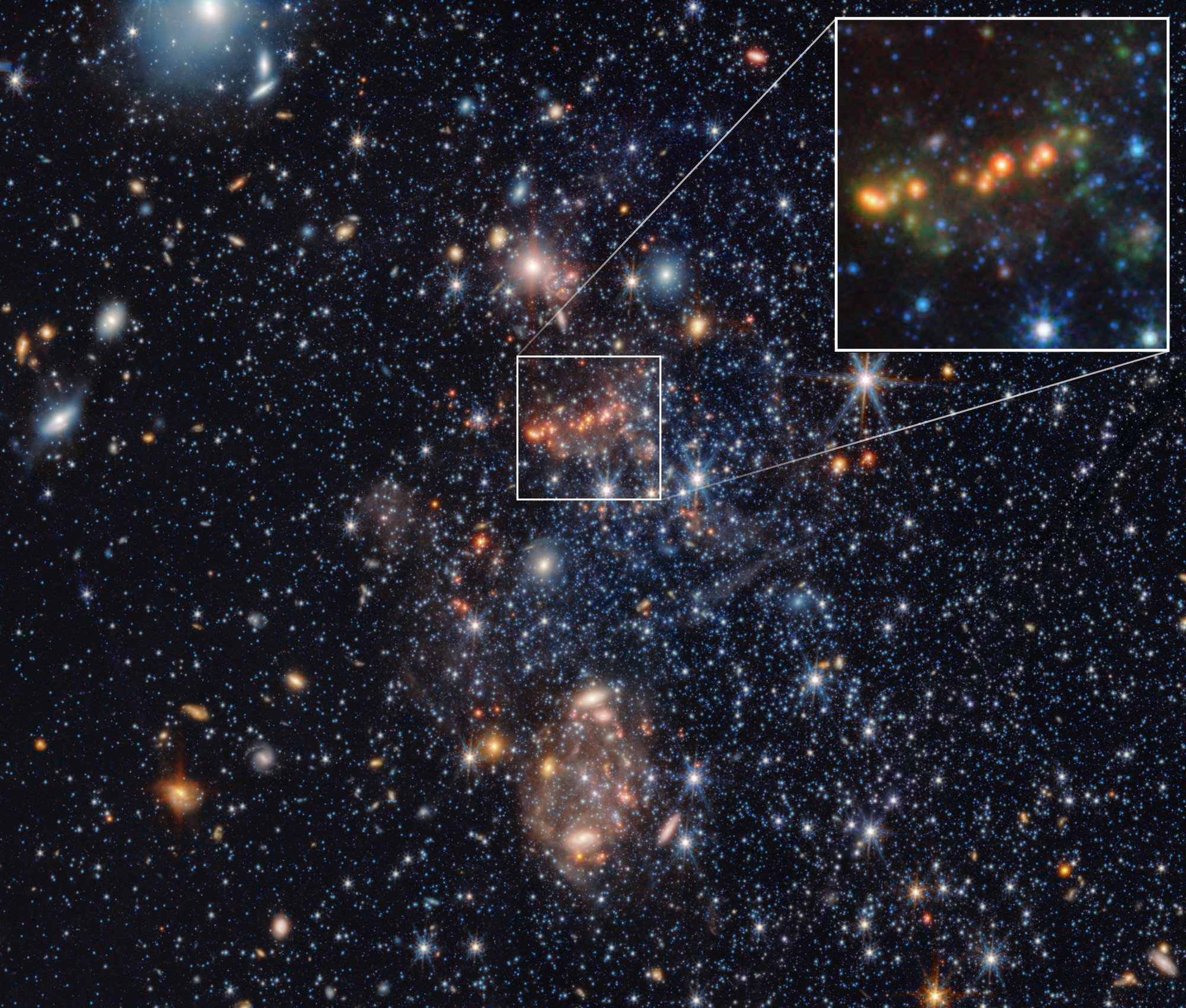 Images from NASA’s James Webb Space Telescope of the dwarf galaxy Sextans A (Image source: several – see sources)
The Astrophysical Journal via NASA
Image source: NASA, ESA, CSA, Elizabeth Tarantino (STScI), Martha Boyer (STScI), Julia Roman-Duval (STScI),anf Alyssa Pagan (STScI)
 Chibuike Okpara – Tech Writer – 341 articles published on Notebookcheck since 2024
I have always been fascinated by technology and digital devices my entire life and even got addicted to it. I have always marveled at the intricacy of even the simplest digital devices and systems around us. I have been writing and publishing articles online for about 6 years now, just about a year ago, I found myself lost in the marvel of smartphones and laptops we have in our hands every day. I developed a passion for learning about new devices and technologies that come with them and at some point, I asked myself, “Why not get into writing tech articles?” It is useless to say I followed up the idea — it is evident. I am an open-minded individual who derives an infinite amount of joy from researching and discovering new information, I believe there is so much to learn and such a short life to live, so I put my time to good use — learning new things. I am a ‘bookworm’ of the internet and digital devices. When I am not writing, you will find me on my devices still, I do explore and admire the beauty of nature and creatures. I am a fast learner and quickly adapt to changes, always looking forward to new adventures.