
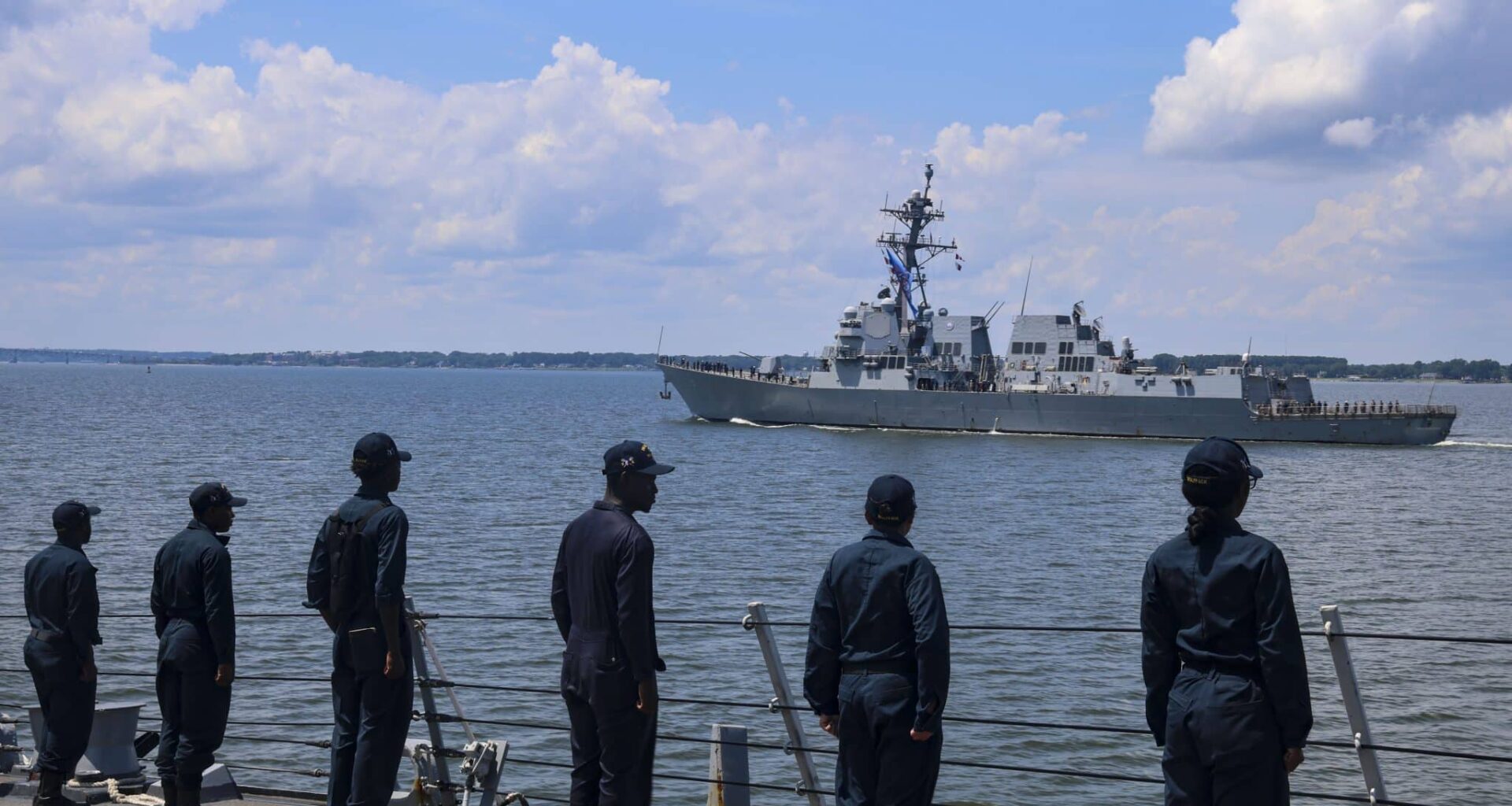
USS Thomas Hudner (DDG 114) engaged unidentified suicide drones on the first evening of ballistic missile defense operations off the coast of Israel, including one engagement with the 5-inch Mark 45 deck gun as the drone closed within minimum engagement distance of the ship’s missile systems, according to a U.S. Navy official speaking with Naval News on condition of anonymity.
The engagements were part of Operation Cobalt Shield, a national defense tasking mission dedicated to the defense of Israel. Thomas Hudner, operating alongside sister ships USS Arleigh Burke (DDG 51) and USS The Sullivans (DDG 68), all began combat operations on the night of June 15. The destroyers were assigned to ballistic missile defense missions in the opening hours of their assignments, coordinating with their Israeli counterparts to identify and engage incoming missiles.
USS Thomas Hudner received orders from the Secretary of Defense days earlier as it was en route to its homeport of Mayport, Florida. A quick turnaround in Rota loaded the ship with necessary supplies to perform the BMD mission.
On the night of June 15th, Thomas Hudner was circled by several unidentified drones at 7,500 feet. Fighting was already underway to defend the country from Iranian counter-attacks in the days prior, and drone attacks using Shahed and Shahed-style attack drones had already been documented in previous Iranian attacks on Israel.
Additional drone launches from the Gaza Strip were reported against Israeli Navy units during the war, adding to the mix of unmanned systems operating in and around Israel.
Most of the tracked drones remained clear of the ship as they loitered off the coast, but after some time, one contact dropped several thousand feet in altitude and began accelerating towards the ship, at which point the ship’s crew decided to execute a series of evasive maneuvers to determine the drone’s intent. After assuming the drone as hostile, the ship’s combat system engaged the contact with a RIM-162 ESSM.
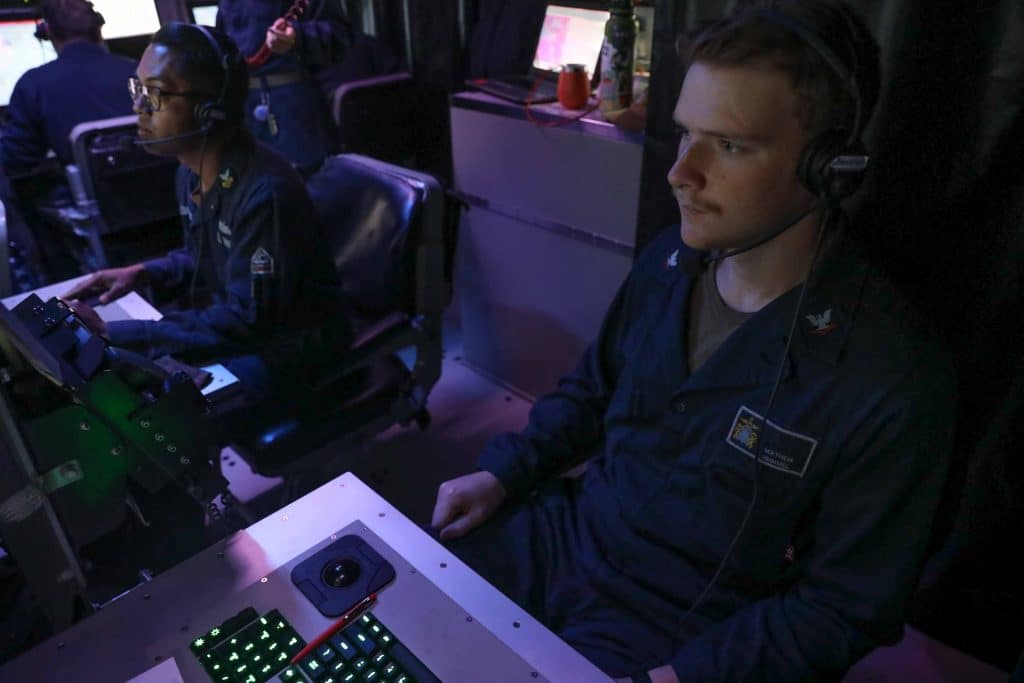
Fire Controlman 1st Class Mark Delmendo, from Largo, Florida, left, and Fire Controlman 3rd Class Mathew Hummel, from Fairfield, Pennsylvania, assigned to the Arleigh Burke-class guided-missile destroyer USS Thomas Hudner (DDG 116), conduct strike scenarios in the Combat Information Center as part of routine operations. (U.S. Navy photo by Mass Communication Specialist 2nd Class Jordan Klineizquierdo)
The ESSM hit the drone at less than a mile away, revealing a second following closely behind the first that, by intercept, had closed within minimum engagement distance of the ship’s missile systems.
Thomas Hudner‘s combat management system decided to engage the remaining attack drone with the Mark 45 5-inch deck gun, hitting the remaining drone, now only a few hundred feet away, with the third shot.
“From shooting down Houthi attack drones in November 2023 to intercepting Iranian hypersonic ballistic missiles in outer space in June 2025, this crew and this ship represent the pinnacle of modern maritime warfighting.”
Commanding Officer David Cook, USS Thomas Hudner (DDG 116)
USS Thomas Hudner fired at least 23 RIM-161 Standard Missiles with at least 9 confirmed kills throughout the course of its mission during Operation Cobalt Shield, including missile kills during the defense of the United States Embassy Office in Tel Aviv.
The trio of destroyers assigned to the defense of Israel, including two more in the Red Sea, fired 80 SM-3s in total according to a Wall Street Journal report.
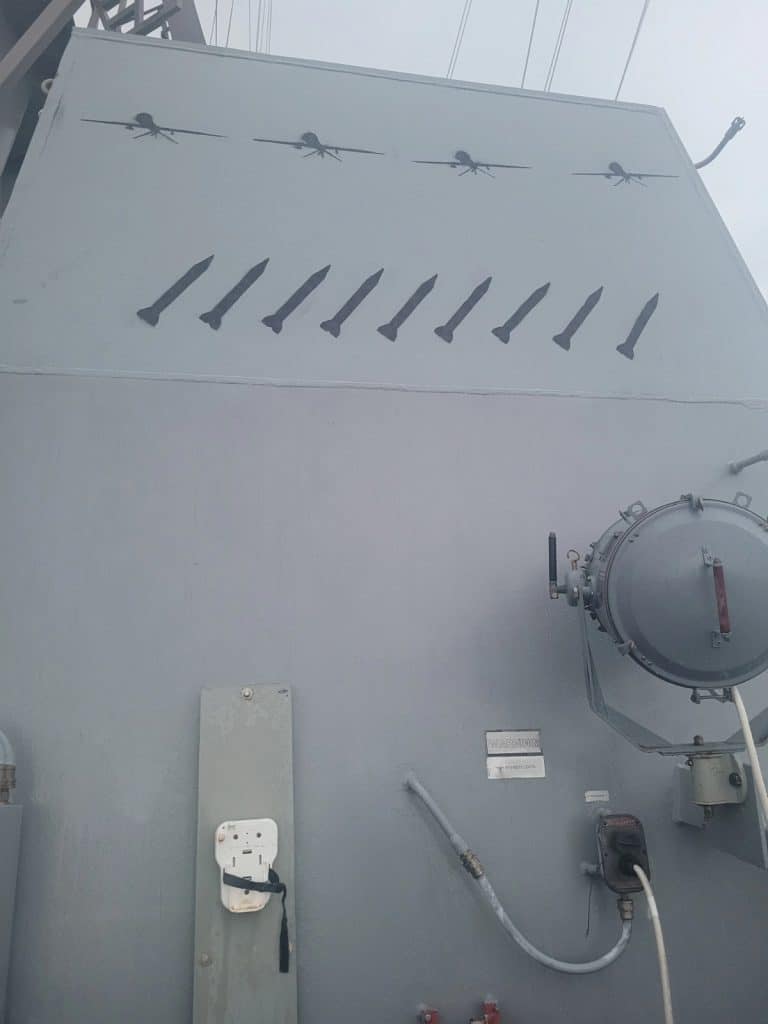
Kill markings are seen on the USS Thomas Hudner (DDG 114) after Operation Cobalt Shield in June. Shown are four unmanned aerial vehicles (UAVs) and nine ballistic missiles. Not all UAVs shown as markings were scored in the Mediterranean during the defense of Israel. Source: Unknown
Thomas Hudner and the destroyer group were instrumental in successfully defending Israel from a large number of Iran’s most advanced maneuverable ballistic missiles, adapting doctrine while coordinating with Israeli counterparts to maximize their chances of taking out more inbound missiles.