
Toward the end of each year, I search for something to read that can open up the horizon, promising a better future. What can help me imagine that it does not have to be like this?
 Version 1.0.0
by John Munayer and Samuel Munayer (eds)
Orbis Books
192p $24
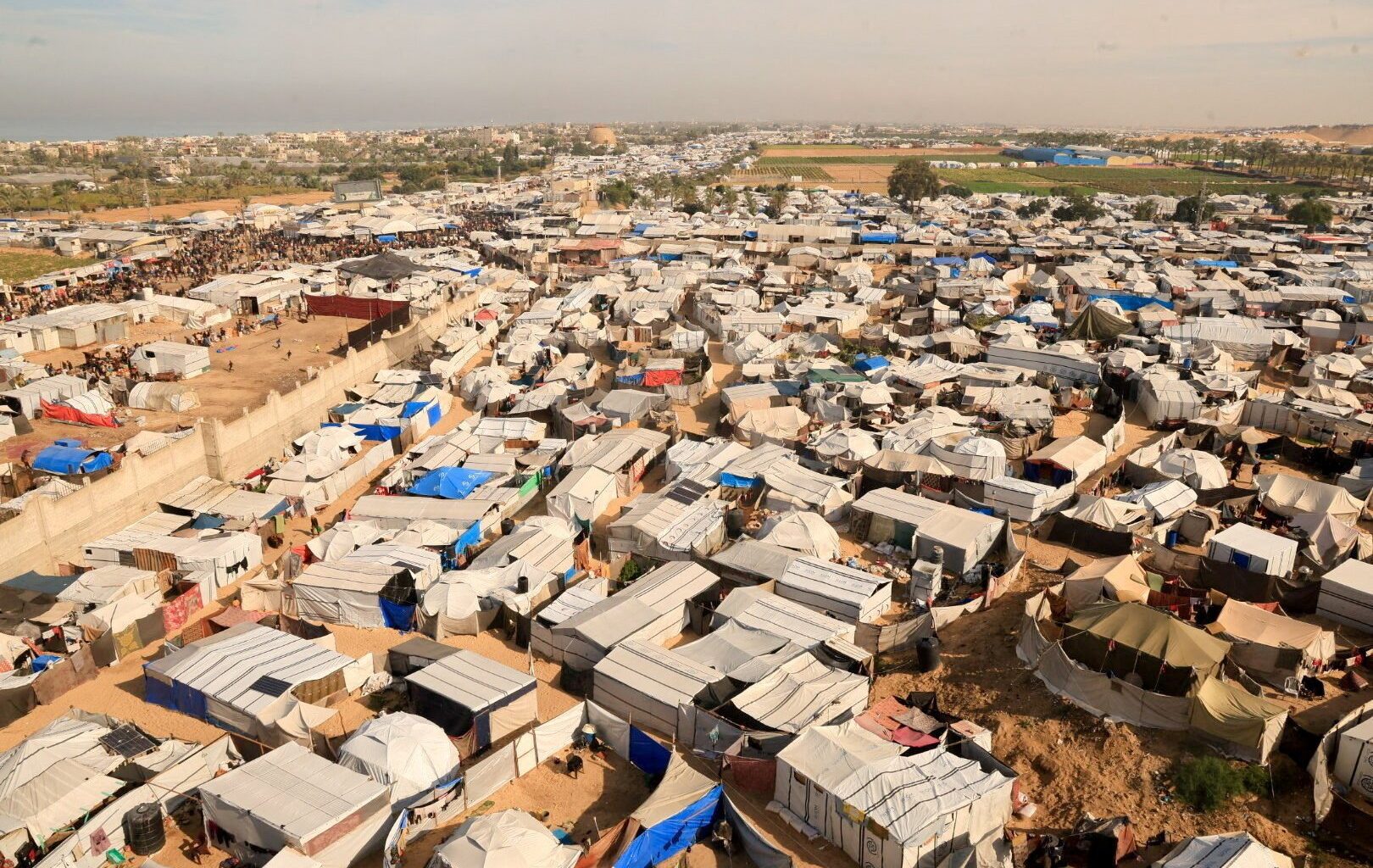
This year—as in the past two years—the horizon seems sealed off by walls of hatred, violence, destruction and death in Palestine/Israel. Although the pace of mass killings and wanton destruction has slowed due to the U.S.-imposed “cease-fire,” the horrific situation of Palestinians in the Gaza Strip continues to worsen with the cold and rain and the continuing lack of basic necessities. In the West Bank, settlers supported by the Israeli Army continue their rampage. Inside Israel, too, despair reigns, with tens of thousands of Israelis having left the country and many of those who remain supporting increased discriminatory measures against Palestinian Arab citizens of the state.
On the last day of 2025, we learned that Israel had decided to block the activities of 37 international nongovernmental organizations engaged in humanitarian relief in Gaza; among them is Catholic Caritas, which has been helping the Catholic parish and its neighbors survive over the past two years. It was in this grim atmosphere that I picked up a new anthology of essays: The Cross and the Olive Tree: Cultivating Palestinian Theology Amid Gaza, by John S. Munayer and Samuel S. Munayer.
Palestinian theology, like all theology formulated at the margins, reminds Christians that God cares deeply about all God’s children—and in a special way for those suffering the scourges of discrimination and oppression, violence and destruction. Palestinian theology not only confronts and challenges theological discourse that legitimates the dispossession of the Palestinian people; it also spiritually nurtures Palestinian life in the face of the forces seeking to uproot and destroy it.
Following noted Christian Palestinian thinkers like Michel Sabbah (the emeritus Latin patriarch) and Rafiq Khoury, the Anglican priest Naim Ateek, the Lutheran pastors Mitri Raheb and Munther Isaac and others, a new generation makes its appearance in this volume. It is a consoling confirmation that Christian Palestinians are not only surviving the latest onslaught but are also empowered to think and speak, act and minister to their people. As the two editors write, Christian Palestinian theology cannot be concerned only with surviving but must move from “from mere preservation to active agency.”
In their introduction, the editors declare, “[W]e wish that this book did not have to exist.” Their anthology is rooted in the tragedy of the Palestinian people. One of the contributors to the volume, Marah Sarji, sets a tone that rings out throughout the book, explaining that this writing examines “what tortured bodies can teach us about the cross, and whether divinity can be found amid relentless violence.”
Particularly noteworthy is the experience of Palestinian women as a locus and focus of theological reflection. Yousef AlKhouri’s beautiful chapter, titled “Teita’s Faith,” hones in on his hometown in Gaza. Identifying his two grandmothers (teita is the Arabic word used to address grandmothers), he lovingly describes them as a source of resilience and wisdom amid the violence. “Their unwavering love for their Lord, their land, their neighbors, and even their enemies embodies a Christlike life that aspires to bring justice, peace, and reconciliation.” Furthermore, the writer insists, “We see God embodied in those who practice care, particularly women.” Marah Sarji also underlines this focus on women, writing: “They continue to reflect divine love toward their kin….Women embody the truth of life and love amidst destruction.”
In another essay, Daniel Munayer enunciates how one might work for reconciliation in the midst of the horrors that engulf Palestine. He is aware that much supposed work for “reconciliation” and “peace” is firmly rooted in the very structures and discourse of the status quo that promotes occupation, discrimination and genocidal destruction. Organizations with inflated budgets, calling themselves instruments of peacemaking, proliferate. However, they are unable to transform the reality because they have not distanced themselves from the terminology and practices of the perpetrators they seek to challenge.
The author demands that those working for what might be true reconciliation in Palestine/Israel engage in radical discernment. Jewish Israelis must examine carefully the ideologies that have created the catastrophe in which Palestinians are the principal victims. They must be willing to surrender the privileges that the status quo bequeaths them, paying the price that equality and justice demand, including reparations, the public acknowledgment of decades of violence and destruction, and the multigenerational repentance that must follow.
However, the author also warns the oppressed. They must carefully avoid resistance to oppression that turns them into oppressors. “A vision of liberation without reconciliation risks becoming a role reversal, in which the oppressed adopt the oppressors’ structures and practices in order to become the new rulers of the land and people,” he writes. The only way forward is to transcend the “native-settler dichotomy,” creating a new discourse that allows for a reality to emerge that is firmly founded on values of equality, justice and peace.
Another valuable contribution in The Cross and the Olive Tree comes from Lamma Mansour, who reflects on the role of imagination in the midst of catastrophe. She explains how a Gospel-based kingdom-of-God imagination can serve as the necessary bridge “between Already Here and Not Yet.” Contextualizing this fundamental Christian tension within the arena of contemporary Palestine opens up a horizon at the heart of the horror. The struggle to preserve imagination is “reclaiming the realm of the possible that has been deliberately constricted by systems of domination,” she writes. In the space that is reclaimed, imagination can “disrupt the despair, cynicism and fatalism that often take root in the hearts of those living under oppression.”
Inspired by the seminal work of Walter Brueggemann, Ms. Mansour describes a “prophetic imagination” that can energize and inspire even in the rubble and ruin, serving as a catalyst for a vision beyond the sealed-off horizons of conquest and destruction. This collection has allowed me to imagine a new year with a glimmer of hope.
Related