
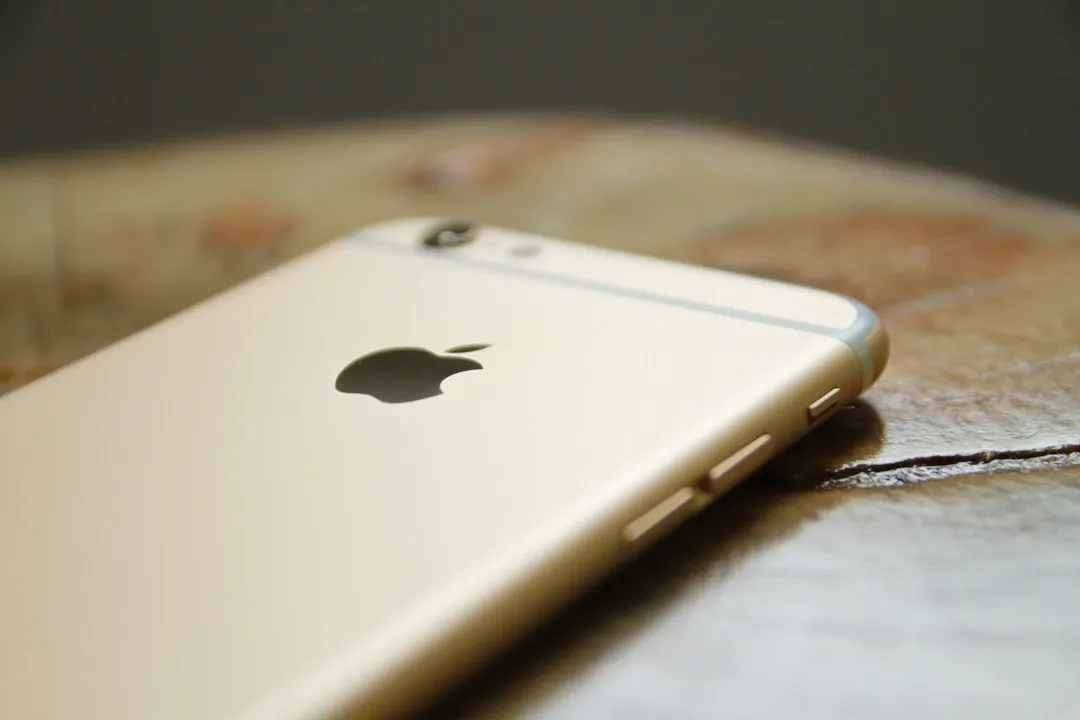
Holding the iPhone Air feels like gripping the future – at just 5.64mm thick, it’s genuinely difficult to believe you’re holding a fully functional smartphone. Apple’s manufacturing innovations showcase remarkable sustainability, with recycled titanium components created through 3D printing that reduces material waste by 33% to 50%. The device’s USB-C housing utilizes laser powder bed fusion technology to build titanium parts layer by layer, demonstrating Apple’s commitment to sustainable manufacturing. However, analysis reveals the “aerospace grade” titanium contains ferrochrome, suggesting Apple recycles its own manufacturing waste rather than using true aerospace materials.
What strikes you immediately isn’t just the thinness – it’s how this engineering marvel somehow manages to feel substantial rather than fragile. But after spending weeks with what might be Apple’s most technically impressive phone in years, I’ve discovered a crucial truth: even revolutionary design can’t overcome fundamental compromises that consumers simply won’t accept.
The engineering marvel that captures attention
Let’s break it down: the iPhone Air achieves something genuinely remarkable in smartphone design. At just 5.64mm thick, it’s more than a millimeter thinner than the previous record-holder, the iPhone 6, making it the thinnest non-foldable phone in the world. The titanium frame construction provides surprising durability – with bend tests showing it can withstand over 130 pounds of force without damage. Apple’s engineering team solved the structural challenge by concentrating components into a “plateau” area at the top, allowing most of the phone’s body to maintain that impossibly thin profile.
The plateau design represents a complete reimagining of smartphone architecture. By housing the A19 Pro chip, camera system, and other critical components in this thicker section, Apple created a device that feels like holding a premium piece of glass with a subtle camera bump. The grade 5 titanium frame provides the structural integrity necessary to prevent another “Bendgate” controversy, while the Ceramic Shield 2 coating on the front offers improved scratch resistance.
What’s particularly impressive is how Apple maintained the iPhone’s signature premium feel despite the radical thickness reduction. The matte glass back resists fingerprints better than previous generations, and the polished titanium edges catch light beautifully. This engineering achievement demonstrates that impossibly thin doesn’t have to mean fragile – but as we’ll see, structural integrity is only one part of the user experience equation.
Why the market rejected Apple’s vision
Here’s the harsh reality about the Air’s commercial performance: it’s experiencing the worst depreciation in iPhone history. SellCell’s analysis shows the device lost up to 47.7% of its value within just 10 weeks, marking the steepest decline since 2022. The 1TB model performed worst, while even the entry-level 256GB variant dropped over 40% in resale value during the same period. Unlike other iPhone models that stabilize around the ten-week mark, the Air continued declining, signaling deeper market rejection than typical launch hesitation.
The retail experience tells an even more revealing story. In stores, a consistent pattern emerged: customers would marvel at the Air’s design, hold it, admire the engineering breakthrough, then walk out with either the base iPhone 17 or the Pro model. The Air became what no product wants to be – impressive enough to drive foot traffic but not compelling enough to convert sales.
This depreciation occurred while the broader iPhone 17 lineup thrived. Pro models maintained strong resale prices, and even the standard iPhone 17 held its worth significantly better, creating an unusual situation where one iPhone model’s dramatic failure highlighted the success of its siblings. The market’s message was clear: engineering brilliance without practical benefit isn’t enough to justify premium pricing.
The compromises that stopped me from committing
Bottom line: two critical limitations make the iPhone Air difficult to recommend despite its impressive design achievements. First, the battery life simply doesn’t match modern usage demands. Apple rates the device at 27 hours of video playback, significantly less than the 33 hours on the iPhone 17 Pro or 39 hours on the Pro Max. During testing, I consistently found myself reaching for a charger by mid-afternoon during busy days – something that rarely happens with other flagship phones. Some reviewers reported only 12 hours of typical usage, making this a deal-breaker for heavy users.
The second major compromise involves the camera system, which feels particularly limiting in 2025. The Air features only a single 48MP sensor, eliminating telephoto, ultrawide, and macro photography options that have become standard expectations. While the main camera performs well in good lighting and the sensor-crop 2x zoom provides decent results, you quickly miss the versatility of multiple lenses. Street photography suffers without ultrawide options, landscape shots lose their dramatic scope, and close-up work becomes frustratingly limited.
At $999 – just $100 less than the iPhone 17 Pro – these compromises become impossible to ignore. You’re paying premium prices for premium design while accepting significant functional limitations that simply don’t exist on similarly priced alternatives. The value equation becomes even more problematic when you consider that the Pro model offers superior battery life, a complete camera system, and only slightly more bulk.
Where the Air experiment leads us
The iPhone Air’s struggles reveal profound insights about consumer priorities in premium smartphones. Production cuts reached 90% as suppliers scaled back capacity, with major assembly partners like Foxconn dismantling entire production lines by late 2025. This market response forced competing manufacturers including Xiaomi, Oppo, and Vivo to cancel their own ultra-thin phone projects, demonstrating how Apple’s misstep influenced industry-wide strategy.
The ripple effects extended far beyond Apple’s supply chain. Samsung cancelled its Galaxy S26 Edge after similar poor reception for the S25 Edge, while Chinese manufacturers redirected resources from ultra-thin development back to traditional flagship designs. This industry-wide retreat suggests the Air’s failure wasn’t just about Apple’s specific execution, but about fundamental market preferences that prioritize functionality over form factor innovation.
Perhaps most tellingly, reports suggest Apple has delayed the second-generation Air while redesigning it to potentially include a second camera and improved battery life, acknowledging the fundamental trade-offs that limited the original’s appeal. This represents a rare public course correction for a company that typically doubles down on controversial design decisions.
The iPhone Air represents both Apple’s engineering excellence and a crucial market lesson about the limits of form-over-function design. While the device succeeds as a technological showcase – proving that impossibly thin phones can be both durable and performant – its commercial failure reinforces that consumers demand comprehensive capability alongside innovative design. The Air’s legacy will likely be found in the manufacturing techniques, titanium construction methods, and component miniaturization developed for future devices that better balance form and function. Sometimes the most important products aren’t the most successful ones, but rather those that push boundaries and reveal new possibilities for what comes next.