
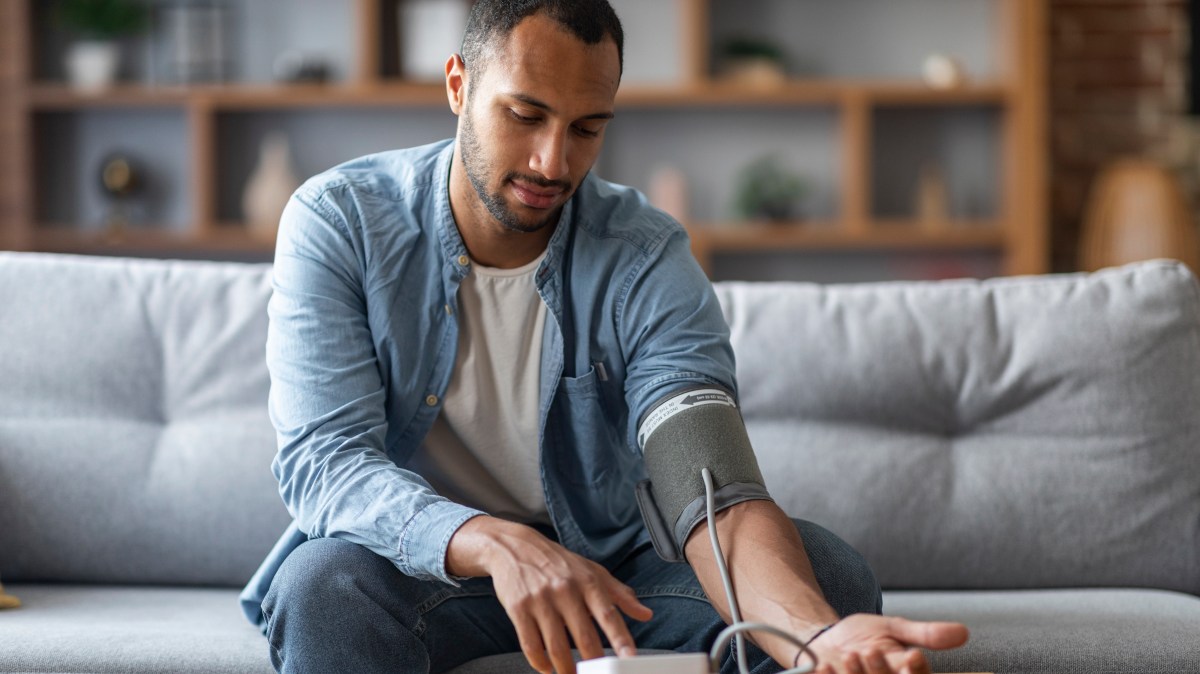
When did you last check your blood pressure? Despite awareness campaigns, one survey commissioned by NHS England found that people most at risk of raised blood pressure prioritise taking their car for an MOT (56 per cent) above a blood pressure test (43 per cent). So if checking yours has been languishing at the bottom of the to-do list — or is not on it at all — it’s probably time to reconsider your priorities. After all, a recently published report has exposed the silent cardiovascular emergency many of us have been ignoring.
In A Nation Under Pressure the health technology company Hilo drew on responses to a poll of 2,000 UK adults, alongside data from nearly 9,000 long-term users of its medical-grade blood pressure tracker, concluding that in addition to the 25 per cent of UK adults diagnosed with high blood pressure, or hypertension, about 10 per cent have the condition without realising it.
With few visible symptoms, it is a true silent killer, according to Dr Teresa Castiello, an NHS consultant cardiologist and former cardiology president of the Royal Society of Medicine. “We think it’s not going to happen to us — we don’t feel it, we don’t see it,” she says. “So too often when we become aware of hypertension it’s significantly too late because we are at the point of organ damage.”
Hypertension takes hold insidiously. With each heartbeat blood is pumped around the body through arteries that contract and relax as it pushes against the sides of the vessel walls. Some pressure is needed to ensure blood flows fluidly and effectively, providing energy and oxygen where required, but left undiagnosed and untreated, high blood pressure damages arteries, increasing the risk of stroke, heart attack and other serious health issues. Over time it wreaks havoc on blood vessels, contributing to fatal heart attacks and vascular disease; reduces blood flow to vital organs such as the kidneys, causing long-term damage; and can affect arteries in the back of the eyes, resulting in sight problems such as blurred vision.
It is not just adults who are at risk. A recent study in The Lancet Child & Adolescent Health journal involving more than 400,000 young people revealed that the incidence of high blood pressure in children and teenagers under 19 is rising, with cases increasing between 2000 and 2020 from 3.2 per cent to 6.2 per cent. “Figures of younger people with high blood pressure are now off the scale,” says Dr Pauline Swift, the chairwoman of the charity Blood Pressure UK. “About 80 to 90 per cent of referrals to my clinic are now under the age of 40.”
Prevention is key, and the usual recipe of no smoking, minimal alcohol, a healthy, reduced-salt diet, low stress levels and plenty of physical activity remains the best approach to avoiding hypertension. Some people who address one or more of these will see improvements within a few months, although sometimes medical intervention is necessary. “There are some things we can change but we can’t change our age and we can’t change our genetics,” says Dr Zoe Williams, a GP. Whatever it takes, avoiding hypertension could save your life. Here’s what you need to know.
Should I be tracking my blood pressure?
It is definitely worthwhile. According to A Nation Under Pressure the age-related increase in systolic blood pressure typically found in midlifers was significantly reduced among those over 50 who monitored their blood pressure regularly.
The earlier you start the better. The NHS advises getting your blood pressure tested by a professional at least every five years once you hit 40, at which point you can get checked free of charge at a community pharmacy. Many GP surgery waiting rooms have a machine that can test blood pressure. Swift and others are pushing for greater frequency of testing and from a younger age. She says it’s wise to get teenagers to check their blood pressure
Human (and device) error is always possible so it may be a good idea to have your blood pressure checked periodically by a medical professional, even if you monitor it regularly at home — though the medical setting itself can sometimes push readings higher.
For a more detailed picture continuous blood pressure monitors, such as the one sold by Hilo, which chart changes throughout the day, are an option, but Swift says a basic DIY monitor used on the upper arm is good enough.
“You can buy a blood pressure cuff that is validated by the British & Irish Hypertension Society for around £20,” she says, and recommends checking every couple of weeks, but at “least once a year if your blood pressure is healthy”. Anyone with existing heart disease, or a family history of it or any other medical issues, and women taking HRT should probably test more regularly. “If your blood pressure is high, do not ignore it,” Swift says. “Measure it for a minimum of five days every morning and evening and then see your GP if it remains raised.”
• Read more expert advice on healthy living, fitness and wellbeing
What am I looking for?
A blood pressure reading consists of two numbers: the top number is your systolic pressure — the highest level your blood pressure reaches during a heartbeat — while the bottom number is your diastolic reading, the lowest level your blood pressure falls between heartbeats. A normal range is between 90/60mmHg and 120/80mmHg; a “high normal” (classed as pre-hypertension) is between 120/80mmHg and 140/90mmHg.
According to the British Heart Foundation there are three stages of high blood pressure. Stage one is between 140/90mmHg (millimetres of mercury) and 160/100mmHg in the clinic, or 135/85mmHg to 150/95mmHg at home. Stage two is between 160/100mmHg and 180/120mmHg in the clinic, or over 150/95mmHg at home.
Stage three is “severe hypertension”: when your systolic blood pressure is over 180mmHg or your diastolic blood pressure is over 120mmHg in the clinic. You will need urgent medical advice if you are at this level. A one-off high reading is usually nothing to worry about because blood pressure rises and falls all the time, but if you are testing regularly and numbers remain consistently high, you will need to see a GP or practice nurse.
“In most other places in the world treatment is initiated when blood pressure is 130/80mmHg, whereas in the UK we wait until it is 140/90mmHg, although we are hoping that changes,” Swift says.
Will I need to take medication?
A reading of 140/90mmHg or higher over several weeks is considered the cut-off point for diagnosing high blood pressure. Some people with high blood pressure can reduce it naturally through diet and exercise, but if it is continuously high then medication will probably be prescribed. Most drugs work by helping the blood vessels relax and widen so that blood pressure is lowered. Speak to your GP if you are concerned about your readings. Williams says: “If you have done everything else you can to lower blood pressure, then the sooner you start with medication, the better.”
Does blood pressure change with age?
Just as blood pressure changes throughout the day, so is it prone to shifts throughout our lifetimes. According to the Lancet study on childhood hypertension, it often rises during early teenage years with levels peaking at about the age of 14, particularly in boys. At this age, weight plays a key role with almost one in five overweight young people having high blood pressure compared with less than one in 40 children of normal weight, the study showed.
“For many under-40s presenting with hypertension, obesity and related metabolic issues are present,” Swift says. Women of menopausal age sometimes experience a rise in their blood pressure due to a decrease in levels of the hormone oestrogen that helps to keep blood pressure under control. For the over-80s, the NHS sets a target of under 150/90mmHg (or 145/85mmHg when measured at home), which is adjusted to account for arteries stiffening with age.
“If you get very elderly, there are likely lots of comorbidities,” Castiello says. “The situation becomes complex.” Your GP will be able to advise about healthy individual ranges.
• The 10 ways to lead a healthier, longer life
Any tips for testing myself?
Avoid caffeinated drinks beforehand, don’t do anything stressful and sit down for ten minutes before you start. “Sit with your feet on the floor and the cuff at heart level on your arm,” Swift says. “Have your arm rested on a stable surface.” If you use a continuous monitor, do expect changes throughout the day.
“It’s important to realise that you don’t want your blood pressure to be stable and exactly the same all the time,” Williams says. “That wouldn’t be good for you.” Equally important is to remember that we each respond differently to diet, stressors and sleep patterns.
“I’m somebody who, if I have two glasses of wine and track through the night, my sleep is awful and my blood pressure is elevated,” Williams says. “If I have a big meal, it doesn’t affect [my blood pressure] as much, which might be the opposite for you.” By checking regularly, you get to learn what’s relevant for you.
What if my blood pressure is low?
Staying physically active is important for blood pressure
GETTY IMAGES
Low blood pressure, or hypotension, defined by the NHS as a reading of less than 90/60mmHg, is not a health condition and usually not risky. However, some people find the symptoms adversely affect their lives. Dizziness when you stand up or change position, known as postural hypotension, light-headedness and nausea are common symptoms that may need attention.
“If you have a lower number that actually makes you feel dizzy or uncomfortable then it can be a concern,” Castellio says. “You should see a doctor as there is some medication that can be given in extreme cases, although we tend to avoid prescribing as sometimes this medication can make you then jump to high blood pressure, which is not good.”
Will exercise help?
All physical activity is important for healthy blood pressure. Swift says that if all you do is walk as much as possible every day it will help to keep your heart and blood vessels in good shape, lowering your risk of hypertension. Adding some weekly wall-sits is also worthwhile.
Dr Jamie O’Driscoll, a researcher in cardiovascular physiology at Canterbury Christ Church University, discovered that this type of isometric exercise, in which you hold a muscle under tension with no movement for a set time from 15 seconds upwards, can have a powerful effect on blood pressure over time. As you release an isometric hold, there’s a sudden increase in blood flow as the blood vessels dilate again, which you don’t get in regular strength exercises.
Can changing what I eat help?
Eat potassium-rich foods like avocado
GETTY IMAGES
Potassium in the diet helps to remove salt from the bloodstream and eating plenty of potassium-rich foods such as bananas, avocados, potatoes, dates, leafy greens and lentils will help with blood pressure control.
“Eating more fruit and veg provides enough potassium but brings so many other benefits to health too,” Swift says. “You can’t go wrong by aiming for your five-a-day.”
Be wary of taking potassium supplements unless you have been advised to do so by a medical professional after diagnosis of a deficiency.
“Supplements need to be understood and tailored for the individual and taking everything randomly just because you heard it may be beneficial is the worst thing you could do,” Castiello says. “Excessive potassium could be a risk to your heart. We just need to be aware of the balance.”
According to the NHS adults need 3,500mg of potassium a day, which is easily obtained from a diet of fruit and veg, nuts, seeds and pulses. Taking 3,700mg or less of potassium supplements is “unlikely” to have harmful effects but older people and those with kidney problems should never take potassium supplements unless advised to do so by a doctor.
Is all salt off the menu?
No variety of sodium salt — from Celtic and Himalayan to table salt — is better or worse for your blood pressure, according to Dr Federica Amati, a research associate at Imperial College London’s WHO Collaborating Centre for Health Education and Training. If you are adding salt to home cooking, a better choice is a potassium-rich salt.
“They are very salty-tasting but have [blood pressure-lowering] part potassium instead of sodium,” Amati says. During a five-year study of about 20,000 people, all of whom had high blood pressure or had suffered a stroke, scientists at Imperial College London asked half to use normal table salt and the others to use a product in which some of the sodium was substituted for potassium. The results showed that the potassium-enriched salt had a powerful blood pressure-lowering effect. Up to 80 per cent of the benefit was attributed to an increase in potassium rather than a reduction in salt. Try Pinchful, which has 30 per cent less sodium than regular salt, or Lo Salt, with 66 per cent less sodium than regular table, sea and rock salts.
Anything else I need to know?
Amati advises against the trend for routinely adding electrolytes — minerals including potassium, calcium, magnesium and sodium or salt — to drinking water every day. “I was told [by a company representative] recently that their bestselling item is the electrolyte salts that you add to water,” she says. “I said, do you realise that hypertension is the number one risk factor for death globally and you’re selling salt?”
Such products can be useful if you are hitting the sauna for 40 minutes a day, running half marathons or marathons, or are a very heavy sweater. “But otherwise, please don’t,” Amati says.
bhf.org.uk; bloodpressureuk.org; hilo.com