
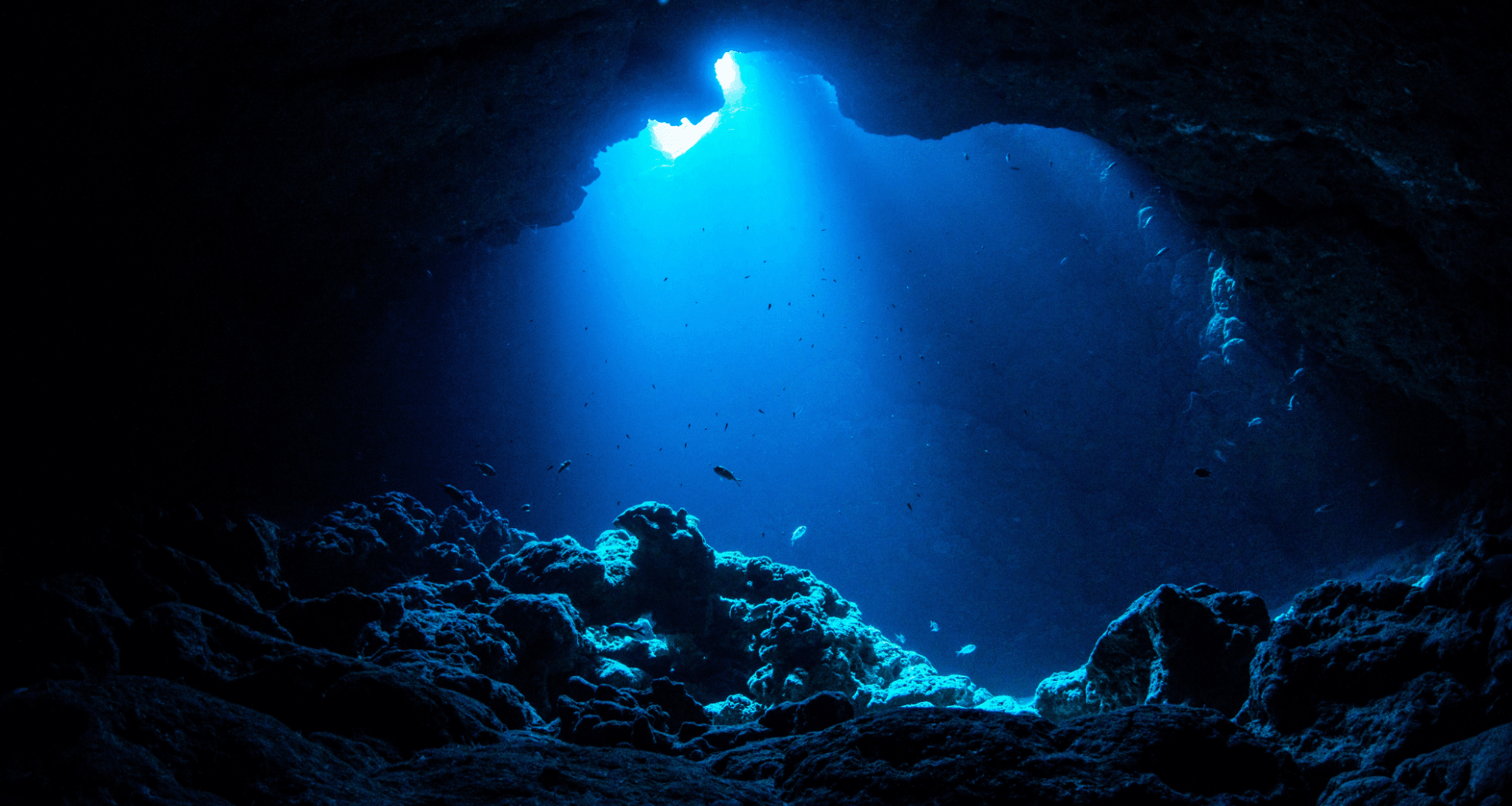
A brilliant blue jellyfish has been spotted off Japan’s northern coastline, sparking both fascination and concern among marine researchers. The discovery, which took place in waters far beyond the species’ usual tropical range, points to the accelerating pace of environmental change in the world’s oceans. Identified as Physalia mikazuki, the organism’s striking hue and unusual location have made it a symbol of how global warming and shifting currents are rewriting marine geography faster than science can follow.
Discovery Of The Blue Samurai Jellyfish
The discovery began when researchers observed a translucent, cobalt-colored jellyfish floating along the country’s northern shores, an area where such creatures had never been recorded before. Upon examination, the team confirmed the specimen as Physalia mikazuki, a new species distinct from the tropical Portuguese man-of-war. According to The Times of India, the jellyfish earned the nickname “samurai jellyfish” for its resemblance to the crescent moon emblem worn by the historical lord Date Masamune, whose symbol mirrored the creature’s curved shape and iridescent glow.
Kei Chloe Tan, one of the study’s lead scientists, explained:
“Our morphological and DNA analyses confirmed that these specimens represent a new species distinct from its tropical relatives. [It] is an exciting finding in and of itself, but we still had questions about how it got here.”
Researchers suspect that dramatic shifts in ocean currents and rising water temperatures allowed the jellyfish to drift northward, illustrating how physical and thermal disruptions in marine systems can transport species far beyond their natural ranges.
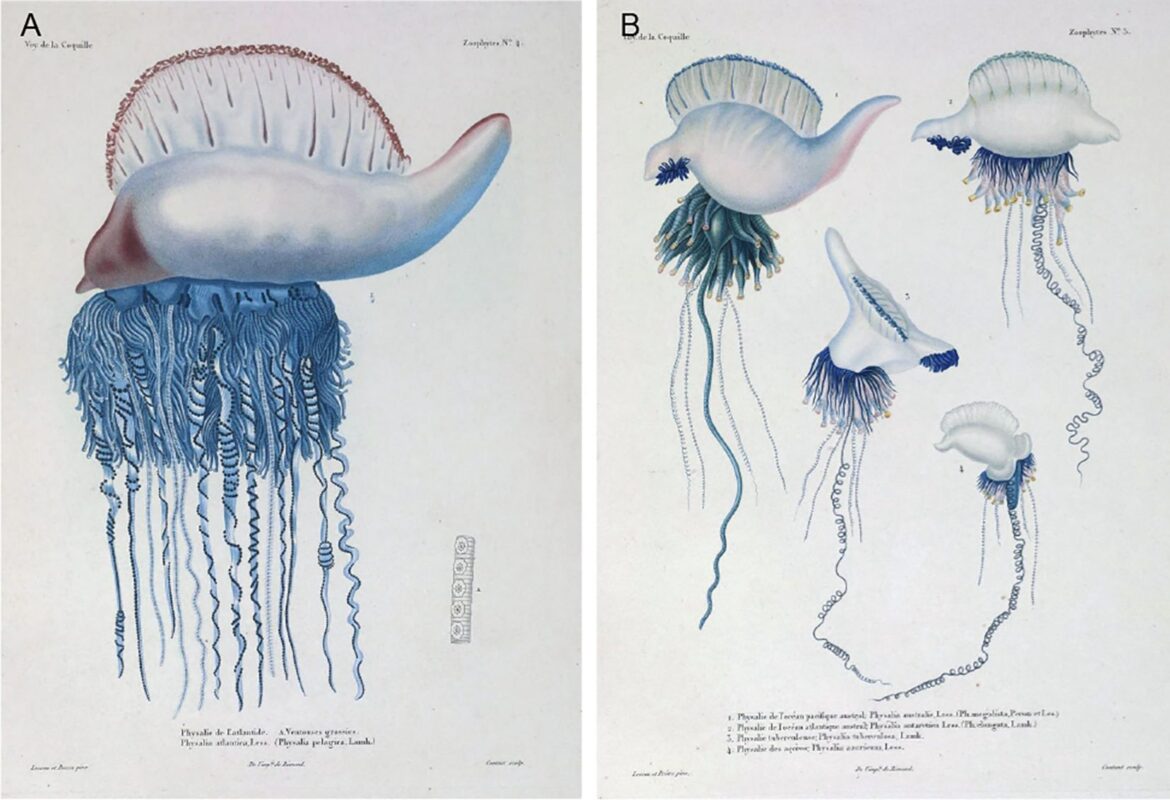 Plates reproduced from Duperrey (1830) in the “Zoophytes” section of the French-language manuscript written by Lesson, depicting five named Physalia species at the time of its publication; illustrations commissioned by Renaud. Credit: Frontiers in Marine Science (2025)
Changing Currents And A Warming Sea
The appearance of Physalia mikazuki is being interpreted as part of a larger ecological pattern. Japan’s surrounding waters are currently experiencing an increase in temperature and current variability, conditions that can redirect marine organisms into unexpected habitats. In the past decade, similar anomalies have brought tropical fish into temperate waters and even invasive crustaceans into coral ecosystems once thought too cool for their survival.
A recent paper published in Frontiers in Marine Science (2025), “Tracking Oceanic Drift and Species Migration Under Climate Stress”, highlights how altered circulation patterns are now capable of transporting entire colonies of plankton and jellyfish across thousands of kilometers. The new findings regarding Physalia mikazuki appear to support that model, showing that physical forces alone may explain its migration, without the need for human assistance or unusual reproductive behaviors. These transformations underscore a sobering reality: the boundaries of marine ecosystems are dissolving, forcing species to adapt, migrate, or perish as their native conditions disappear.
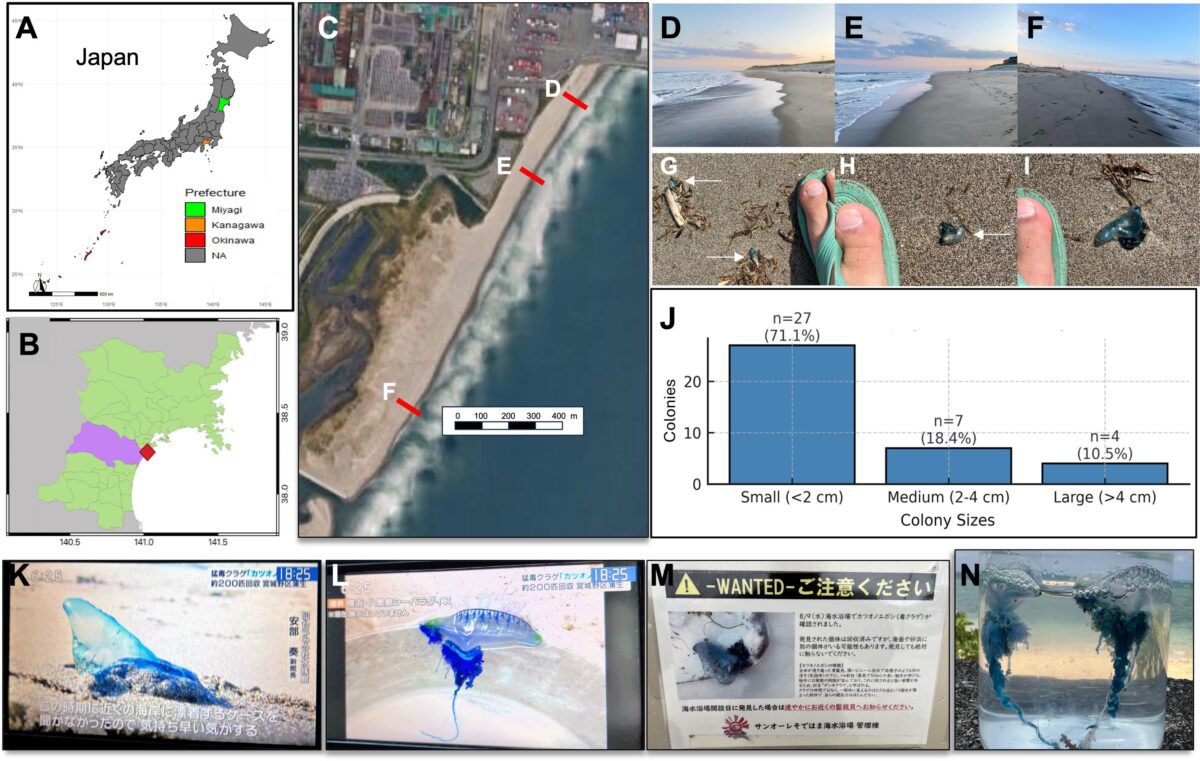 Sightings and public reports of Physalia spp. in Japan. Credit: Frontiers in Marine Science (2025)
Implications For Ecosystems And Coastal Communities
While the jellyfish’s arrival is visually stunning, scientists are quick to warn of the deeper consequences. Marine ecosystems rely on delicate balances between predators, prey, and local species density. When a new organism enters such systems, it can destabilize food chains and introduce harmful toxins or competition for resources. In coastal regions where fishing and aquaculture sustain livelihoods, such disruptions can ripple outward into human economies.
The jellyfish’s sting, though not yet reported to harm humans in Japan, remains a concern given the potency of related species. Even without direct contact, the ecological imbalance caused by such newcomers can indirectly harm coastal biodiversity, leading to changes in plankton populations, oxygen availability, and coral health. As the researchers noted, the event is “a warning sign that marine environments are being transformed faster than our ability to monitor or predict them.” These warnings align with a growing global pattern, from tropical lionfish in the Atlantic to Arctic cod migrating southward, each signaling the same underlying message: the oceans are no longer behaving as they once did.
Monitoring The Drift And Protecting The Future
To understand how the jellyfish reached Japanese waters, researchers are employing ocean simulation models that map current strength and direction over time. These models allow scientists to trace the probable journey of Physalia mikazuki from tropical zones into the north. Parallel temperature monitoring programs are being expanded to track the rate of change in the upper ocean layers, which appear to be warming faster than climate models once projected.
Mitigation efforts remain focused on reducing stressors such as plastic pollution, carbon emissions, and chemical runoff, all of which can amplify the instability of marine systems. Environmental agencies emphasize that small, collective actions, such as switching to electric vehicles, installing solar panels, and minimizing plastic use, contribute to easing the global strain on the oceans. For now, the blue “samurai jellyfish” serves as a vivid reminder that marine systems are in flux, and that the mysteries of the deep are not immune to the changes we create on land.