
GAZA CITY –
Hamas is expected to elect a new head of its political bureau later this month, filling a leadership vacuum left since Israel killed Yahya Sinwar in 2024, even as fears persist that whoever succeeds him could face a similar fate.
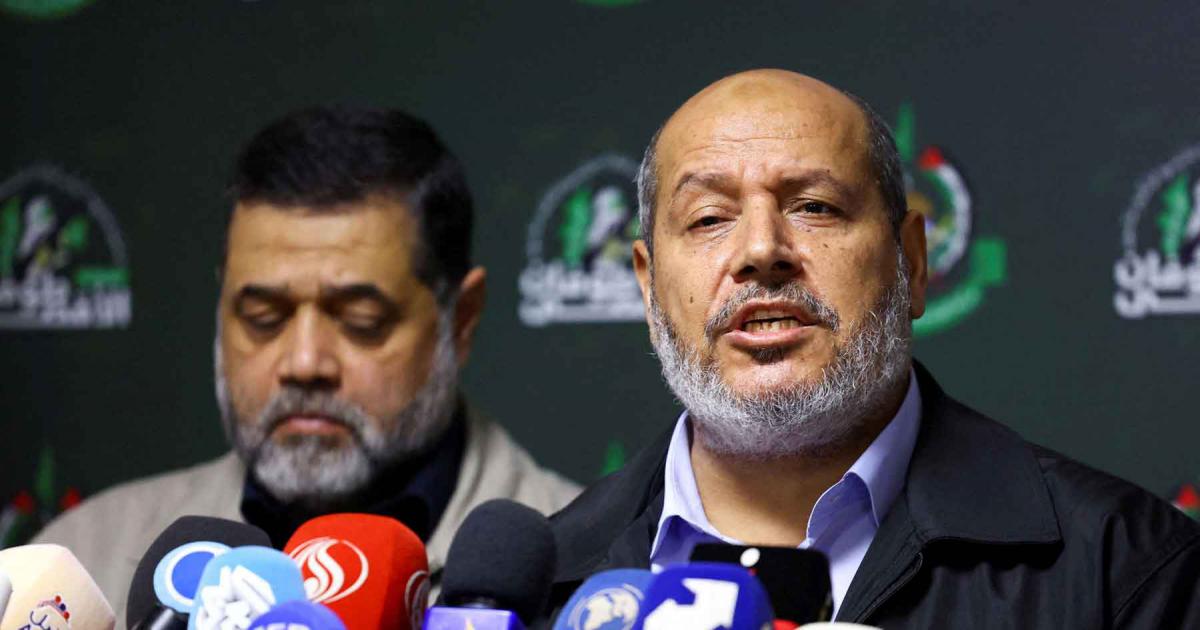
Khalil al-Hayya and Khaled Meshaal are widely seen as the frontrunners to lead the Palestinian Islamist movement at one of the most critical moments in its history. Hamas has been battered by a two-year war with Israel triggered by its October 7, 2023 attack, and is under mounting international pressure to lay down its arms.
Both Hayya and Meshaal are based in Qatar and sit on a five-member leadership council that has run the movement since Sinwar, the architect of the Al-Aqsa Flood operation, was killed by Israel. Sinwar himself had succeeded Ismail Haniyeh, who was assassinated by Israel during a visit to Iran in 2024.
Sources close to the movement said the election process has already begun. The head of the political bureau will be chosen through a secret ballot by Hamas’s Shura Council, a 50-member body representing the group’s leadership in Gaza, the Israeli-occupied West Bank and abroad.
Hamas is also expected to elect a deputy head of the political bureau, replacing Saleh al-Arouri, who was killed in an Israeli air strike in Lebanon in 2024. While some voices within the movement favour extending the current collective leadership arrangement, sources said Hamas is determined to complete the vote.
Observers describe Meshaal as part of a more pragmatic current within Hamas, with long-standing ties to Sunni Muslim states, while Hayya, the group’s chief negotiator, is seen as belonging to a camp that strengthened Hamas’s relations with Iran.
The leadership contest comes as Hamas faces some of the most severe challenges since its founding in 1987. Although fighting in Gaza has eased sharply since a US-brokered ceasefire in October, Israel still controls nearly half of the coastal enclave. Israeli strikes have continued, while living conditions for Gaza’s roughly two million residents remain dire.
Hamas has also faced criticism from within Gaza over the scale of devastation caused by the war, which has reduced much of the territory to rubble. Gaza’s health authorities say more than 71,000 people have been killed during Israel’s military campaign.
Israeli figures say Hamas-led fighters killed around 1,200 people and abducted 251 others in the October 7 attack. A ceasefire plan promoted by US President Donald Trump calls for Hamas to be disarmed and envisages Gaza being administered by a technocratic Palestinian body under the supervision of an international entity known as the Peace Council.
Hamas has so far rejected calls to surrender its weapons, saying armed resistance should be discussed within a broader Palestinian national framework. It has said it would be willing to hand over its arms to a future Palestinian state, an outcome Israel has ruled out. Western powers, including the United States, designate Hamas a terrorist organisation.
Both leading contenders have previously been targeted by Israel. Hayya, who was born in Gaza, was among Hamas leaders targeted in an Israeli air strike in Qatar in September. The White House said at the time that Israeli Prime Minister Benjamin Netanyahu later apologised to Qatar’s Emir Sheikh Tamim bin Hamad Al Thani during a call involving Trump, and assured him such an attack would not be repeated.
Meshaal led Hamas for nearly two decades and survived an assassination attempt by Israeli agents in Jordan in 1997, when he was injected with poison. His relationship with Iran deteriorated in 2012 after he distanced Hamas, during the early Arab Spring uprisings, from then Syrian president Bashar al-Assad, a key ally of Tehran.
Hamas was founded as the Palestinian branch of the Muslim Brotherhood and remains the main rival to Fatah, led by 90-year-old Palestinian President Mahmoud Abbas. Its original charter called for Israel’s destruction, although its leaders have at times floated the idea of a long-term truce in return for a viable Palestinian state on all territory occupied by Israel in the 1967 war, a proposal Israel dismisses as a ruse.
Analyst Reham Owda said there were limited differences between Hayya and Meshaal on the conflict with Israel, but argued Meshaal may have stronger chances. “He can market Hamas internationally and help it rebuild its capacities,” she said.