
Sign up for the Slatest to get the most insightful analysis, criticism, and advice out there, delivered to your inbox daily.
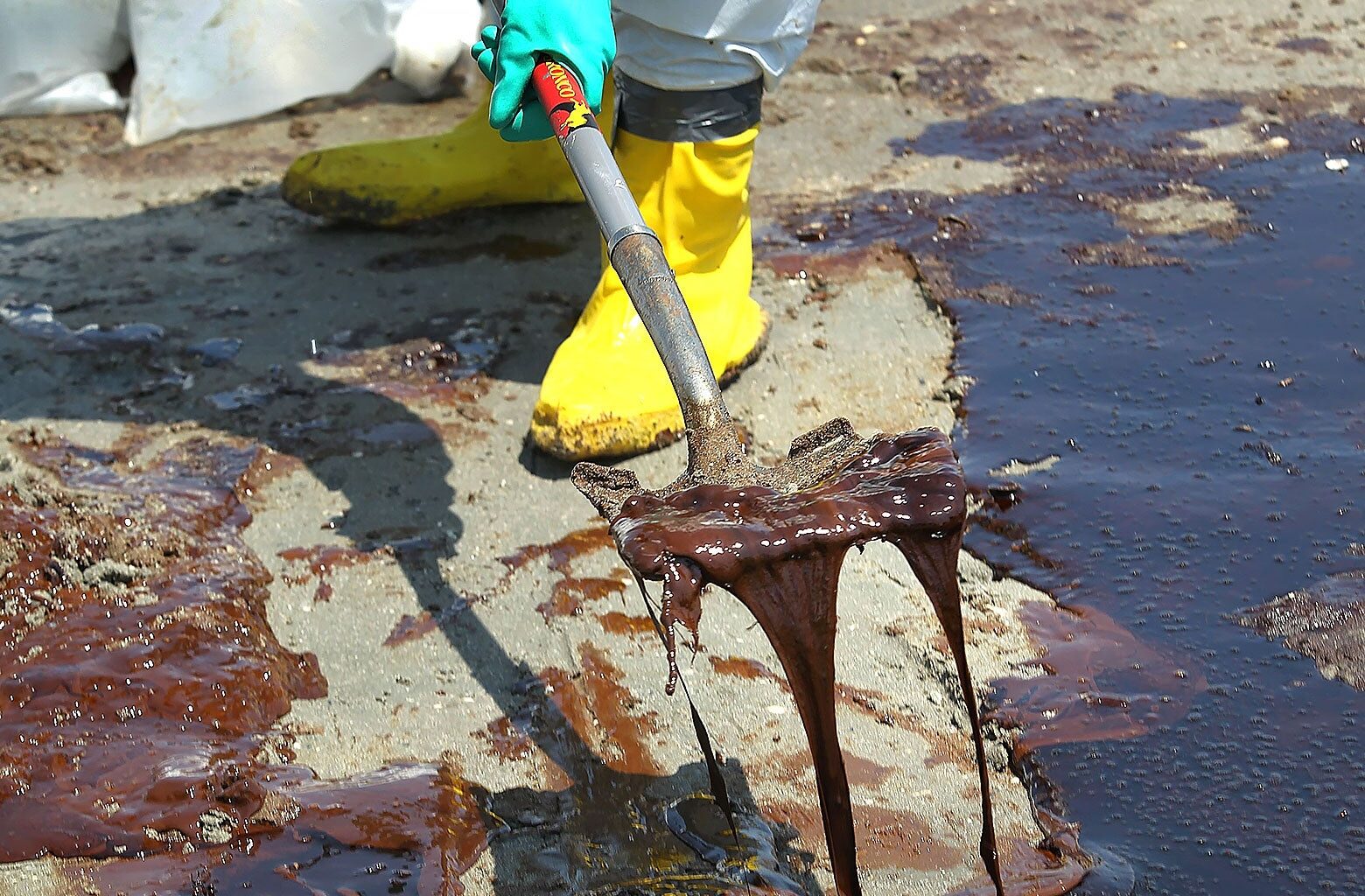
In April 2010, a state-of-the-art offshore oil rig operated by BP exploded in the Gulf of Mexico. The blast killed 11 and ignited a fireball so large it could be seen from 40 miles away. For nearly three months, Americans watched as BP (formerly British Petroleum) tried desperately to cap the Macondo well 5,000 feet below the surface. More than 134 million gallons of oil blackened the Gulf from Florida to Texas.
The Deepwater Horizon spill remains one of the worst environmental disasters in U.S. history. More than 15 years later, coastal communities in the Gulf are still recovering from the devastation of their economies and ecosystems. But the passage of time naturally dulls the horror for people farther away.
BP and the Trump administration appear to be counting on that. As the world fixates on Venezuela’s oil reserves, industry and regulators are quietly paving the way for reckless projects much closer to U.S. shores.
Indeed, the company responsible for Deepwater Horizon is trying to open its next chapter in the Gulf: a massive new hub for offshore drilling that could give it access to 10 billion barrels of crude oil. The Bureau of Ocean Energy Management is currently reviewing BP’s proposal for Kaskida, among the first of several planned ultra-deep-water oil projects. Although BOEM sent back BP’s initial proposal in August, the company has since resubmitted what the agency has characterized as minor modifications. BOEM now has until March to issue its decision.
The proposal itself is riddled with red flags, demonstrating that BP has not learned from the worst oil spill in U.S. history. It utterly fails to prove that the project could operate safely under the high temperatures and pressures of ultra-deep-water drilling. Instead, it seems the London-based company is hoping that Donald Trump’s obsession with fossil fuels will push it over the finish line.
I helped document the lessons of the Deepwater Horizon disaster as the lead investigator for the BP Deepwater Horizon Oil Spill commission. President Barack Obama convened our bipartisan group of science, policy, and industry experts a month after the Macondo blowout began—and a good two months before the industry was able to cap it. As millions of gallons of oil were pumping daily into waters owned by the American public, the president gave us a simple but important job: Figure out what happened so that the oil industry, the federal government, and Gulf communities could ensure it would never happen again.
We wrote an entire book to document our technical findings, but it’s easy to sum up our broader observations: In the decades leading up to the disaster, oil companies had been undertaking riskier and riskier projects even as government safety standards grew increasingly outdated. Industry executives were trusting themselves to the point of willful ignorance. Ambition and shareholder pressure created a culture of complacency in which oil and gas executives convinced themselves that they could do no wrong, despite incidents that should have warned them otherwise.
Executives at BP and every other oil company all told me they never thought that something like the Deepwater blowout could happen. With billions of dollars at stake, they just couldn’t overcome the temptation to drink their own Kool-Aid.
Protecting people, private property, and our public lands from this kind of industry complacency is supposed to be the job of expert, nonpartisan regulators. But in the years leading up to Deepwater Horizon, fossil-friendly politicians of both parties had steadily starved regulatory agencies of resources, authority, and independence.
Scientists and engineers who were supposed to supervise the industry got captured by it instead. They knew that risks were increasing as the wells were getting deeper and more dangerous, but they trusted the oil companies’ assurances. Our report found that by the time of the Deepwater Horizon calamity, federal regulators had been routinely rubber-stamping new ventures into deep water.
The underwater volcano of oil from the Macondo well blew apart BP’s complacency—for a time. The company was forced to reckon with the reality that no one knew how to stop a blowout from a well as big and as deep as Macondo. BP’s drilling proposal for the well should have provided a viable plan for a worst-case scenario, but it didn’t. And overwhelmed and underresourced regulators didn’t respond to that gigantic red flag.
We had a major opportunity to learn from Deepwater Horizon. But other industry players distanced themselves from BP rather than internalize the lessons. When I talked to them, they appeared to be in denial. While I wasn’t entirely shocked when BP executives told me that they never thought a blowout like Macondo could happen on one of their projects, I was stunned when other industry execs insisted that it would not have happened on any of their projects.
None of them recognized that their company’s hubris was just one instance of an industrywide culture of complacency.
The public should expect our government to address this complacency through expert oversight. But 15 years on, and despite the dedicated advocacy of the bipartisan Deepwater Horizon commission and others, Congress has done nothing to address the budgetary and structural problems that plague the agencies tasked with providing it. Congress hasn’t touched the liability limits that enable the industry to gamble with public health. The Department of the Interior did issue modest improvements to drilling regulations in 2016, but it rolled them back during the first Trump administration in what the American Petroleum Institute hailed as a “modernization” effort.
The second Trump administration has been even friendlier to industry. Executive orders have reversed a number of Biden-era offshore restrictions to fast-track permitting and weaken technical requirements (e.g., adjusting various technical constraints to allow drilling under higher pressures and enable more output). The Elon Musk–led DOGE project also shuttered regional offices and fired regulators.
The administration’s quest to accelerate drilling with inadequate regulations and fewer regulators is a recipe for disaster that leaves the industry largely to its own devices. And judging by its half-baked proposals, BP has either forgotten the lessons of what it termed a “catastrophe” or decided that catastrophe is an acceptable risk. After all, the company’s shareholders can still count on the American taxpayer and the communities of the Gulf to bear most of the costs of a spill, just as they did last time.
The proposed Kaskida project is even riskier than Macondo was. It is over 1,000 feet deeper, and drilling overall is becoming more challenging as ever-stronger storms rip across a heating Gulf with ever-increasing regularity. Yet BP’s proposal reveals that the company is not meaningfully better prepared to cap a deep-water well than it was 15 years ago. It took 87 days to cap Deepwater Horizon; according to the BP proposal, it would take 90 to 100 days to stop a spill from Kaskida.
Members of Congress have found even that dismal figure optimistic, concluding that the company underestimates the magnitude of a worst-case scenario at Kaskida by using a questionable methodology. In a scathing letter to BOEM in August, lawmakers urged Acting Director Matthew Giacona to reject the project. They correctly noted that BP’s proposal “fails to meet basic regulatory standards,” including neglecting to show that the company possesses the necessary equipment to contain a high-pressure spill. Under the law, the fact that BP hasn’t met current regulatory standards should be sufficient to deny the application.
Yet it seems that federal agencies have gone from merely failing to regulate the oil industry to actively advocating for it. The first Trump administration saw oil companies as its “partners.” The second Trump administration treats them as its “customers.”
Fossil-fuel giants have, of course, exploited the White House’s “customer service” stance to demand accelerated approval of new oil and gas pipelines and export terminals. They’re scrambling to secure long-term leases to some of the more than 1 billion acres of our public waters that the administration is offering up for drilling. They aim to lock in lengthy property rights and economic advantages that will insulate them from the reality of the inevitable clean-energy transition. That includes a new era of ultra-deep and high-risk drilling in the Gulf.
Robyn Nicole Sanders
Sonia Sotomayor Just Vindicated the Rights of the Incarcerated to Seek Appeals
Read More
Kaskida is very much part of this pattern. And it’s just the beginning: BP has already submitted an additional production proposal for another ultra-deep-water project called Tiber, and companies like Chevron and Beacon Offshore Energy have proposed a slew of multibillion-dollar ultra-deep-water projects in the Gulf.
This Content is Available for Slate Plus members only
The Defense Department’s Case Against Mark Kelly Is Even Dumber Than It Sounds
Even as the administration is bending over backward to green-light risky offshore oil projects, it is doing all it can to stop renewable-energy projects that create jobs and deliver gigawatts with far less pollution and climate impact. If BP were proposing to build wind towers instead of drill wells at Kaskida, it wouldn’t have a chance.
The Trump administration and BP are trying to carry on as if nothing has changed since Deepwater Horizon. In some ways, they’re right. The regulations still are not strong enough, the companies aren’t any wiser, and there’s even more oil money in politics.
But some things have changed. Renewable energy has become cheaper and increasingly more reliable than fossil energy, and it is getting more so every day. At the same time, the risks of fossil-fuel extraction are a lot less hypothetical. Every American adult can summon up searing images from the Deepwater Horizon spill.
We know that the oil industry has not operated in good faith, that our regulators aren’t protecting us, and that the American public, particularly Gulf communities, will bear the costs of the next disaster. If we witness another Deepwater Horizon, no one will be in a position to plead ignorance.

Sign up for Slate’s evening newsletter.