
Where are the smallest galaxies? A recent study suggests that there may not be as nearly as many of them in the early universe as there should be, which has big implications for the story of how our universe grew up.
For years, astronomers have looked back into the deep history of the cosmos and assumed that if they just looked hard enough, they would find a nearly infinite supply of tiny, dim galaxies huddling in the darkness. They figured that, the smaller the galaxy, the more of them there should be.
You may like
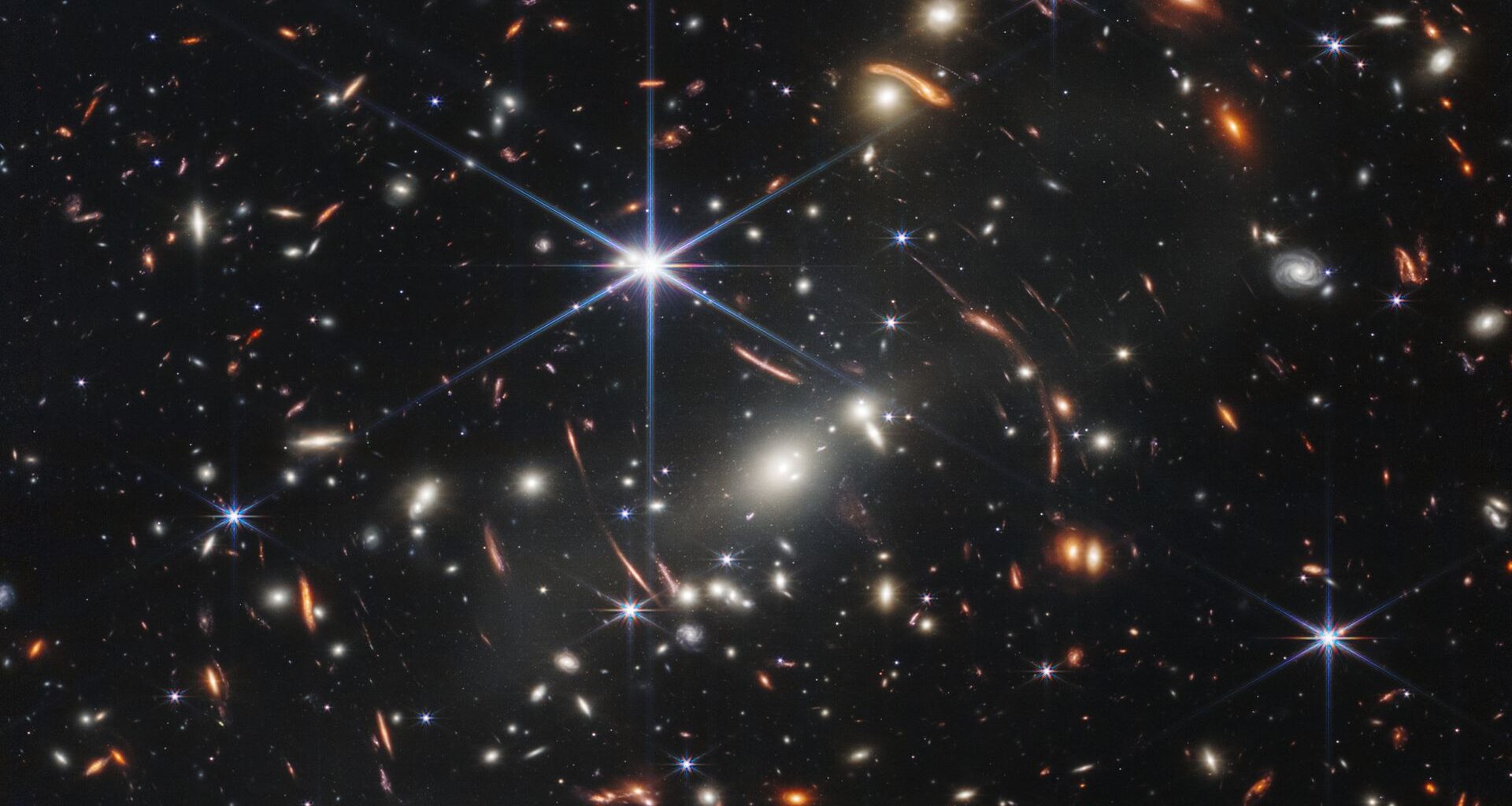
To find these elusive runts of the galactic litter, the team turned to a behemoth called Abell 2744. This massive cluster of galaxies is a swarming hive of dark matter and stars that’s so heavy, it literally warps the fabric of space-time. This effect, called gravitational lensing, acts like a natural telescope, where gravity bends light from more distant objects, stretching and brightening them so they’re visible to our instruments.
Using data from the James Webb Space Telescope‘s (JWST) UNCOVER program, the team looked through this lens to see galaxies from the dawn of time, specifically from a period known as the Epoch of Reionization (roughly 12 billion to 13 billion years ago).
This was a transformative era. The first stars and galaxies were flooding the universe with ultraviolet light and stripping electrons from hydrogen atoms in the surrounding soup of gas. Astronomers have long suspected that the tiniest, faintest galaxies were the primary engines driving this change. They were the “little engines that could,” providing the bulk of the radiation needed to clear the cosmic fog.
But then, the data threw us a curveball. Usually, when researchers count galaxies of different brightnesses, they use a tool called a luminosity function, which is essentially a cosmic bar chart showing how many bright galaxies versus dim galaxies exist. For study after study throughout the universe, the chart just kept going in one direction: there are more small, faint galaxies than bigger, brighter ones.
But Ma and his team, using sophisticated gravitational lens models, found something different. Instead of continuing to climb, the numbers peaked and then started to drop off.
This trend, called faint-end suppression, means that below a certain brightness, the population of galaxies starts to thin out. There aren’t as many small galaxies as older theories predicted.
So, why are these little guys missing? It’s likely a case of cosmic bullying. In the early universe, the intense radiation from the first big stars could have heated up the surrounding gas so much that small, low-mass galaxies couldn’t hold on to it, the new study proposes; the galaxies literally couldn’t eat enough gas to form new stars. Without stars, they would have stayed dark. Essentially, they would have become ghosts.
The results depend heavily on our understanding of the gravitational lens (the Abell 2744 cluster). If the team’s map of the dark matter in that cluster is even slightly off, their calculations of how many distant galaxies are hidden there could be wrong. But the analysis in this paper suggests that the turnover is real and that the tiny galaxies are being suppressed.
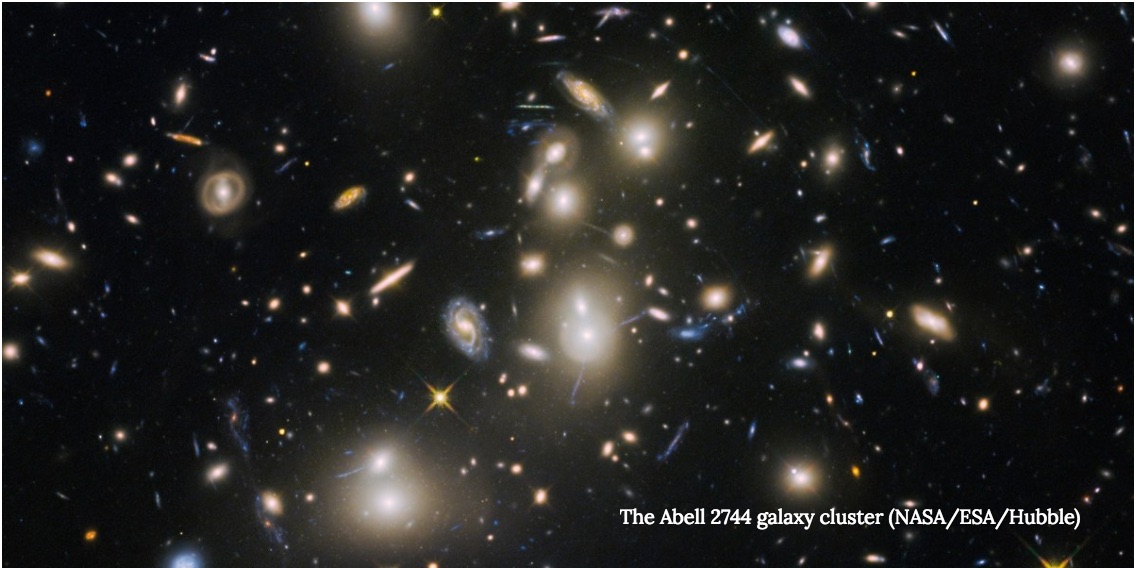
The Abell 2744 galaxy cluster shows clear signs of gravitational lensing. (Image credit: NASA/ESA/Hubble)
This leaves us with a bit of a pickle. If these ultrafaint galaxies are missing, they can’t be the ones doing all the heavy lifting during the epoch of reionization, that crucial phase in the history of the universe where bright, energetic sources transform the gas of the cosmos from a cold, neutral soup into the hot, ionized plasma that it is today. We might need to look back at the slightly bigger, more established galaxies to explain how the universe became transparent.
Next, we’ll need more clusters and more lenses to see if this trend holds up across the entire sky. With more data from JWST and upcoming surveys, we’ll find out if this is a local quirk or a fundamental rule of the cosmos. For now, the early universe looks a little emptier — and a lot more interesting — than we thought.