
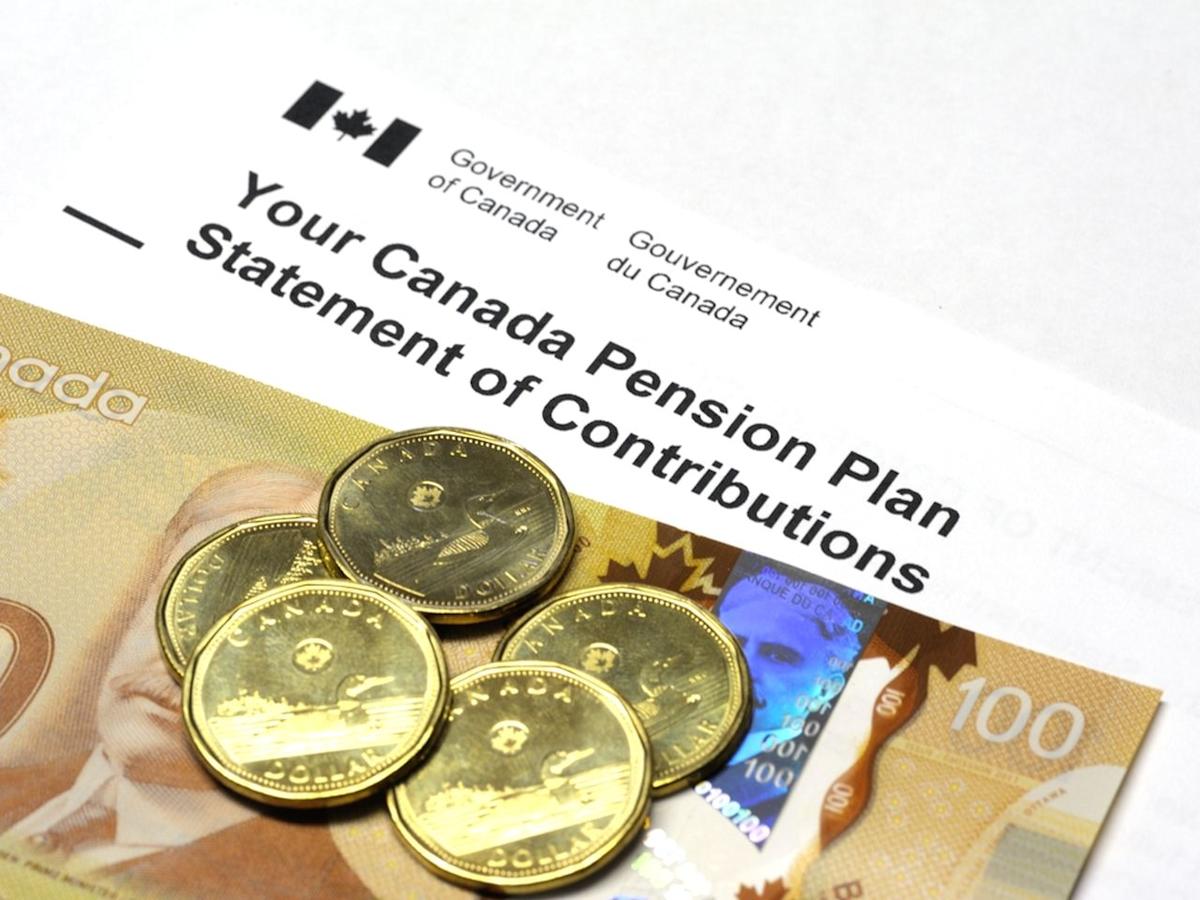
 By paying a higher Canada Pension Plan tax, workers today are not actually saving more for their retirements, writes Matthew Lau. (Credit: Getty Images/iStockphoto)
In 2026, for the eighth year in a row, Ottawa is whacking workers with a Canada Pension Plan tax hike. For someone earning $85,000, the combined worker and employer CPP tax in 2026 is $9,292.90, including the government’s new “CPP2,” which was imposed beginning in 2024. That’s an annual tax increase of 4.9 per cent, more than double the current inflation rate of 2.2 per cent. At $85,000 annual earnings, the cumulative tax hike over eight years is 79.1 per cent in nominal terms, or about 42.1 per cent after accounting for inflation.
The government calls its tax hike “the CPP enhancement” and back in 2017 justified it by saying it helps Canadians “meaningfully reduce the risk of not saving enough for retirement.” But by paying a higher CPP tax, workers today are not actually saving more for their retirements. They are paying for benefits to retirees today, with the expectation that when they retire they will receive benefits funded by CPP taxes on the next generation of workers, plus any investment returns from the Canada Pension Plan Investment Board (CPPIB).
But even if workers were able to directly fund their retirements through CPP taxes, it would still be a bad, wasteful government program. The CPP’s premise is that some Canadians would not save enough for retirement on their own, so everyone should be forced to pay into a pension fund to reduce these people’s under-saving. By the same logic, since some Canadians are overweight, the federal government should impose a CEE (Canada Exercise Equipment) payroll tax to fund shipments of exercise equipment to everyone’s house to mitigate the problem of under-exercising.
For that matter, if the government needs to force everyone to save a certain amount for retirement each year, why not also have it decide how much everyone should spend on groceries, shelter, electronics, transportation, travel and so on?
Higher taxes and smaller paycheques mean workers have less money to contribute to TFSAs, RRSPs and other investments, so a higher CPP tax may not actually increase overall retirement savings. In a 2016 publication “Five Myths Behind the Push to Expand the Canada Pension Plan,” Fraser Institute economists argued that “any increase in the CPP will be offset by lower savings in private accounts,” which was the conclusion of an earlier study on CPP tax hikes between 1996 and 2004. The other four CPP myths? That Canadians do not save enough for retirement on their own; that the CPP is a low-cost pension plan; that it produces excellent returns for workers; and that its expansion would help financially vulnerable seniors.
In recent years, these arguments against expanding the CPP have only gotten stronger. Since switching from passive management (i.e., tracking broad market indices) to active management in 2006, the CPPIB’s expenses have exploded and its employee head count has increased from 150 to more than 2,100. Canadians forced to pay into the CPP have not benefitted from this increased cost. “Over the past five years,” according to the CPPIB’s Annual Report 2025, “the Fund earned a net return of 9.0 per cent, compared to the Benchmark Portfolios return of 9.7 per cent.” So with the CPP, Canadians have paid more to get less.
Measuring the performance of the CPP since the inception of active management by comparing its return to the benchmark portfolios, “the Fund generated an annualized value added of negative 0.2 per cent.” Compounded over 19 years, that is a sizable erosion of Canadians’ retirement savings. Some of this underperformance might well be attributed to playing politics with Canadians’ savings: in early 2022, the CPPIB committed to transitioning its operations and investments to net-zero emissions by 2050. Thankfully, it has since abandoned that commitment.
In addition to its financial underperformance, the CPP gives Canadians less flexibility and less choice than private options. If someone wants to buy a house, they can draw down their private savings to make a down payment, but they cannot withdraw from what they have paid into the CPP. Or suppose someone has a terminal illness and is not expected to live to retirement age. Is it sensible for the government to force this person to save for their retirement — especially through the CPP? Upon their death, their private savings can be passed down to their family. Not so the money they were forced to pay into the CPP.
The CPP hurts workers because individuals themselves, not the federal government, have the best information and incentives to manage their finances. Personal finance is, after all, just that: personal finance. It is not, and should not be, government finance.