
Credit: pcruciatti on Shutterstock
One astronaut became younger than before the trip, and maintained lower biological age through a follow-up period.
In A Nutshell
Four astronauts’ biological age markers increased nearly 2 years during a 9-day ISS mission. Within 24 hours of landing, age markers reversed in all crew members
Older astronauts (60s) returned to pre-flight biological age readings; younger astronauts (30s) showed readings biologically younger than baseline
Changes in regulatory T-cells and naïve CD4 T-cells drove much of the shift. Even after adjusting for cell composition, age markers still showed acceleration
Study makes space travel a promising testing ground for aging research
Space travel can age the human body at a fast pace, but returning to Earth may actually reverse all that. Four astronauts aboard the Axiom-2 mission to the International Space Station spent nine days on their trip. When they returned to Earth they showed a two-year jump in biological age markers. Yet, within 24 hours of touching foot on solid ground, those markers started moving back toward normal.
Researchers from the Buck Institute for Research on Aging and Weill Cornell Medicine measured biological age through DNA methylation (chemical tags on DNA linked with aging, not a stopwatch on the body). The Axiom-2 crew included two men and two women ranging from 31 to 67 years old.
By day seven in space, the crew showed an average biological age increase of 1.91 years compared to baseline. Space exposes astronauts to microgravity, radiation, disrupted sleep cycles, and isolation (stressors linked to aging-related changes in the body).
Tracking Astronauts’ Biological Age In Space
The study, published in Aging Cell, saw researchers collect blood samples at five timepoints: 45 days before launch, on flight days four and seven, and one and seven days after splashdown. They analyzed these samples using dozens of DNA-based “age calculators” that scientists use to estimate biological age.
The oldest crew member (67) showed the biggest initial spike: 2.45 years by day four. A 63-year-old woman increased by 1.2 years, and a 34-year-old woman by 1.06 years. The 31-year-old man actually decreased by 1.64 years at day four, defying the pattern.
Three of four astronauts showed biological age increases by flight day seven, averaging 1.91 years above pre-flight levels.
Within 24 hours of touchdown, all four crew members showed decreased biological age markers compared to day seven in space. The average reduction was 3.48 years.
The two older astronauts returned to their pre-flight biological ages. The younger two ended up with biological age readings lower than their starting point. The 31-year-old dropped 2.93 years below baseline, while the 34-year-old dropped 4.08 years below her pre-flight measurement.
This reversal wasn’t permanent for everyone. The 34-year-old returned to pre-flight levels by day seven after landing. The 31-year-old maintained his lowered biological age through the follow-up period.
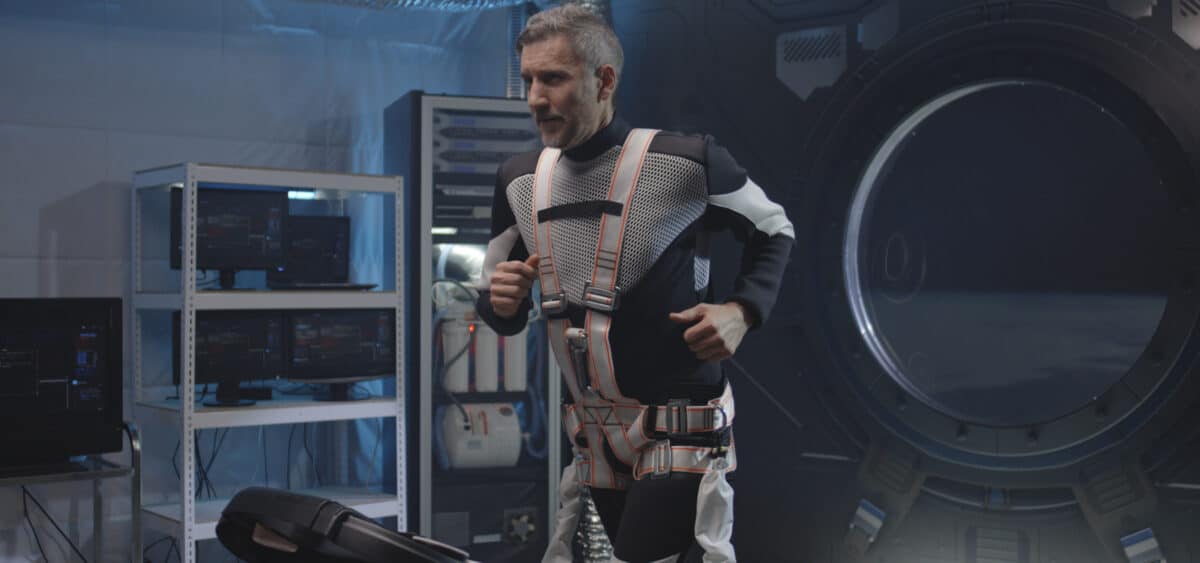
Outer space is anything but easy on the human body. (Credit: Frame Stock Footage)
Immune Cell Changes Drive the Shift
A lot of the shift seemed tied to changes in immune cells in the blood, which can swing during stress. Specifically, regulatory T-cells (immune “brake” cells that help prevent overreactions) and naïve CD4 T-cells (a kind of “rookie” helper T cell) accounted for a big portion of the observed changes.
These immune cell proportions decreased on day four, increased on day seven, then decreased again after landing. When researchers accounted for these shifting cell populations, the aging signals still showed acceleration during spaceflight. This means the effects reflected actual epigenetic changes, not just blood cell behavior.
Different Age Calculators Showed Different Responses
The biological age calculators fell into categories based on what they measure. Some were more sensitive to spaceflight than others.
Calculators focused on chronological aging showed the biggest jumps during the mission. Others that measure fitness-related factors or cellular wear-and-tear actually decreased during spaceflight, meaning those calculators moved in the opposite direction. That doesn’t mean astronauts got “fitter” in space: it shows different measures react differently.
After landing, nearly all calculator types showed decreases in biological age markers.
Space Travel Could Help Scientists Study Aging Faster
As noted, older astronauts showed more dramatic biological age swings during spaceflight. This supports the idea that aging reduces cellular resilience and stress adaptation. Younger astronauts bounced back more robustly, temporarily overshooting their baseline measurements.
The rapid yet reversible nature of these changes makes space travel a promising testing ground to study aging mechanisms. Environmental stressors in space create an accelerated aging model that could help test interventions designed to slow aging on Earth.
“These results point to the exciting possibility that humans have intrinsic rejuvenation factors that can counter these age-accelerating stressors,” said David Furman, senior author of the study and an associate professor at the Buck Institute, in a statement.
Spaceflight countermeasures developed for astronauts could translate into strategies for age-related decline in the general population. Protective interventions could be repurposed to support astronaut health.
“Using spaceflight as a platform to study aging mechanisms gives us a working model that will allow us to move toward the ultimate goal of identifying and boosting these rejuvenating factors both in astronauts and in those of us planning on aging in a more conventional manner,” added Furman.
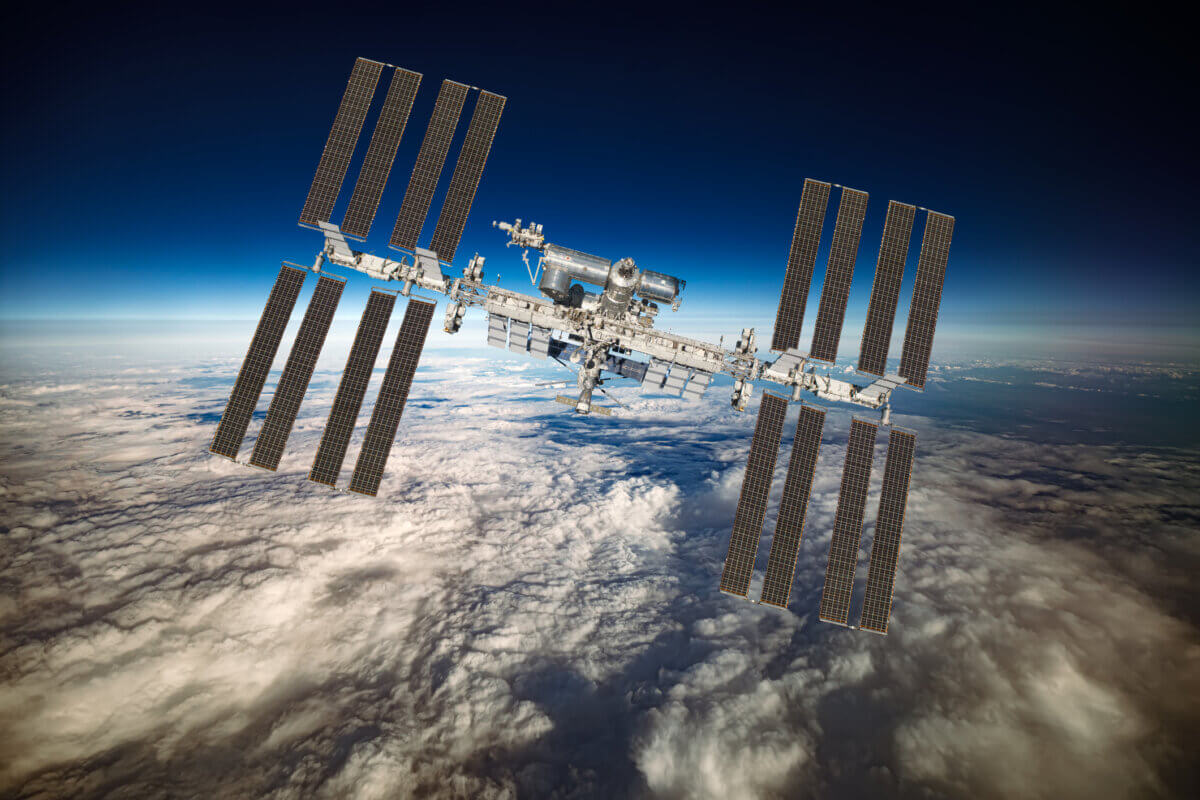 The astronauts traveled to the International Space Station on their trip. Elements of this image furnished NASA. (ID 200693085 © Andreyi Armiagov | Dreamstime.com)
Study Comes With Caveats
The four-astronaut sample limits how broadly findings apply. The study lacked an Earth-based control group, making it impossible to separate spaceflight effects from other factors like dietary changes, altered sleep schedules, and reduced activity.
The immune cell prediction method showed higher errors for regulatory T-cells compared to the original reference. Recent studies show epigenetic age can fluctuate throughout the day, so sample collection timing may have contributed to observed variations.
Future longitudinal studies on longer missions will be needed to confirm how persistent these changes are and assess whether countermeasures can prevent them.
Furman is now modeling microgravity effects in his lab using organoids grown from heart, brain, and immune cells to better understand how spaceflight impacts different tissues. The Buck Institute has also spun off patented technology into a company focused on building tools for drug discovery and consumer products aimed at slowing the aging process.
Paper Notes
Limitations
The sample size of four astronauts limits generalization of findings. The study lacked an Earth-based control group, preventing isolation of spaceflight-specific effects from confounding factors like dietary shifts toward freeze-dried foods, altered sleep schedules, and reduced activity—all of which influence DNA methylation and blood cell composition. The deconvolution reference matrix used for cell type predictions showed slightly higher prediction errors for regulatory T-cells compared to the original library, which may add noise to age acceleration adjustments. Recent studies indicate epigenetic age oscillates during the day, so variation in collection time could contribute to observed fluctuations. Linear mixed models and permutation-based approaches were used to account for dependence between clocks and repeated measures, but p-values and effect sizes should be treated as exploratory and confirmed in larger cohorts with longer missions.
Funding and Disclosures
Author David Furman is co-founder of Cosmica Biosciences. All other authors declared no competing interests. The authors reported no specific funding for this research.
Publication Details
Authors: Matías Fuentealba (Buck AI Platform, Buck Institute for Research on Aging), JangKeun Kim (Department of Physiology and Biophysics, Weill Cornell Medicine), Jeremy Wain Hirschberg (Department of Physiology and Biophysics, Weill Cornell Medicine), Bader Shirah (Department of Neuroscience, King Faisal Specialist Hospital & Research Centre), Eliah G. Overbey (Center for STEM, University of Austin), Christopher Mason (Department of Physiology and Biophysics, Weill Cornell Medicine), David Furman (Buck AI Platform, Buck Institute for Research on Aging, and Stanford 1000 Immunomes Project, Stanford School of Medicine)
Journal: Aging Cell, January 11, 2026; Volume 25, Issue 2, Article e70360 | DOI: 10.1111/acel.70360 | Received: July 9, 2025 | Revised: December 20, 2025 | Accepted: December 24, 2025 | Data Availability: Data supporting the findings are openly available on GitHub at https://github.com/msfuentealba/aging_space.
Mission Details: Axiom Mission 2 was a 9-day, 5-hour, 26-minute private astronaut flight to the International Space Station operated by Axiom Space in partnership with NASA and SpaceX, launching May 21, 2023, and splashing down May 31, 2023. The four crew members were identified as A1 (male, 67.7 years), A2 (female, 63.2 years), A3 (male, 31.1 years), and A4 (female, 34.6 years).