
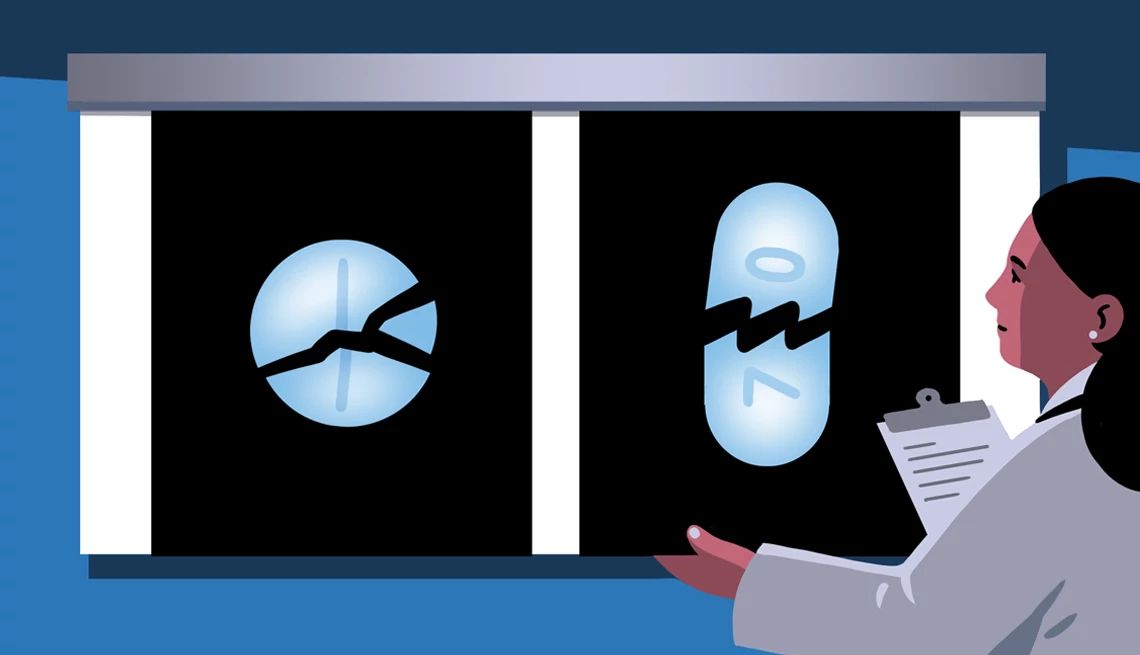
2. Proton pump inhibitors (PPIs)
What does a common medication for heartburn have to do with bone health? In reducing stomach acid, PPIs may prevent the absorption of certain forms of calcium, so your body resorts to leaching calcium from your bones.
“The lower the bone density, the greater the fracture risk in general,” says Dr. Andrea Singer, director of bone densitometry at MedStar Georgetown University Hospital and chief medical officer of the Bone Health & Osteoporosis Foundation. Indeed, research shows a significantly higher risk of bone fractures in people who take PPIs compared with those who don’t.
Only PPIs available by prescription include a warning about the risk; not so with over-the-counter (OTC) versions. That’s likely because you aren’t supposed to take OTC PPIs for more than two weeks, which isn’t long enough to affect bone density.
Prescription PPIs include:
OmeprazoleLansoprazoleEsomeprazolePantoprazole
What to do: The risk associated with PPIs is linked to long-term use. If you have chronic acid reflux, talk to your doctor about alternative treatments. Research shows, for instance, that lifestyle changes — like losing weight, quitting cigarettes and sleeping with your head elevated — can help manage symptoms.
3. Selective serotonin reuptake inhibitors (SSRIs)
The relationship between bone health and SSRIs — the most commonly prescribed class of antidepressants — is, well, complicated. While SSRIs increase serotonin in the brain, which can benefit bones, they may have the opposite effect on the vast majority of serotonin in the body, what’s known as peripheral serotonin, causing bone loss.
SSRIs include:
Fluoxetine (Prozac)Paroxetine (Paxil)Citalopram (Celexa)Sertraline (Zoloft)
What to do: If you’re on an SSRI, talk to your health care provider about the potential effect of your particular antidepressant on your bone health. Depending on the severity of depression, sex, duration of use, length of SSRI treatment and other factors that can raise your risk of osteoporosis, you may be a good candidate for an alternative type of antidepressant.
4. Anticonvulsant drugs
The medications commonly used for treating seizures, and sometimes prescribed for migraines, nerve pain and mood disorders, can interfere with the way your body metabolizes vitamin D, a nutrient that has its own starring role in the health of your bones. If you aren’t getting enough vitamin D, your body can’t absorb calcium the way it should.
Anticonvulsant drugs that may weaken your bones include:
Carbamazepine (Tegretol)Phenytoin (Dilantin)Primidone (Mysoline)Phenobarbital (Luminal, Solfoton)
What to do: Talk to your doctor about alternative medications since not all anticonvulsants carry the same increased risk of fracture. The older anticonvulsants are especially problematic for bone health, Singer notes, echoing research showing lower bone mineral density in patients on enzyme-inducing drugs (like those listed above) as compared with so-called noninducers.