
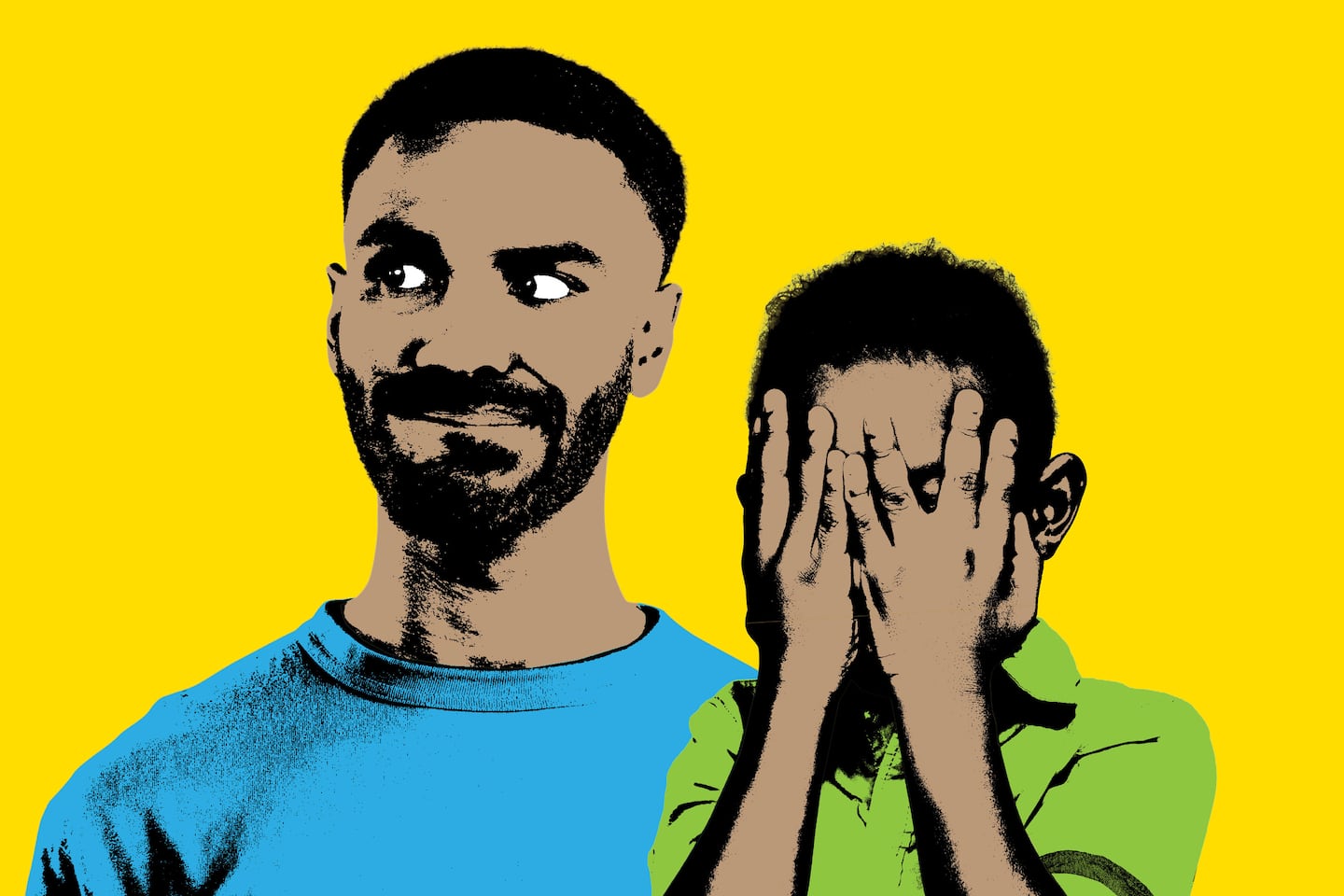
This happens for a very simple reason: When you avoid something that makes you uncomfortable, it becomes harder to face it again in the future.
Get Starting Point
A guide through the most important stories of the morning, delivered Monday through Friday.
As the co-director of a McLean Hospital clinic treating child anxiety disorders, as faculty at Harvard Medical School, and in my private practice where I treat mothers with postpartum anxiety disorders and parenting stress, I consistently connect with parents who are worried about their children’s anxiety. I see these concerns mirrored in my friends, colleagues, and acquaintances — individuals and families without formally diagnosed anxiety disorders, or who are not currently seeking treatment, but who still feel paralyzed by the responsibility of helping their children grow up to be emotionally healthy in today’s tumultuous world.
We’re in an era where each negative emotion is treated as a crisis, and where fears of screwing up the parent-child relationship mean that you may be working overtime to minimize any discomfort in your kid — and in yourself. And this is backfiring spectacularly.
The avoidance of discomfort itself is what can ultimately be unsafe.
At certain stages of development, anxiety and fears are normal and expected. Babies start showing separation and stranger anxiety at 8 or 9 months, once they realize “Mom still exists even when I do not see her, and I want her all the time.” Anxiety about being away from primary caregivers is typically a marker of secure attachment; clinicians become concerned when young children do not care whether their caregivers are around.
As children develop, “what if” fears become increasingly common: “What if there is a war?” “What if you die?” “What will happen because of climate change?” Then, as preteens and teenagers, their primary influences shift from parents to peers, and anxiety around social situations becomes common.
As much as we all wish we could assuage our kids’ fears by reassuring them “Don’t worry, you will never live through a war,” or “Grandpa is actually a force of nature who will never die,” we can’t make these promises, and it erodes trust to do so. Instead, you can respond in ways that acknowledge the reality of a world where sad or scary things happen sometimes, while also highlighting the ways in which the adults in your child’s life are prioritizing their safety and well-being.
When kids haven’t had the chance to practice coping with discomfort in normally stressful situations, they lose out on learning how to deal with their negative emotions and to practice tolerating distress. They can end up flailing in truly unsafe ways when larger challenges come up.
Avoidance isn’t always a recipe for anxiety problems, but it is a slippery slope. The good news is that if you understand the relationship between anxiety and avoidance, you can take steps to help prevent avoidance from snowballing into an anxiety disorder. Noticing your own experiential avoidance — and teaching your kids how to notice theirs — is a huge help in improving resilience and combating anxiety.
Imagine your kid has been placed in an honors math class for the new school year. You and he were proud when you heard the news over the summer, but he had some doubts he could handle the work. His anxiety kicks in when he shows up to the first class. At his desk, trying to make sense of the material flying at him, he thinks, I don’t understand any of this. His stomach flutters, his muscles tense, and he notices a bit of dizziness. As he feels increasingly lost and uncomfortable, he has the urge to flee the classroom.
 Author Meredith Elkins is the co-director of a McLean Hospital clinic treating child anxiety disorders.Handout
Eventually, he raises his hand and asks to go to the school nurse’s office. Still dizzy, he worries because it’s hard to catch his breath as he walks down the hall. The nurse takes his temperature — normal — and suggests he lie down for a bit. He begins to feel better, able to join his friends for lunch and finish out the rest of the school day.
Avoidance is a quick and powerful way to decrease anxiety, and the relief that it brings is super reinforcing. But his avoidance has consequences. New learning has taken place: He has evidence suggesting to him he can’t handle honors math class. This sets the stage for Math Class #2, feeling even more anxiety, more quickly.
What has he learned he needs to do to cope? He raises his hand within the first few minutes and heads to the nurse. The relief he feels is mingled with shame and self-doubt. I’m too dumb to be in this class. Why is this so hard for me?
By the morning of Math Class #3, he has so much anticipatory anxiety he feels overwhelmed as soon as he wakes up, and you and he have a tense and tearful argument about going to school that day. He makes it there, but on the way to class, he feels his heart pounding and feels hot and clammy. He goes straight to the nurse’s office, not even attempting to enter the classroom. The school nurse calls you to come pick him up.
The relief we feel when we avoid something anxiety-provoking is a powerful motivator of future behavior. This means that relief reinforces the avoidance behavior, and we call this the cycle of anxiety.
Talking to kids about it in visual terms, I’ll say something like, “So you think your anxiety would keep going up and up and up, getting worse and worse, unless you did something to stop it?”
“I guess.”
I acknowledge to them that this would be pretty awful. But then I ask them to think about what that would actually mean — what would happen to their body or their mind if their anxiety went through the roof and never stopped.
“I don’t know really . . . I guess I would have a heart attack and die? Or I wouldn’t be able to control my body at all, and maybe I would freak out and try to jump out a window or something. Or I would go crazy.”
This is when I validate those assumptions while also pointing out that there is almost no chance their feelings of anxiety will hurt them in the moment.
Your emotions rise, peak, and fall like waves. They don’t — they can’t — stay elevated for too long. This is because your body strives for balance, for homeostasis. Feedback loops in your body elevate you into the fight-or-flight response, then trigger changes to bring you back to baseline.
What would’ve happened if your son hadn’t left math class the first time? His anxiety probably would’ve risen, possibly quite high, and eventually peaked and plateaued before starting to decrease, slowly. He might’ve cried and felt embarrassed if classmates or his teacher noticed.
But more likely, his teacher may have approached him after class to see how he was doing and to set up time to review the basics one-on-one, and your son would see that he does, in fact, understand the material — or at least has the capacity to do so, with extra time and help.
The point is, it’s way more likely your son would be able to cope with his anxiety if he resisted the urge to avoid. When he avoids, he loses the opportunity to learn that his “worst-case scenario” predictions typically don’t come to pass and he can cope with the tough situation.
Doing hard things is hard, but leaning into, rather than away, from anxiety is the key to reducing its power.
Kids get a ton of information about what to be afraid of from their caregivers. (When your toddler takes a tumble, they look to you, right?) Observing their parents also gives them important information that helps them form beliefs about how capable they are of handling tough things. Modeling brave beliefs and resilient responses to anxiety sets your kids up to have brave beliefs and resilient responses of their own.
Imagine your child is crying, having trouble catching their breath, and telling you their heart is beating quickly. What does it communicate to them if you respond with panic: “Oh my gosh, what’s wrong, are you OK? Let me check your pulse. Calm down! If you don’t calm down, you will make yourself sick!” This response adds fuel to the anxiety fire, amplifying the painful-feelings pile-on and creating more anxiety about anxiety.
What if, instead, you take your kid’s hands, look them in the eye, and validate with confidence. “You feel really scared; I see that. Anxiety feels awful. At the same time, it can’t hurt you. This will pass. I am right here with you, if you want me to be.” Consider the impact for your kid of seeing you so confident in their coping abilities that you would encourage them to sit with — rather than run from — their distress.
Confession: I’m an anxiety disorder specialist who’s scared of bugs. Once I became a parent, I didn’t want my kid to learn from my reaction that bugs were scary or dangerous; I know they aren’t. I aim to assume a convincing poker face when my daughter points out a spine-chilling beast with a thousand legs on the living room wall. And I’m getting better at modeling calm curiosity — “Wow! Look at all those legs! I bet he is fast! Let me put him outside where he belongs” — but I’m still a work in progress.
It’s also important to model for your kids that you, too, can be afraid. Modeling healthy responses to the range of negative emotions helps our kids feel less vulnerable and unmoored when they experience those same feelings. Because anxiety can make us feel terribly alone.
When we believe we’re the only one struggling, we can feel like we’re damaged and defective, weird and incapable. It’s a gift to share with your kids about times in your life when you felt frightened, worried, uncertain, or terrified, but — crucially — when you rose to the challenge, resisted the urge to avoid your anxiety, and instead fought back.
Remember to consider a child’s developmental stage and emotional maturity in the process, and model how you are coping with your hard feelings. It’s one thing to say to your 9-year-old, “I’m feeling a bit stressed about some of the stuff in the news these days, and I know I can handle it,” and another to share, “I am pretty sure this is Armageddon and I’m totally freaking out.”
Knowing your kid well, you can often anticipate their reactions. For example, if your child tends to feel anxious in large social situations, you might watch them at a holiday party, checking in with them repeatedly to see if they’re all right. You might give them an “out” ahead of time: “If it feels too hard, we can go whenever you want. I’ll just tell Aunt Vicki I’m not feeling well.”
If your kid notices you’re on high alert for their reaction, they’re more likely to notice uncomfortable thoughts and feelings themselves. If you keep checking in with them, it communicates that you think there’s something about this situation that isn’t all right. If you give them an “out,” they know you don’t think they’ll be able to cope; you’re modeling your belief that they won’t be able to handle a given situation that everyone else in the room can.
Supportive statements validate your kids’ anxiety and express confidence in their ability to cope with tough feelings — keys to encouraging effective coping in the moment. A supportive statement could sound like this: “I see that you are uncomfortable. It can be hard to be around a bunch of people, and I know you can do hard things even when you feel uncomfortable.”
The goal of the supportive statements is not to magically eviscerate your child’s anxiety in the moment. Rather, it’s a shorthand that you can reach for when your kid is anxious and you don’t know what to say or do, but you want to do something that helps.
Getting to know anxiety better can help you dispel the myths about this normal, natural, and ultimately helpful emotion. It also can help you to shift your responses to anxiety-provoking situations so that you and your kids can become less avoidant and more resilient. Anxiety is either emboldened or defused, based on what you do in response to it.
It’s extraordinarily difficult to be a parent. I’m trying my best, and I know you are, too. Seriously, if you have ever successfully put sunscreen on a screaming toddler, you have what it takes to be successful here. So stay open, get curious, and keep going — you’ve got this.
This excerpt was adapted from Parenting Anxiety: Breaking the Cycle of Worry and Raising Resilient Kids by Meredith Elkins, PhD. Copyright © 2026 by Regina Meredith Elkins. Published in the United States by Crown, an imprint of the Crown Publishing Group, a division of Penguin Random House LLC. Send comments to magazine@globe.com.