
Increasing pressures on monitoring officers and the “exodus” of senior staff means more peer support is needed. Rachel McKoy, speaks with LGC about the complexities of local government reorganisation, rise of Reform, and the impact of international conflict on local governance.
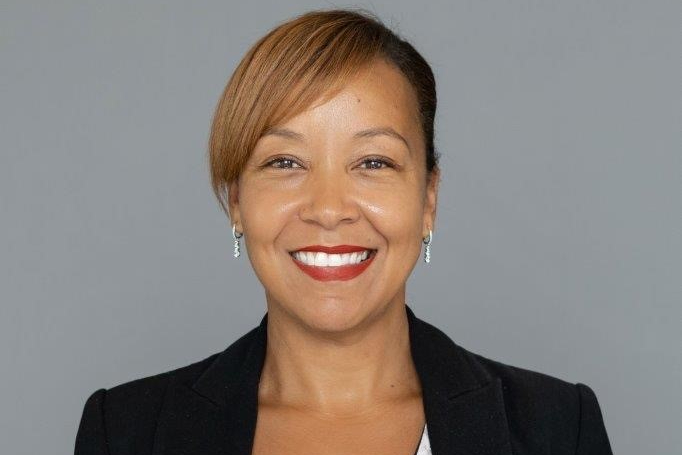
Rachel McKoy, president of Lawyers in Local Government, and director of law & governance (monitoring officer) at Hounslow LBC
Monitoring officers have been a fixture of local government since 1989, but until 2025 they did not have a dedicated professional body to represent and support them in fulfilling their legal and governance responsibilities.
The Association of Monitoring Officers (AMO), set up by Lawyers in Local Government (LLG), aims to give monitoring officers the same professional standing as finance directors get through the t the Chartered Institute of Public Finance and Accountancy and chief executives have via Solace [spell out] provide for finance officers and chief executives.
Heading up the new body as executive director is Rachel McKoy, a former president of LLG and previously director of law and governance (monitoring officer) at the London boroughs of Newham, Havering and Hounslow.
“The whole purpose is to provide that professional national voice for monitoring officers, so we are rightly seen as a key component of the top tier of corporate governance in local government,” says Ms McKoy.
AMO is currently a formal committee of LLG, with admin and communications support provided by the parent organisation. AMO will be rolling out benefits over the first three months of this year. Its services are free of charge until 1 April and it intends to announce a subscription fee to meet its operational costs
Alongside a national voice, AMO will also provide peer-to-peer support by launching a helpline, staffed by volunteer monitoring officers, to support colleagues dealing with complex issues and tasks.
The sector is under a lot of pressure from an exodus of lots of people retiring
“Over recent years there’s been lots of retirement, and what we find nationally are lots of monitoring officers that have fallen into that role quite quickly, without that support, without all that grounding and those years of experience,” she says.
To support newer colleagues, AMO will also seek members’ views on which policies and guidance would be most helpful, in order to develop standards and commission thought pieces that can be shared across the profession.
Ms McKoy says “the sector is under a lot of pressure from an exodus of lots of people retiring”. This comes amid a “perfect storm” of underinvestment following austerity and political instability in councils.
Politics at home and abroad
Ms McKoy says the responsibilities and duties of monitoring officers have been particularly affected by the “national and geopolitical context”.
“We’ve had other parties, new parties, that are taking up those seats and forming councils, and they’re new to this,” she says. “Reform is probably the biggest one, with a whole new cohort of members that haven’t done this before. It brings a lot of pressure in terms of training and doing things in a different way, so it’s more challenging.”
Reform made the biggest gains in the May 2025 local elections, electing 677 councillors and winning a majority of seats in 10 local authorities.
While she reiterates that monitoring officers are not directly involved in council politics, she says “the way resources change according to the manifestos in terms of governance” can still affect how councils operate.
“They have come with a certain perspective, like with DOGE, and they don’t want to be doing training for DEI [diversity, equity and inclusion], as they consider it to be wasteful expenditure, but some of those things are really important.”
She stresses she is not “picking” on Reform, but says they are “the biggest kids in town”, with “a different approach and a different manifesto”, which can create “conflict”.
“They’re a party, but they are new, and they don’t understand the system.”
Ms McKoy explains how these ideological differences can create challenges around training and promoting representation within communities.
Whatever happens politically and geo-politically cascades down locally
“We’ve got statutory responsibilities to skill up a workforce; we do have a public sector equality duty. Decision-making in local government has to follow a constitutional process. You can’t just do whatever.”
Ms McKoy also says issues abroad have filtered into the day-to-day duties of monitoring officers, particularly “the conflicts in the Middle East”.
She refers to the government’s stance towards Israel’s large-scale bombing campaign in Gaza following the 7 October attacks by Hamas, which has spilled into local politics and led to “member-to-member confrontations or complaints”.
“What lots of authorities and monitoring officers have been dealing with is lots of demonstrations outside council buildings, which has spilled into full council disruption,” she says.
Many councils have had to develop security policies for public attendance at meetings, with full security personnel becoming “standard now to ensure the safety of members and staff and to make sure business can be conducted”.
“Whatever happens politically and geo-politically cascades down locally,” she says.
The complexities of LGR
National decisions also continue to shape local governance through the local government reorganisation (LGR) programme.
More than 50 proposals have already been submitted to the Ministry of Housing, Communities & Local Government for review as the government aims to replace tow-tier areas with single unitary authorities.
Ms McKoy says submitting proposals is only the start of the work for monitoring officers, as the next stage involves building entirely new governance arrangements, with “lots and lots of work”.
“The concern is these new structures need to be established, created, drafted,” she says. “Those lawyers will have to draft new constitutions and memberships, with proportional representation, set up shadow committees and shadow councils, and work out how that transition works – what assets each authority has, making sure contracts are terminated, and land is transferred.”
Ms McKoy says LGR brings significant “uncertainty” for monitoring officers whose councils may disappear, requiring them to reapply for roles elsewhere. “The numbers will dwindle because we’re losing all of our districts,” she says.
She describes this as particularly concerning for a profession that is already “really dwindling and creaking” under “funding pressures”, adding that “there’s been a real depletion of funding for everyone”.
Ms McKoy does, however, welcome steps by the new government to tighten standards and the conduct framework for local government, which she says provides a “clear steer”.
“But the devil is in the details,” she says. “What the government is proposing is that members will have an appeal mechanism where they can ask for a review. What we would like to see is more clarity on how that is going to work, because that’s a big stack of an extra burden on local government.”
New challenges and new burdens
She says similar clarity is needed on other developing policies, such as systems of neighbourhood governance.
These structures are intended to empower local communities and ward councillors by bringing decision-making closer to residents.
Amongst all of us, we’ve got a lot of good humour and resilience
“It’s all great, and I’m for it because it’s all about local voices,” says Ms McKoy. “But again, it’s that capacity issue – how it’s going to work in terms of capacity and who’s going to help administer all of this, because you still need that local engagement.”
Capacity and funding are recurring themes in her concerns for the sector, particularly given additional pressures from temporary accommodation and special educational needs and disabilities.
“I know it sounds so cliché, saying we need more funding and capacity, but we literally do,” she says. “There are some areas where it’s just so obvious – like temporary accommodation and Send are a national issue. It can’t just be for the local authority to absorb that within their budgets because it’s across the whole country.”
Spending on temporary accommodation has surged, reaching £2.8bn in 2024-25, a 25% increase on the previous year. On Send, the government has announced it will take on the costs from 2028-29, with the current statutory override keeping Send deficits off council balance sheets set to end in 2027-28, but has yet to set out further details.
“Once again, the solution would be more funding and more training in order to increase capacity.”
Despite the scale of the challenges, Ms McKoy remains optimistic.
“We are quite a dynamic bunch,” she says. “Amongst all of us, we’ve got a lot of good humour and resilience. That’s why the support is so important, especially for the newer, more junior colleagues coming into it.”