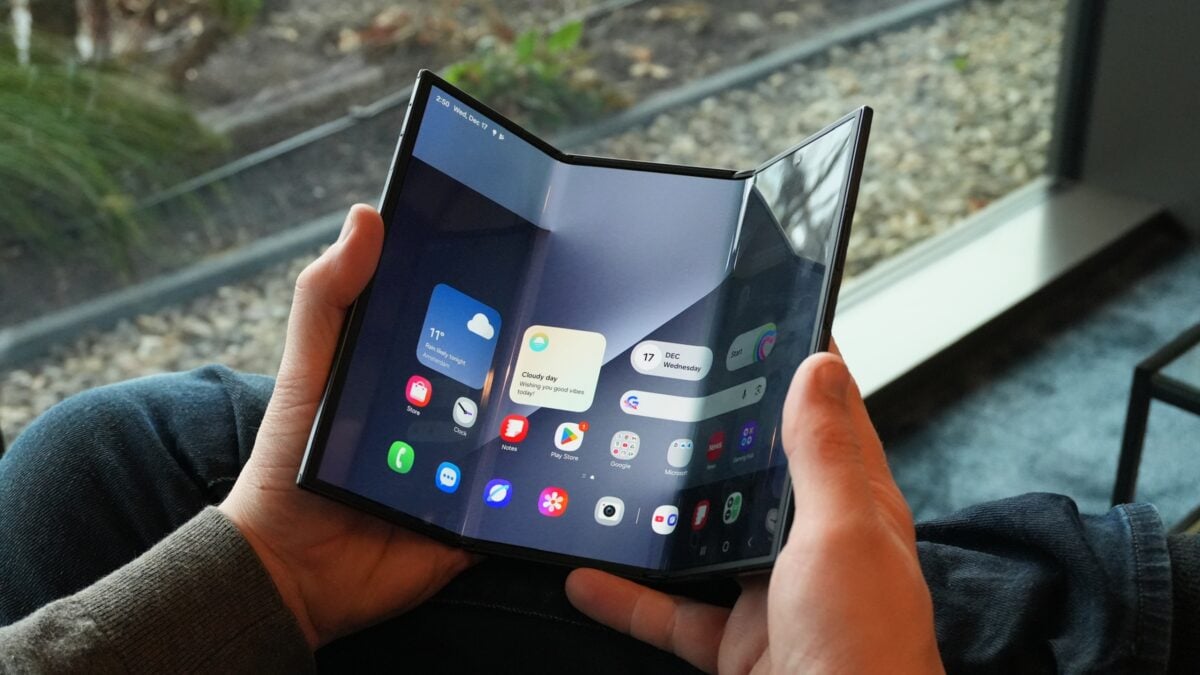
Our earlier suspicions were recently confirmed by reports from Korea: Samsung is selling the Galaxy Z TriFold at a loss. This could lead to a higher launch price for the TriFold 2, assuming Samsung can’t lower production costs.
In Korea, the TriFold — offered only in a 512GB+16GB configuration — launched at 3,590,400 won ($2,447). By comparison, the 512GB+12GB Galaxy Z Fold 7 sells for 2,537,700 won ($1,730). Despite the price gap, Korean media says Samsung spends more on each TriFold than it earns.
In that sense, the TriFold functions like a halo car. Samsung poured heavily into its research and development, but the device isn’t profitable. At least not yet. Its purpose is to boost Samsung’s brand and draw attention to its broader foldable lineup rather than to earn Samsung money directly.
Even if Samsung loses funds on every TriFold sold, the company is betting on long-term gains in market share, brand desirability, a popularity boost for other foldable phones, and so on.
Could this mean the Galaxy Z TriFold 2 will cost more?
Possibly. While halo products aren’t unusual, they aren’t a sustainable long-term strategy. Eventually, Samsung will need to earn a profit on TriFolds, either through lower production costs or higher launch prices.
If future TriFold models can’t be made more efficiently, the $2,500 price in Korea may be unsustainable, potentially forcing higher launch prices.
A change in strategy may be even more necessary once Samsung releases the TriFold globally. While the company can absorb losses on the limited Galaxy Z TriFold release in select markets, global sales at a loss could be disastrous.
Hopefully, by the time the TriFold series goes global, the original halo product should have done its job: elevating the entire foldable lineup and helping Samsung lower production costs. Either way, a pricier TriFold sequel doesn’t seem out of the question.