
Porsche‘s latest patents show a company that is looking at the future but also well into the past. Three different patents all involve leaf springs. A suspension technology that every other serious performance car left behind decades ago and even the Corvette doesn’t use anymore. It combines that spring with an in-wheel electric motor, showing that old and new can work together quite well.
Three Ideas Covering Leaf Springs Over Coils
Porsche suspension patentsPorsche/EUIPO
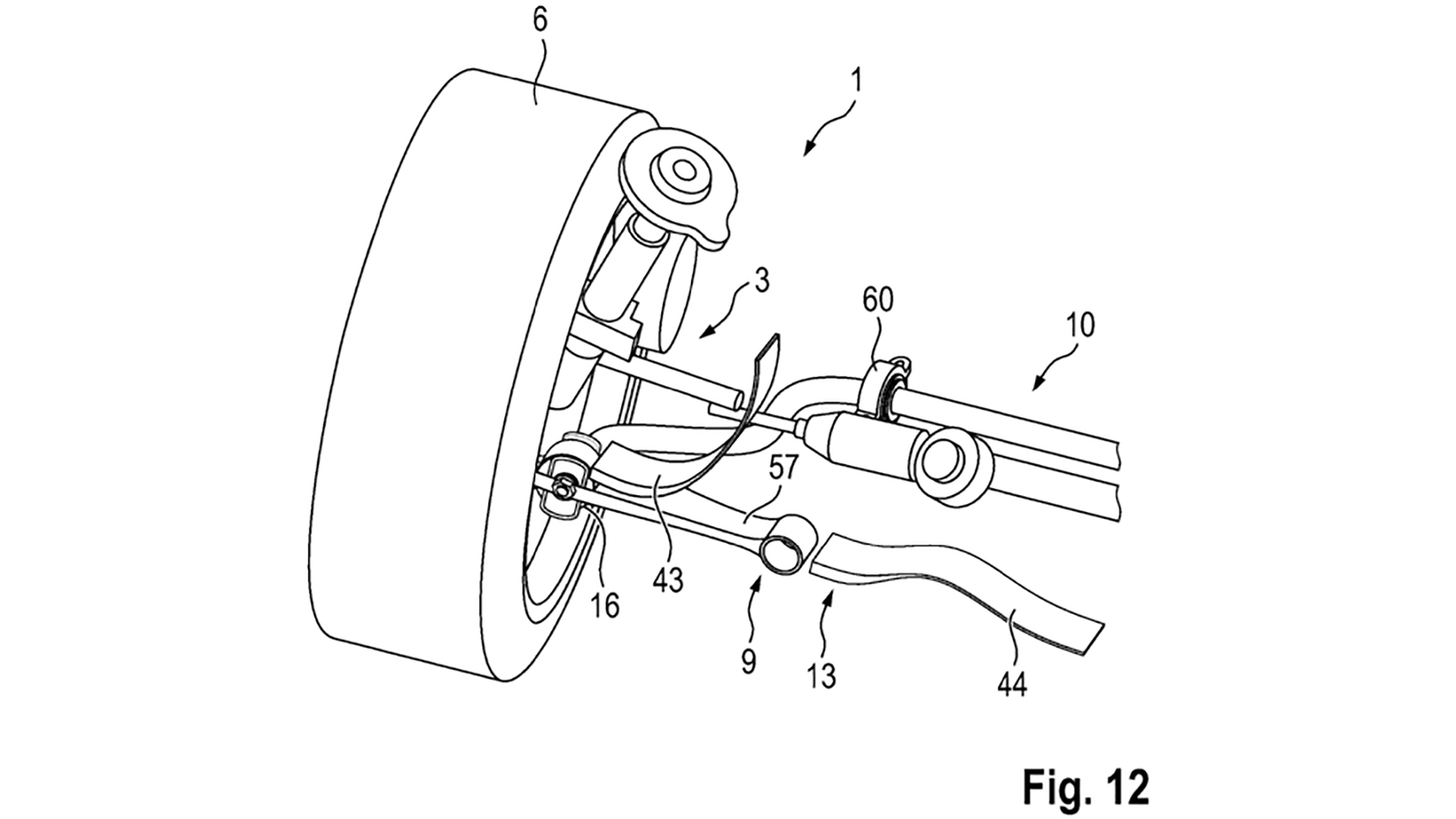
The first patent involves placing both an electric motor and its transmission inside the wheel, along with the brakes. It uses a leaf spring as part of an effort to “reduce the overall height of the individual wheel suspension.”
A modern suspension’s strut length is largely decided by how much wheel travel the vehicle needs, but the length of the spring required plays a part in that. Coil springs take up a lot of vertical space, leaf springs don’t.
Porsche suspension patentsPorsche/EUIPO
Getting rid of the coil lets Porsche lower the strut tower. That allows different styling, and Porsche says it can even help with pedestrian safety. Most importantly for Porsche drivers, though, ditching the coil is good for the steering roll radius. It’s good for handling.
Related
Porsche’s New Patent Ditches The Hybrid For A Geared Turbo With Clutch And Brake
The complex turbocharger setup includes a geared input shaft that has its own clutch and brake for greater flexibility.
In this first one, the leaf takes the place of one of the lower control arm links. It’s short, compact, and light. It leaves the car with an independent front suspension.
System Allows Height And Rate Adjustments
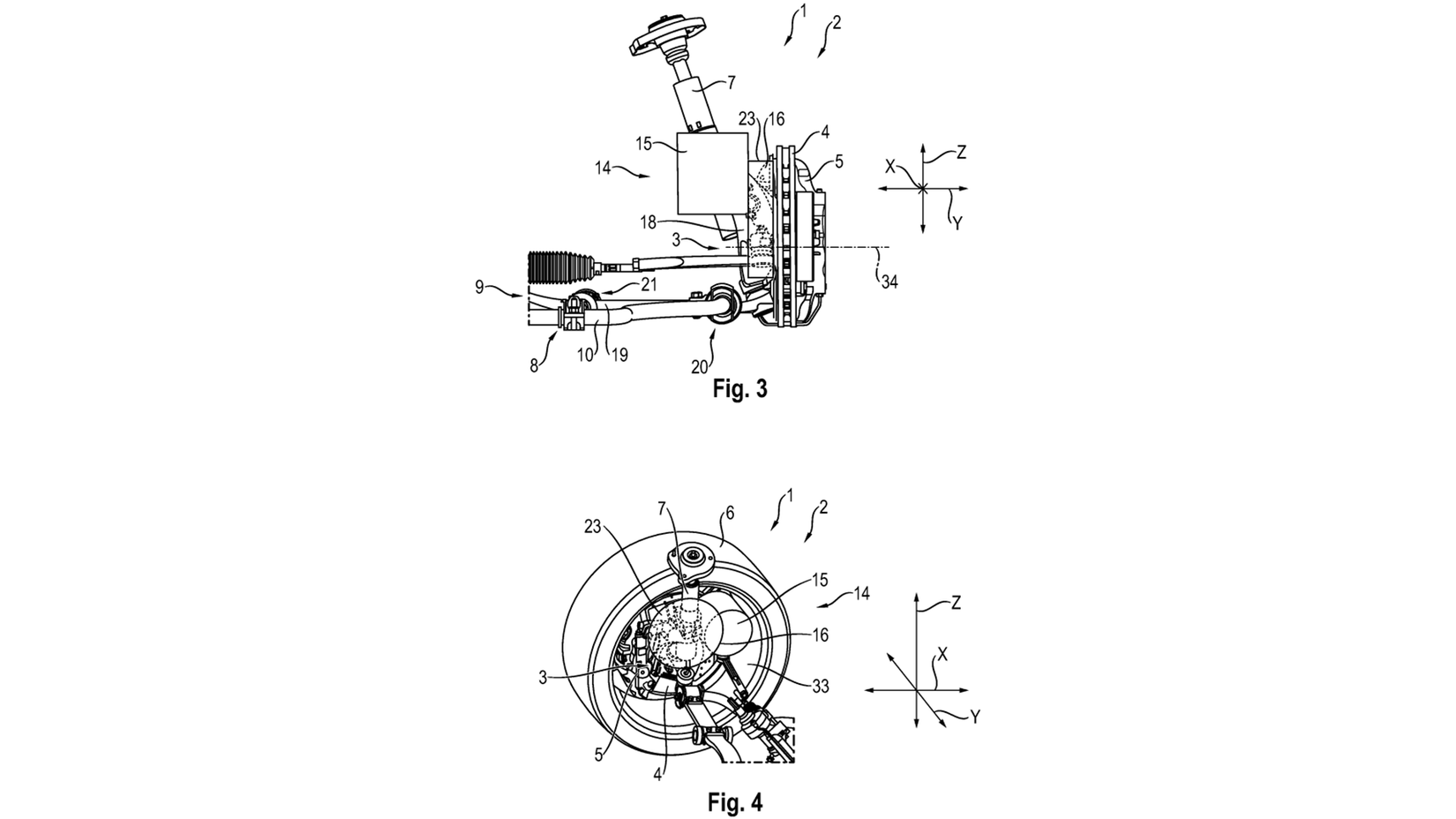
Porsche suspension patentsPorsche/EUIPO
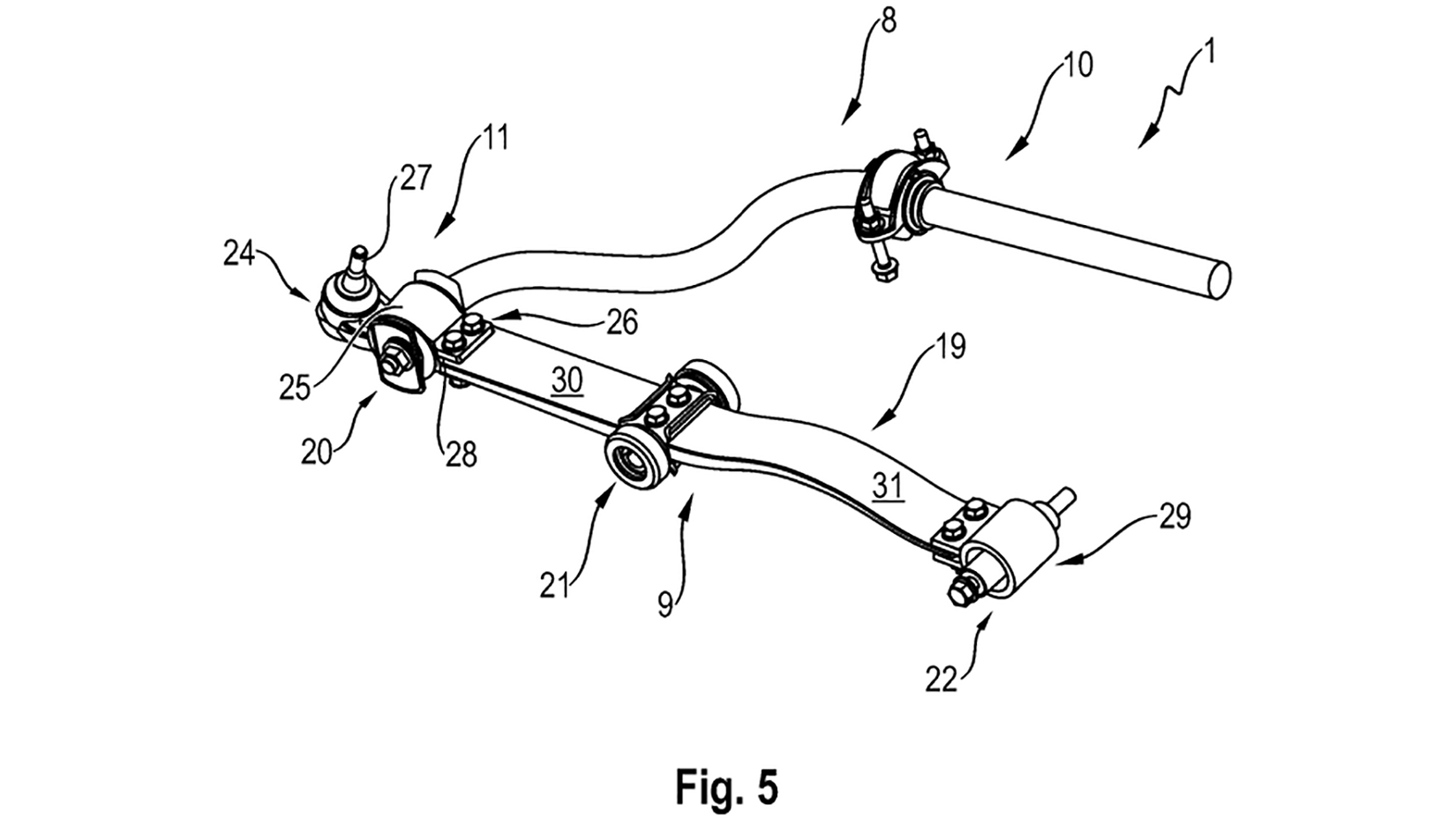
The second patent focuses on the spring itself, and how it would attach to the vehicle. It shows a two-part spring, joined to the ball joint at one end through a bushing, another bushing in the center link, and a bushing mounted to the car on the inside. The inner link is the one that’s doing most of the “spring” action, the outer is more rigid, moving up and down to allow wheel travel.
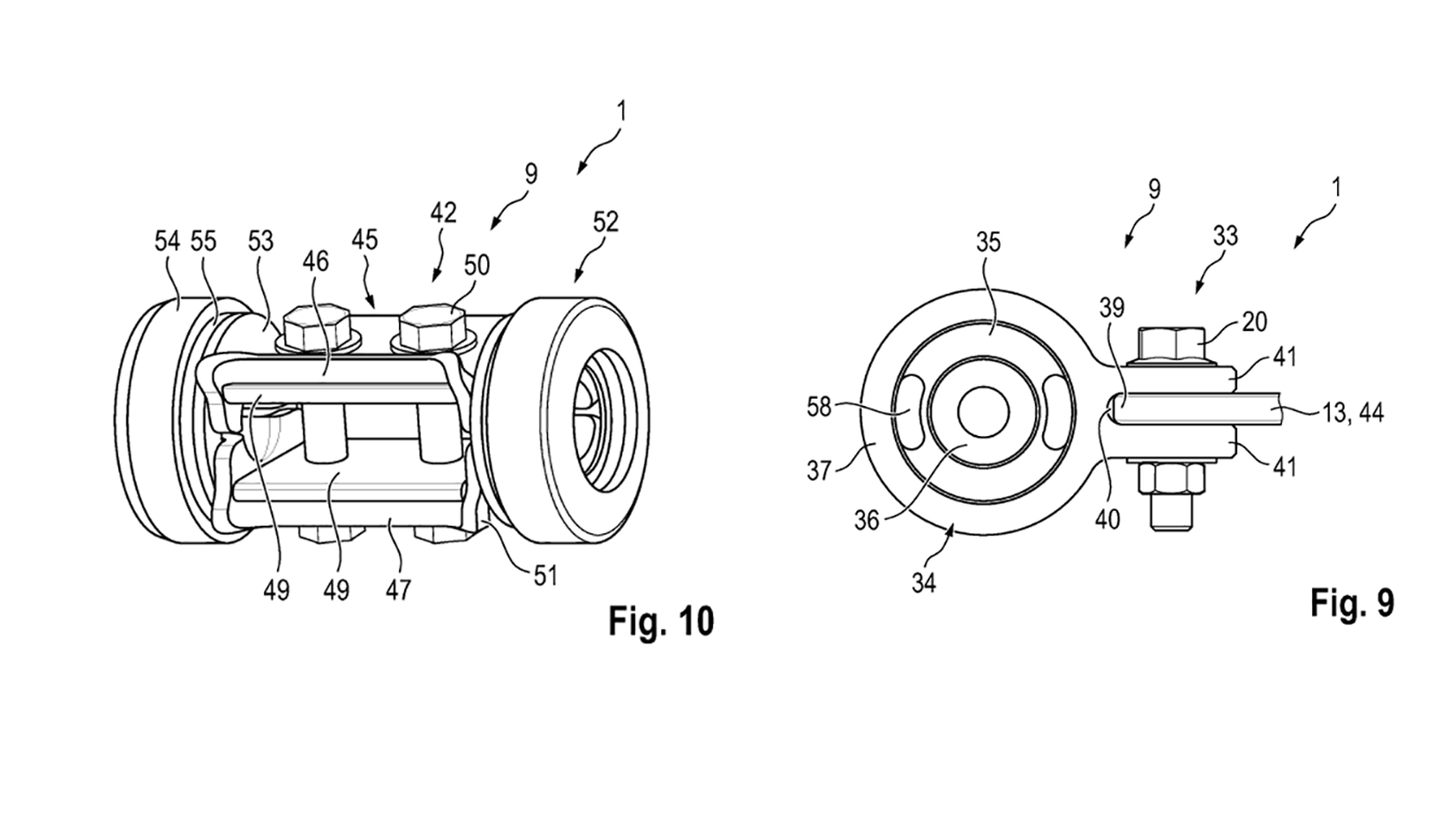
Porsche suspension patentsPorsche/EUIPO
Porsche’s third patent covers how the spring is mounted, and what that lets the company do. It describes a bushing connection that would let Porsche adjust the spring stiffness using electric or hydraulic activation. This simple method could adjust stiffness and change ride height on the fly without the need for a more complex air spring system.
Today, if you think leaf springs you think pickup truck, but the flat bars, usually steel, used to hold up the body of nearly every vehicle on sale. Before that, they did the same for wagons. Actual wagons, with horses. Not the station kind.
Porsche
Some performance cars have shown that the simple flat bar suspension can work. The most notable has been the Chevrolet Corvette, which used a sideways-mounted leaf spring in the rear all the way through the C7 generation. It’s only the most recent C8 that swapped it for rear coil springs because of the rear-mid mounted engine.
Related
Porsche Finds Yet Another Way To Keep Combustion Alive
New two-piece pistons could stay cool no matter the pressure.
Porsche hasn’t used the design before, but it has shown that the company is open to anything in the name of performance. Porsche has used torsion bars, where a piece of metal bends to provide the spring action. It also famously used the “Weissach axle” beginning with the 928 that added a pivot point in the trailing arm to change toe when braking, which helped cancel lift-throttle oversteer.
Patent filings do not guarantee the use of such technology in future vehicles and are often used exclusively as a means of protecting intellectual property. Such a filing cannot be construed as confirmation of production intent.
Source: EUIPO