
Support CleanTechnica’s work through a Substack subscription or on Stripe.
When it comes to alerting the public about food contamination, public health officials can use all the help they can get — and they may be getting it, from a snake. Specifically, the giant anaconda that featured in the new National Geographic series Pole to Pole with Will Smith is contributing its unique feeding patterns to a sort of early warning system, helping local populations avoid eating wildlife contaminated by lead, cadmium, and other toxic materials.
Food Systems And The Anaconda Sentinel
CleanTechnica had a chance to learn about the anaconda connection in a conversation with Bryan Fry, a toxicologist specializing in venomous creatures at the University of Queensland in Australia.
Fry — aka “Venom Doc” — also holds the post of National Geographic Explorer, in which capacity he participated in the filming of the South America leg of the Pole to Pole series. Anaconda samples collected in Ecuador, Venezuela, and Brazil during the filming supported a new study published in February 2024 in the open access journal MDPI, co-authored by Fry and a multinational research team.
“A key finding was the identification of two distinct clades within Eunectes murinus, revealing two species as cryptic yet genetically deeply divergent. This has led to the recognition of the Northern Green Anaconda as a separate species (Eunectes akayima sp. nov), distinct from its southern counterpart (E. murinus), the Southern Green Anaconda,” the researchers summarized.
Got all that? Good! In our conversation, Fry also offered a plain-language explanation (edited for clarity and flow):
CleanTechnica: In terms of wild food systems, what is the significance of the new finding?
Fry: The Northern Green Anaconda is unique. There is extreme sexual dimorphism. The females are “everything anaconda,” but the males are smaller and built like an eel. They have a totally different predatory ecology, so we can use them as a tool, as a sort of sentinel.
They are feeding on different animals. The females are feeding on deer but the males are feeding on fish, turtles, and frogs. So, the bioaccumulation [of pollutants like cadmium and lead] is higher in males due to their diet.
CleanTechnica: Are some people more at risk than others?
Fry: Pregnant women, and children, need a lot of protein, and fish are a staple food item. Pregnant people and young children have to stop eating top-level predatory fish.
CleanTechnica: How does your research support the case for placing a real value on ecosystem services, such as a safe habitat for local food systems?
Fry: Visiting this area was a childhood dream come true but also a nightmare because of the ecological side of things…. We can start by getting rid of the highest-risk oil drilling.
Beyond Saving The Polar Bears
The food systems connection brings up a valuable point for climate and biodiversity communications. Clearly, many people care about the impact of climate change, oil spills, and other contaminants on wildlife. Fry points out that the concern is more intimate and universal when the impacted wildlife is also part of the local food system, where pollution can ripple into severe public health consequences, particularly among babies and young children.
With the Pole to Pole series, Fry anticipates that Will Smith will help engage new audiences, beyond those who regularly tune into the nature documentaries. “Talking about wildlife most of the time you’ll be preaching to the choir. Human impact is the great leveler driving home the message,” Fry told CleanTechnica.
“This [Pole to Pole series] is a novel take. There is an everyman link. The ‘fish out of water’ element is a bridge to a much more broad and diverse audience,” Fry added.
As for the series itself, if you blinked, you missed the January 13 premier on National Geographic Worldwide, but you can still catch the series streaming on Disney+ globally, and on Hulu in the US.
The ambitious series spans all seven continents and took five years to film. In addition to the Amazon jungles, Pole to Pole covers extreme environments in mountains, deserts, caves, islands, and icebergs, highlighting connections with humans as well as wildlife and the natural world (here’s some more background).
Know Your Food Systems
Of course, food system risks are not limited to remote populations that depend on local wildlife for subsistence. Here in the US, for example, fish and shellfish contamination has been a longstanding concern of public health officials, particularly for children and people who are pregnant or breastfeeding, as well as people who may become pregnant. Aside from oil spills and other periodic episodes, power plants and coal ash disposal sites are among the ongoing sources of concern (see more coal ash background here).
“If you eat fish caught by family or friends, check for fish advisories,” the US Environmental Protection Agency and the Food and Drug Administration jointly warn. “If there is no advisory, eat only one serving and no other fish that week.”
In other words, don’t eat any fish under advisory, and don’t eat more than one serving a week even if you don’t see an advisory. That sounds pretty extreme, but again, this guidance applies only to children, current and potential pregnancies, and breastfeeding, where the fish in question has been provided by an individual.
“Some fish caught by family and friends, such as larger carp, catfish, trout and perch, are more likely to have fish advisories due to mercury or other contaminants. State advisories will tell you how often you can safely eat those fish,” EPA warns again for good measure.
The other option is to avoid individually caught fish altogether, and get your fish fix from the grocery store where there are a wide range of choices that can limit mercury exposure.
“While it is important to limit mercury in the diets of females who are pregnant or breastfeeding and children because of its potential effect on developing brains, many types of fish are both nutritious and lower in mercury,” EPA adds, directing attention to a chart labeled Best Choices – Good Choices – Choices to Avoid.
For the record, among the list-makers in the Choices to Avoid category are bigeye tuna, king mackerel, marlin, orange roughy, sharks, swordfish, and tilefish from the Gulf of Mexico.
Mercury aside, the FDA is also continuing to review data on PFAS contamination in foods, with a focus on clams, oysters, and other bivalve mollusks, as well as the ten most-consumed seafood species, so keep an eye out for their next report.
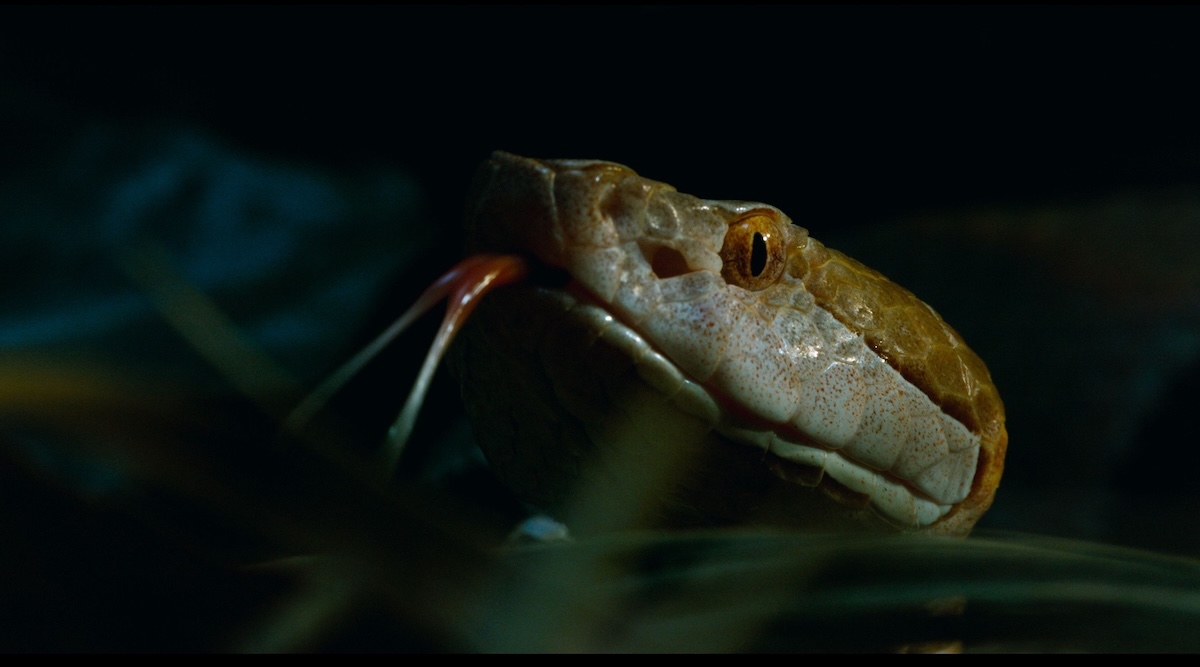
Photo: The new Pole to Pole series from National Geographic offers some surprising clues about food system protection alongside the thrills and chills of a seven-continent adventure (courtesy of National Geographic).
Sign up for CleanTechnica’s Weekly Substack for Zach and Scott’s in-depth analyses and high level summaries, sign up for our daily newsletter, and follow us on Google News!
Advertisement
Have a tip for CleanTechnica? Want to advertise? Want to suggest a guest for our CleanTech Talk podcast? Contact us here.
Sign up for our daily newsletter for 15 new cleantech stories a day. Or sign up for our weekly one on top stories of the week if daily is too frequent.
CleanTechnica uses affiliate links. See our policy here.