
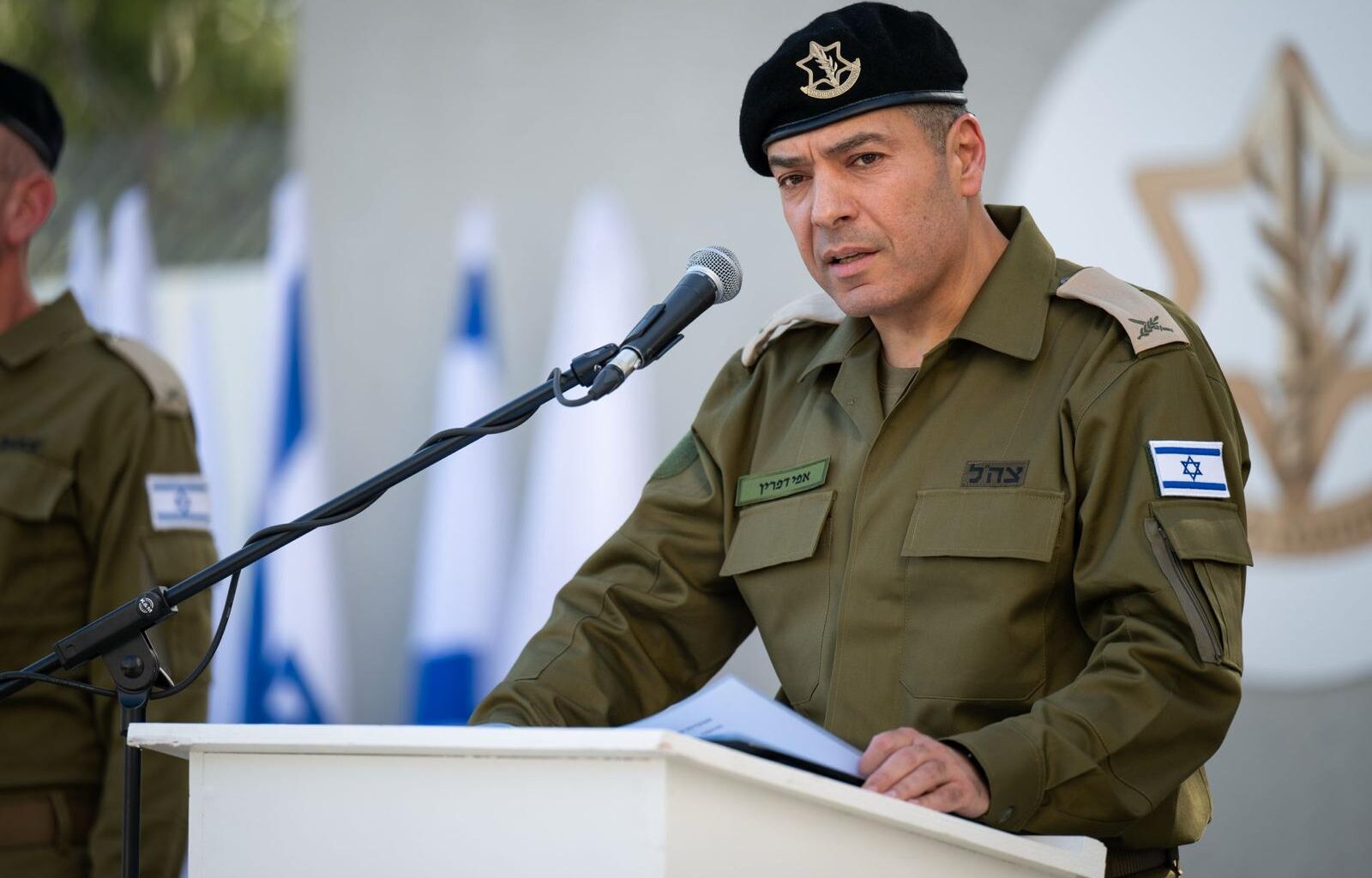
“It is important for me to address you before Shabbat begins.” With that sentence, Israel’s military spokesperson finally stepped into a conversation that — by then — had already run away from everyone.
For days, and especially on Wednesday, January 14, Israeli social media had been flooded with confident predictions of an imminent US strike on Iran, followed — inevitably, we were told — by an Iranian missile attack on Israel. People refreshed flight trackers, dissected radar maps, and treated every unverified screenshot as breaking news. WhatsApp groups filled with “sources” and “warnings.” Residents called their municipalities demanding guidance. Mayors felt pressure to “do something.” And yet the one actor that could have anchored the public mood with a clear, authoritative message—the Israel Defense Forces—waited until Friday afternoon to say, in effect: stop listening to rumors.
The spokesperson’s plea was reasonable: rely on official channels, act responsibly, do not amplify speculation that stokes fear. The problem was timing. When the public most needed reassurance, the official voice largely disappeared. That absence did not create the panic, but it gave it room to become contagious.
A rumor machine fed by real trauma
It is true that this anxiety did not appear out of nowhere. Since early November, the possibility of renewed confrontation with Iran had been kept alivethrough official hints, media reporting, and an ecosystem of “security commentators” online who profit from suspense. Many Israelis still carry fresh memories of the previous 12-day conflict: repeated shelter runs, hospitals under strain, the uneasy realization that “safe spaces” are fragile, and dozens of civilians killed. A society that has recently lived through that kind of stress is primed to treat the next warning as credible, especially when it comes dressed as certainty.
This time, the context was the wave of protests that began in Iran on December 28 over economic hardship and quickly evolved into broader demonstrations against the regime. The state responded with repression, mass arrests, and internet shutdowns. Reports about casualties and the scale of violence were alarming and, by their nature, difficult to verify in real time from outside. Into that chaos stepped Donald Trump, eager to present himself, once again, as the world’s sheriff. warning that if Iranian authorities continued killing demonstrators, the United States might intervene militarily.
From that moment, rumors multiplied. Not just whether a strike would happen, but when. Not just what “intervention” meant, but what targets would be hit — nuclear facilities, ballistic missile depots, command centers — often in contradictory combinations. Some commentators spoke as if the operational plans were already printed and signed. Others framed the threat as a moral crusade for democracy. And many in the region — Israel included — began trying to tailor the story to their own interests: Saudi Arabia, Qatar, and Turkey all had their reasons to either encourage pressure or restrain it. In Trump’s orbit, every actor tries to read the weather, and then sell their forecast as fact.
January 14: the day fear became content
The tension peaked on Wednesday, January 14, after Trump announced that he was suspending any negotiations with Iran and urged protesters to seize government institutions, assuring them that “help is on the way.” The wording was classic Trump: maximalist, dramatic, and strategically vague. But in the online economy of panic, it was treated as a countdown.
From that point, several things happened almost at once.
On social media, the usual roulette began: self-appointed “analysts” trying to pinpoint the exact moment of attack, interpreting aircraft movements, naval deployments, and anonymous “leaks.” Many of these voices have built their platforms since October 7 by living inside permanent emergency mode. War, for them, is not only a national crisis — it is a brand strategy.
What made this episode especially toxic was the casual dishonesty. False reports — easily checkable — were presented as confirmed facts (for instance, claims that certain airlines had suspended flights to Israel). Serious reporting from credible outlets was circulated selectively, cropped in ways that removed the doubts and caveats, leaving only the most alarming interpretation. The goal was not to inform. It was to perform certainty. And certainty is addictive—especially when it flatters the audience with the idea that they are seeing what “the media won’t tell you.”
Meanwhile, the diplomacy, largely ignored by the prophets of doom, was actually moving.
Iran’s foreign minister, Abbas Araghchi, gave an interview on Fox News. He spoke about foreign interference in the protests, but he also delivered two key messages: that the regime claimed it had regained control, and that there would not be a mass execution of demonstrators as had been widely rumored. At the same time, Saudi Arabia, Qatar, and Turkey reportedly worked channels aimed at discouraging Washington from turning threats into bombs. Their argument was not moral; it was pragmatic: a strike could unleash regional chaos, trigger an attempt to close the Strait of Hormuz, disrupt Gulf oil exports, spike global prices, and hurt the United States economically.
Saudi Arabia’s position has its own logic: a weakened, isolated Iran can be useful to Riyadh’s regional ambitions, but a collapsing Iran, or a war that threatens energy routes, creates risks too big to price in. Turkey has different anxieties: a long border with Iran and the fear that turmoil would empower Kurdish movements in ways Ankara sees as existential. Both governments also understand something simple: Trump can be pressured, flattered, and redirected—often by the leaders he personally likes.
Then came Trump’s press appearance at the White House. He announced — citing a “reliable source” — that the killing of protesters had stopped and that the feared mass executions had been canceled. But the world had heard essentially the same information hours earlier, from Iran’s foreign minister on Fox News. The point is not that Araghchi should be trusted. It is that the “new” justification for de-escalation was already circulating. The strike narrative was not collapsing because social media got it wrong; it was collapsing because regional and political incentives were pulling it away from the cliff.
Israel’s vacuum, and the politics of gesture
Back in Israel, the emotional weather was still storming. Driven by rumors of aircraft in the air, ships in the region, and alleged “Russian sources” speaking to Al Jazeera, Israelis started calling municipal hotlines in search of answers. The calls became so intense that several cities — Beersheba and Dimona among them — opened public shelters and publicly announced the decision. Other cities were pushed to explain why they were not doing the same.
This is how panic becomes policy: not through a formal decision, but through pressure and imitation. Once one municipality opens shelters, another fears looking negligent. Soon, the act of “doing something” becomes more important than whether that something is necessary. It is leadership as performance, because in a panic, symbols travel faster than facts.
The absurd peak came when the mayor of Arad released a statement explaining that opening shelters was unnecessary because they operate automatically during alerts (a system shared by many cities, including those that had opened shelters). He then added a confident prediction: an attack would come Friday morning, involving “20 to 30 missiles,” and advised residents to do their Shabbat shopping on Thursday in case of disruptions. He ended with a tragicomic reassurance: we’ve had bigger attacks, so there’s no reason to panic.
That is what institutional drift looks like: local officials improvising missile forecasts, while the national authority that actually monitors threats speaks late, briefly, and defensively. The IDF spokesperson was right to warn against rumors. But the public is not only asking citizens to be responsible; it is asking institutions to be present.
The non-attack—and the real story no one wanted to cover
The ending is familiar: the attack did not come — at least not then. And of course, no one can claim to know what Trump will do tomorrow. The day after, Steve Witkoff said in a public setting that he was in contact with Iranian officials and even outlined the contours of a potential negotiation: uranium enrichment, missiles, nuclear stockpiles, and Iran’s proxy network.
And the Iranian people? The democratic aspirations? The protesters and the dead? Those subjects, central to the emotional trigger of the panic, fell out of the storyline once they stopped serving the spectacle. Like Venezuela, like countless causes that flare on American rhetoric and then cool into realpolitik, they were left waiting.
Which brings us back to the lesson of January 14. This was not just a story about irresponsible influencers, though their role was unmistakable. It was a case study in how public calm is either maintained — or abandoned.
A society living under threat cannot afford an information ecosystem that treats fear as entertainment. When information becomes spectacle, rumors become ammunition. And when official authority disappears at the critical hour, it does not neutralize the panic; it validates it by silence.
Next time, it will not be enough to deny rumors late. The antidote to viral fear is not scolding the public on Friday afternoon. It is showing up early, clearly, and consistently, with a voice competing not for clicks, but for trust.