
It’s bingo night at the Royal Canadian Legion in Churchill, Man., and Joe Stover is poring over an impressive pile of card sheets, hoping for a little luck.
A warm pastime on a cold night, Thursday bingo is a popular event for residents of this town beside where the Churchill River flows into Hudson Bay. Mr. Stover helps the caller verify winners after they’ve piped up, and good-naturedly grumbles about his own misses.
Like many in town, he said world events seem suddenly close to the remote northern locale. That’s because of U.S. President Donald Trump’s threats to take over Greenland. If successful, Canada’s Far North would be surrounded by two U.S. holdings – Alaska and Greenland – and Russia.
Joe Stover has lived in Churchill since 1987, and says he has long viewed the town as a place of significance when it comes to national security and sovereignty.
“The fact that he isn’t ruling out military action is just so concerning,” said Mr. Stover, a former port worker who is now in the tourism industry.
“Especially this term, he’s following through on a lot of the crazy stuff that he’s talked about, and so far his administration is just complicit in letting him do whatever the heck he wants,” he said between daubs.
Mr. Stover said Trump’s foreign policy boosts the profile of a planned multibillion-dollar port expansion at Churchill that could enable new trade routes through the Arctic, a project that has seen years of false starts.
Churchill is not in the Arctic – it’s about 140 kilometres south of the Manitoba-Nunavut border – but it certainly gets as frigid in the winter, and is renowned for the polar bears that symbolize the Far North. It’s also played a decades-long role as a supplier for the Arctic.
Churchill’s deep-water port is connected by more than 1,000 kilometres of track and has an airstrip that handle any size of aircraft. The Arctic Gateway Group has owned and operated the port and the Hudson Bay Railway since buying both in 2018.
Arctic Gateway Group (AGG), which operates the port and the railway that serves it, is planning the proposed expansion to bolster exports of everything from critical minerals to fertilizer to energy products, seeking markets in Europe, the Middle East and South America as climate change makes more northern shipping routes navigable.
This is a tall order for a port that is currently ice-free for just four months a year, and requires major upgrades. Not everyone is on board with the idea.
But now, with Mr. Trump repeatedly declaring his desire for Greenland after musing about absorbing Canada, Churchill’s potential to help defend the country’s sovereignty has come into sharper focus, too. This is not lost on residents, who wonder how it may affect them.
Louise Lawrie visits the library at the Town Centre Complex in Churchill. Mrs. Lawrie’s grandparents came to Churchill in the 1930s, and she has lived in the region all her life.Matt Horseman/The Globe and Mail
“I think the worst part is the uncertainty,” says Louise Lawrie, a retired teacher and community volunteer who has lived in the region her whole life. “I mean, you wake up and listen to the news and think, what’s next? You think it’s got to stop, it’s got to turn, and it’s just not doing that. It’s affecting the whole world, this wanting to take over Greenland.”
Ms. Lawrie and her husband, Gavin, are generally supportive of increased development and trade, but worry about the pressures it will bring on the town, which currently has limited public services and now supports a tourism economy.
Ottawa unveiled its Arctic Foreign Policy in late 2024. It was aimed at deepening co-operation with regional Arctic allies, including Denmark and the United States. The policy addresses security worries as Russia and China vie for polar territory.
If the U.S. ceases to be a friendly ally, the policy may require some rewriting.
These are the stakes as Prime Minister Mark Carney and his government’s Major Projects Office decide whether Churchill – the old port, railway and a series of other potential onshore and marine investments – will receive funding and fast-track approvals for its expansion along with other projects across the country that could be deemed in the national interest.
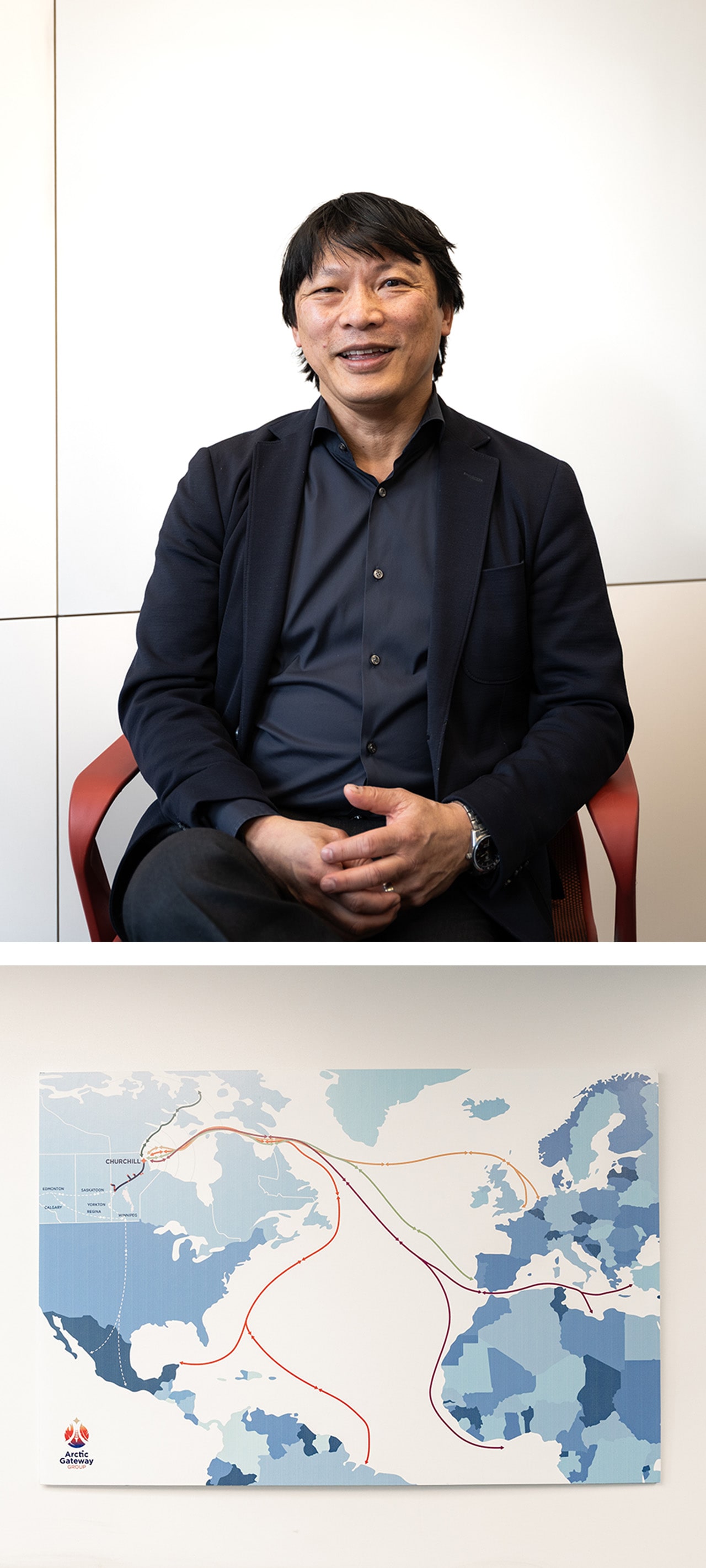
Chris Avery, CEO of the Arctic Gateway Group, at the company’s office in Winnipeg’s Union station. AGG is planning the proposed port expansion to bolster exports and seek markets in Europe, the Middle East and South America as climate change makes more northern shipping routes navigable.
The chaotic events of past two weeks at the hands of Washington show the importance of moving quickly to shore up Canada’s north, said Chris Avery, chief executive officer of AGG. He said his biggest fear is Canadians believing they can revert back to historical ties with the U.S. once Mr. Trump leaves office.
“You’re talking about Arctic sovereignty and Arctic security and, frankly, Canadian security. One of the parts of security is – and we’ve seen this trend in the world – where nations are using their economic power to dictate their agenda and to dictate their wishes onto other nations. It’s a wake-up call for Canada,” Mr. Avery said at the company’s office in Winnipeg’s Union Station.
He lists Churchill’s attributes: It’s a deep-water port connected to more than 1,000 kilometres of track, it can house more people than it does today, it’s plugged into the power grid and broadband internet, and it has a 2,804-metre airstrip that can handle any size aircraft.
Mr. Avery said the port could help serve the new fleet of submarines the Department of Defence is shopping for.
The operators of the port at Churchill, Man. are planning a multibillion-dollar expansion to bolster exports to global markets. The town’s mayor says the lack of investment over years has underestimated the strategic value of the facility.
The Globe and Mail
In its major project push, Ottawa has designated the potential development as “Churchill Plus,” as it may also include a corridor for energy products, new hydro power and fibre optic lines to the north, an all-weather road to the south and icebreakers.
AGG has owned the port and the Hudson Bay Railway, which extends to Churchill from The Pas, Man., since buying them in 2018 from the previous owner, Denver-based OmniTRAX. Churchillians still bristle at how the U.S. company let it fall into disrepair.
AGG, owned by 29 First Nations as well as local governments in Manitoba and Nunavut, is upgrading the port facilities after having repaired rail lines that washed out in the muskeg almost a decade ago, severing an important transport link.
Churchill is one of AGG’s owners, and for its chairman and longtime town mayor, Mike Spence, there’s a personal connection to seeing the project through. Growing up here, he recalls the town’s large U.S. military presence in the Cold War years.
Driving his pickup on ice-covered roads on a bright and crisp January afternoon, he points to where armed forces buildings and other facilities once stood on plots of land in sight of the vast frozen expanse of Hudson Bay.
Until the 1970s, it was a base for Canadian and U.S. armed forces stationed across the Far North to protect the continent from any threats from the Soviet Union.
In its heyday, the town had a population of more than 5,000. Now, fewer than 1,000 live here. Tourism is currently the main industry as people arrive from around the world to glimpse polar bears, belugas and the Northern Lights.
Fewer than 1,000 now live in Churchill, a fifth of its peak population, and tourism is now the key industry for the remote Manitoban town known as the ‘Polar Bear Capital of the World.’
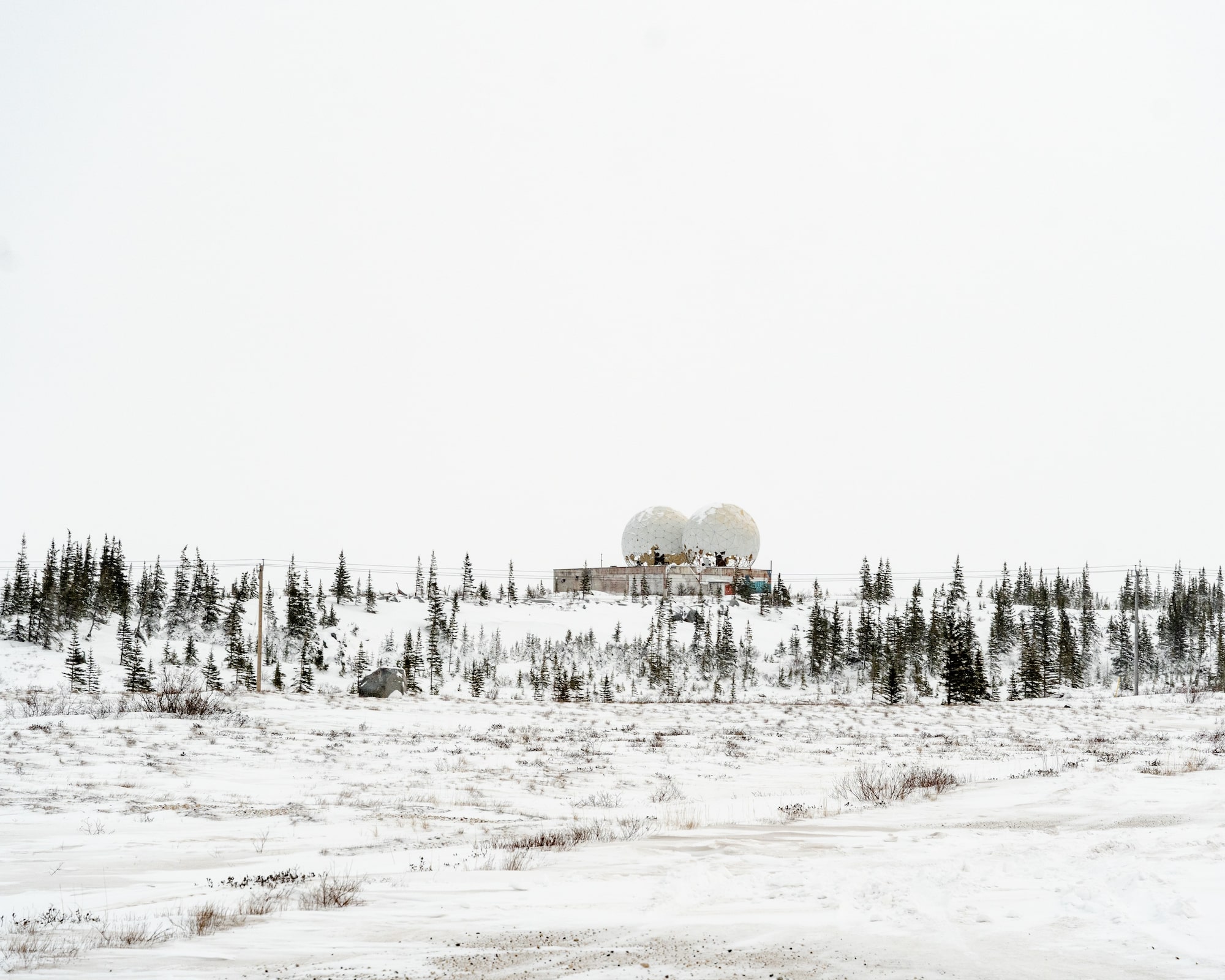
A now-defunct radar station, known locally as the Churchill ‘Golf Balls,’ sits on a ridge near the shores of Hudson Bay.
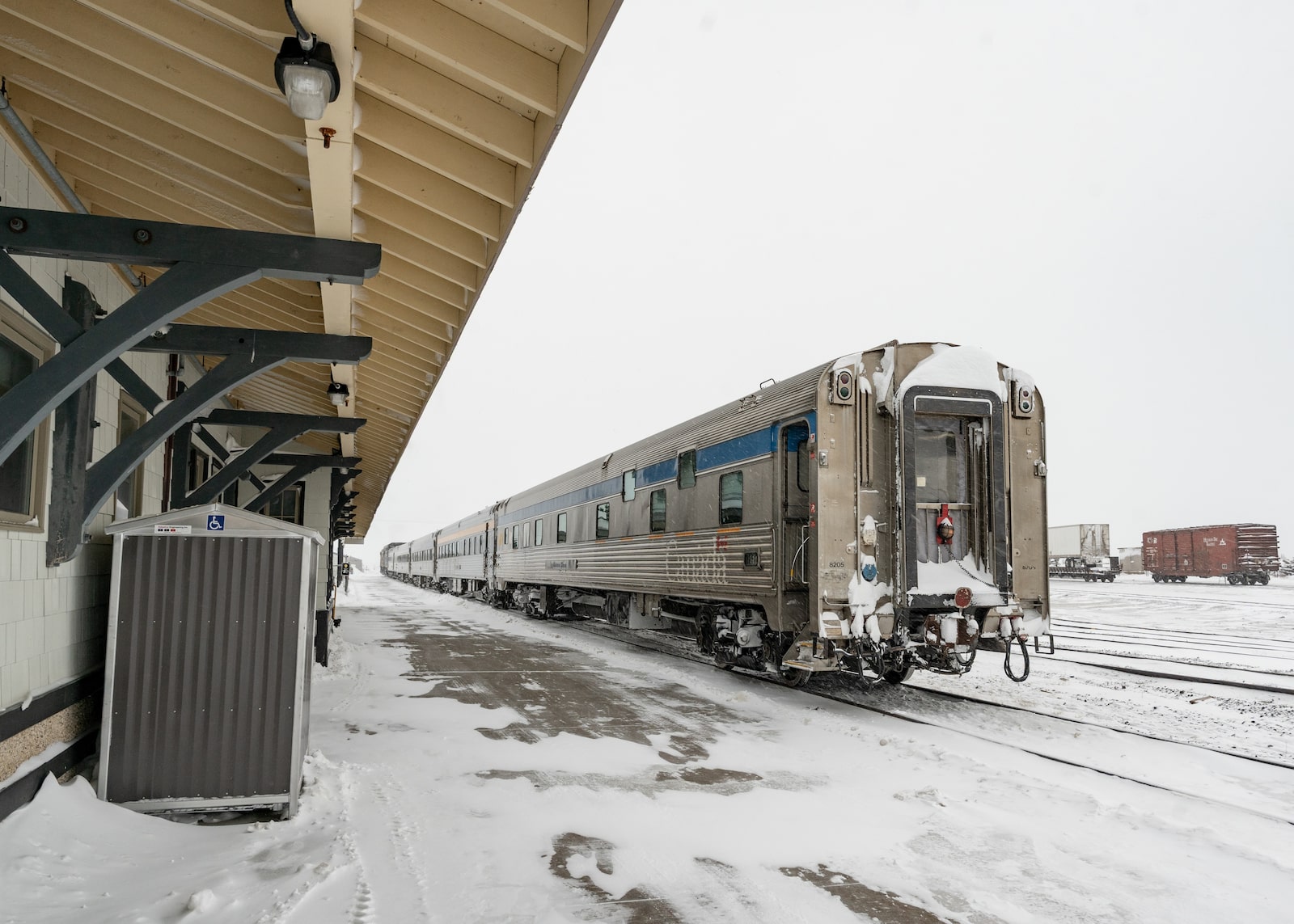
A Via Rail passenger train reaches its final stop in Churchill, part of the Hudson Bay Railway, which extends from The Pas north to Churchill.
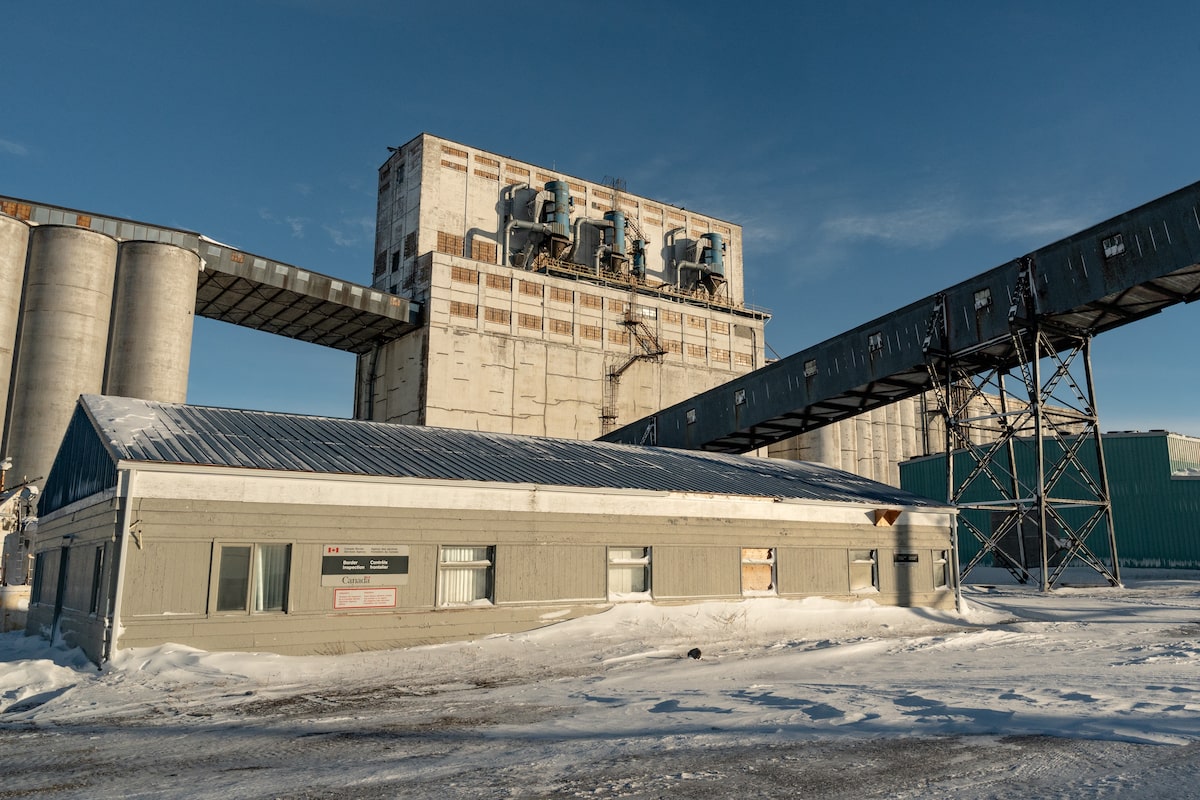
That has replaced grain shipping, which dwindled in the last decade after the Canadian Wheat Board was dissolved. The aged, concrete elevator still dominates the view east from the main drag, though no grain has shipped in recent seasons. In the past year, the port has sent off test shipments of zinc concentrate from a Hudbay Minerals Inc. mine in northern Manitoba.
Mr. Spence said consecutive governments have talked a good game about Arctic sovereignty and security and Churchill’s role, but have failed so far to deliver on promises. “Canada hasn’t paid attention – you talk the talk but you don’t walk the walk.”
But this time, it’s different, Manitoba Premier Wab Kinew said. “The stars have aligned” with Canada seeking new trade routes from a port on the Prairies, he explained, and with U.S. sabre-rattling forcing the country to get serious about protecting the North.
“Though there’s been a lot of hype about Churchill in the past, I don’t think you’ve ever heard a prime minister talk about it before,” Mr. Kinew said in an interview. “Prime Minister Carney has been clear about Churchill being part of his thinking.”
In November, Mr. Carney and Mr. Kinew announced the two governments will combine efforts and expect planning and design of a strategy to be completed this spring. They’ve contributed $262.5-million to the work.
The port’s aged concrete grain elevator still dominates the view east from downtown Churchill, though no grain has shipped in recent seasons.
Prior to its purchase in 2018, the previous owner, U.S. company OmniTrax, let the port fall into disrepair. AGG is upgrading the port facilities after having repaired rail lines that washed out in the muskeg almost a decade ago, severing an important transport link.
The Premier is adamant that the case is strong for Churchill to be a naval supply site and an export point for a range of commodities – even as the terminus of a pipeline for oil or other products. He’s also looking to make sure Indigenous peoples share in the economic opportunity.
However, Heather Exner-Pirot, senior fellow and director of energy, natural resources and environment at the Macdonald-Laurier Institute, argues that the plans make for good political talking points but Churchill’s disadvantages overshadow its economic and strategic usefulness; Mr. Trump’s objectives don’t change that.
The short ice-free season and scant interest from large exporters of commodities, including potash, make a major expansion impractical, said Ms. Exner-Pirot, who published a paper on northern trade corridors last year. In addition, the port is ill-suited for naval operations, given its distance from the high Arctic and lack of a shipyard for specialized maintenance, she says.
“Churchill has been around for about 100 years as a port. It has seldom been self-sustaining,” she said. “I think you could ship more minerals out of Churchill, but not oil and gas because the seasonality makes that uncompetitive,” she says.
A ship sits on the snowy coast of Hudson Bay. The short ice-free season in Churchill may make a major expansion aimed at the large-scale export of commodities impractical.
Others, such as Connor MacAulay, head chef for a large tour company, are wary about the damage more ship traffic or an industrial accident could have on the ice, wildlife and, in turn, Churchill’s tourist economy. “It’s a big grey cloud – we don’t really know what the effects are going to be,” he said.
At bingo, though, Mr. Stover, who has lived here since 1987, said the time has come to proceed. “Even before this stuff, I touted Churchill as a place of significance when it comes to national security and sovereignty. It would have been great if we had the foresight to get things moving along by now.”