
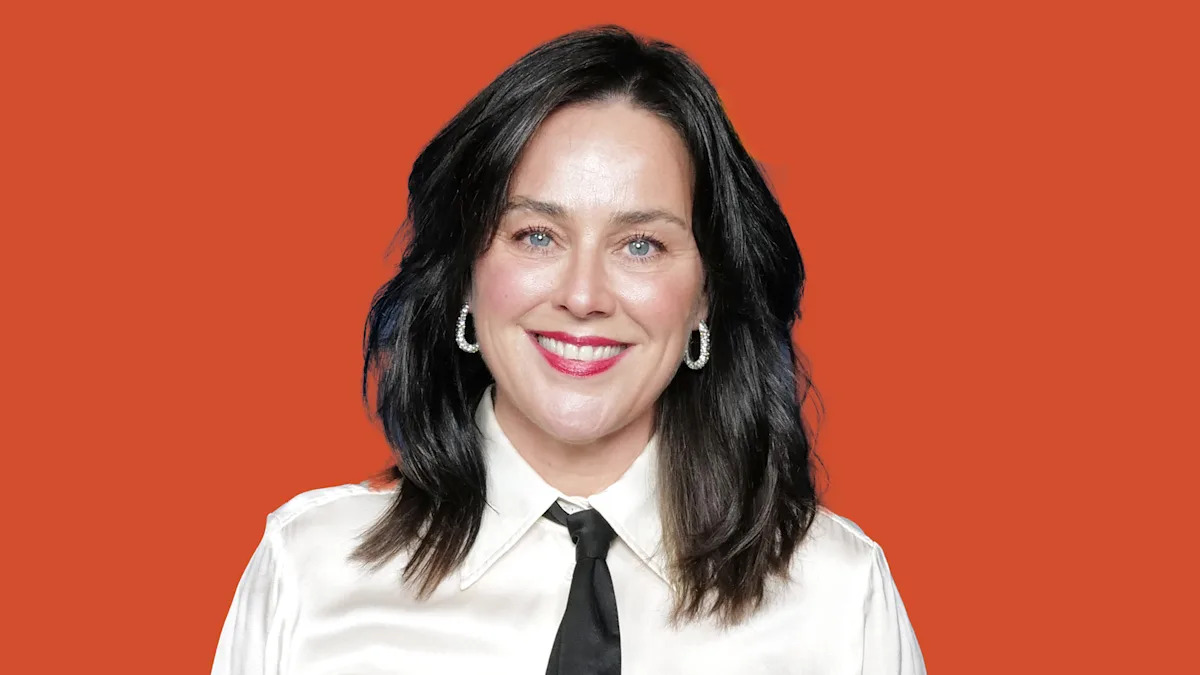
Jill Halfpenny has had to learn to be resilient in the face of tragedy. The 50-year-old actor is warm and open as we meet – a kindness that feels shaped by her experience with grief.
The After the Flood star lost her father at the age of four when he left for a football game and died from a fatal heart attack. It was an experience that was tragically repeated in 2017 when Halfpenny’s partner, Matt Janes, died of a sudden heart attack. While she tells me it was “the hardest thing [she’s] ever gone through”, she adds that it taught her a lot.
“I think that people very understandably focus on how hard it is and how difficult it is, which it is – there’s no argument for me about that at all,” she tells me for Yahoo UK’s Unapologetically series. “It is by far the hardest thing I’ve ever gone through, but I think what people maybe don’t talk about as much is the resilience that it can give you.”
Halfpenny took that grief for her late partner and used it to help address the feelings she hadn’t processed as a child. She then used her newly discovered resilience to help others in her memoir, A Life Reimagined.
Halfpenny, who shares a 17-year-old son, Harvey, with her ex-husband, Craig Conway, is the kind of person who wears her heart on her sleeve, who isn’t afraid to be vulnerable, and is a person with whom you, in turn, can be vulnerable.
The actor, who can now be seen in Paramount+’s Girl Taken, understands it’s not taboo to talk about grief; if anything, it helps, and she wants more people to know that.
“I think the lack of acknowledgement makes you feel desperately lonely, and sometimes all it takes is for someone to say, ‘How are you?'” she shares.
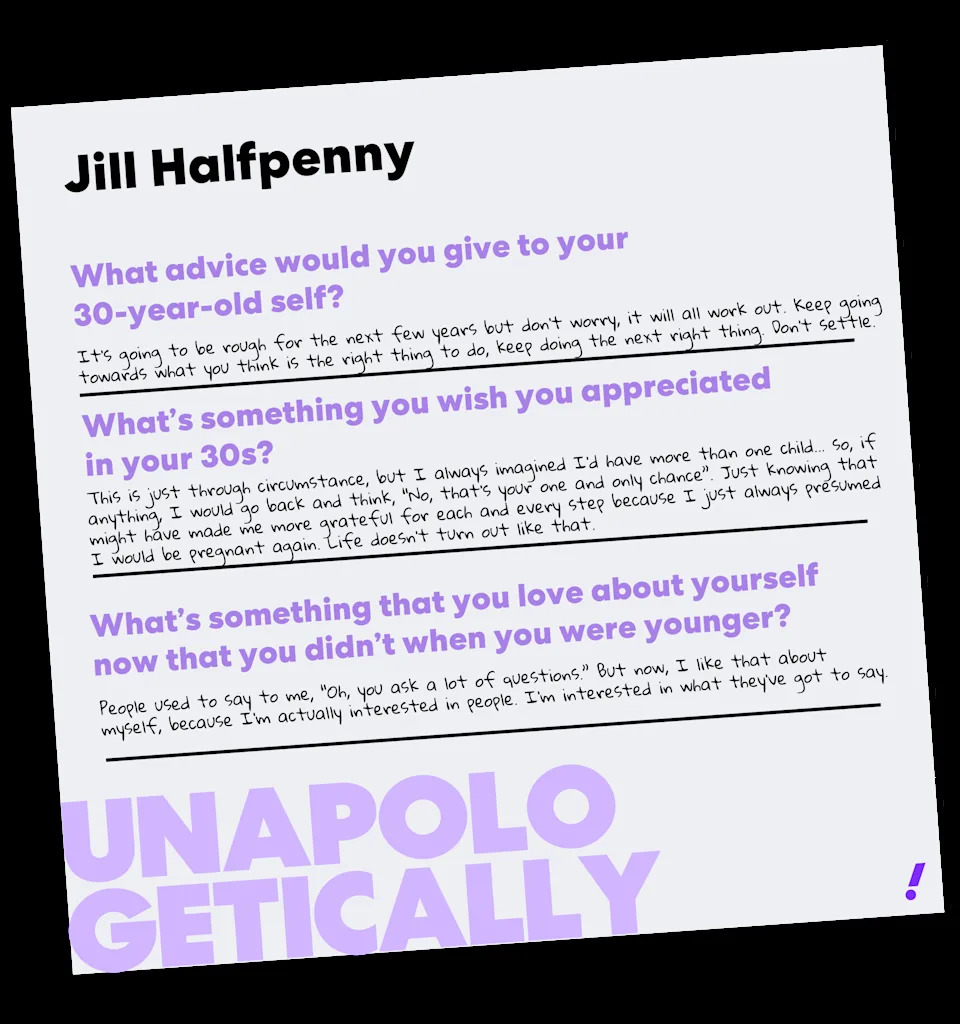
Jill Halfpenny’s Unapologetically interview (Yahoo)
Unapologetically is dedicated to conversations with women who continue to evolve in the public eye. How do you live unapologetically?
It’s really hard, I think, to just fully be who you are. I’m not even sure if I know exactly who I am, because I think that in one way or another, we’re always wearing some sort of mask.
But I try really hard to be authentic. I try really hard to be me. And sometimes it’s embarrassing, and sometimes you feel uncomfortable, but that’s the way I try to be unapologetic.
People often have unrealistic expectations regarding age and beauty. How do you navigate that while being in the spotlight?
I think I was 13 when I was in Byker Grove, and for so many years I’ve had people write about my appearance or what they think of me or what they think I look like. And it’s not to say that it doesn’t bother me anymore, it’s just I’m so used to it that I think what it’s done is it has just trained me into a situation of, ‘Am I OK? Am I OK with this? Am I OK with how I look?’
And some days that’s yes, and some days that’s no. But I think that’s because I’m a human being. So I try not to make it the focus; there couldn’t be anything more boring than your sole reason for being is how pretty you are or how skinny you are. It’s just ridiculous.
How did the conversation around your looks impact you in those early years?
At the beginning, you just think, ‘Oh, I wonder why people have to write about that, I wonder why that’s a thing.’ And I don’t know, I don’t know the answer to that. I don’t know why it’s still such a thing, but it is. Rather than rail against that or fight against that, you just have to become OK with who you are.
What does ageing mean to you? How did turning 50 feel?
[When I turned 50] I was in the middle of a job. I was enjoying myself. I met my son and we had a little holiday on my fiftieth birthday. So how did it feel? Great.
I didn’t really think about it or stress about it. I didn’t think of it as any sort of particularly significant thing. It’s a number, it is what it is. I just think it’s slightly pointless thinking about numbers.
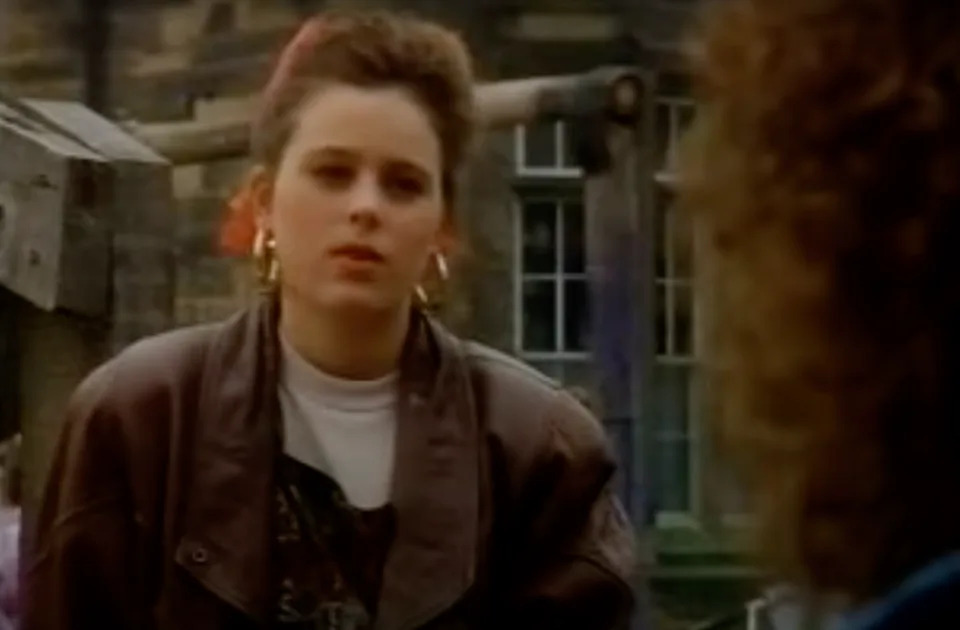
Jill Halfpenny in a 1990 episode of Byker Grove. (BBC)
What does ageing mean? It means you’re flipping lucky to be living on this planet. You’ve still got a chance. I know people that have lost their life quite early on, so yeah you’ve got your life, you’ve got another year to go. You’ve got maybe another 50 years to go. Good on you… you might as well enjoy it while you’re here.
You’ve been quite candid about your experience with grief. How has it shaped you, and what do you feel people get wrong?
I think that people very understandably focus on how hard it is and how difficult it is, which it is – there’s no argument for me about that at all. It is by far the hardest thing I’ve ever gone through – but I think what people maybe don’t talk about as much is the resilience that it can give you.
So I guess what I’ve learned from it is that if I can get through that, and if I can try to come to terms with it and accept it, then… it’s not that I feel indestructible, but I feel I’ve worked a muscle, and I’ve learned something about myself.
Which is when I feel like I cannot go on, when I feel like I don’t even want to lift my head off the pillow, not only I can, but I can actually start to feel quite good at some point.
Patience is not my strong point – you definitely have to be patient with grief. So I think resilience, grit, and patience are the positive things that grief has taught me.
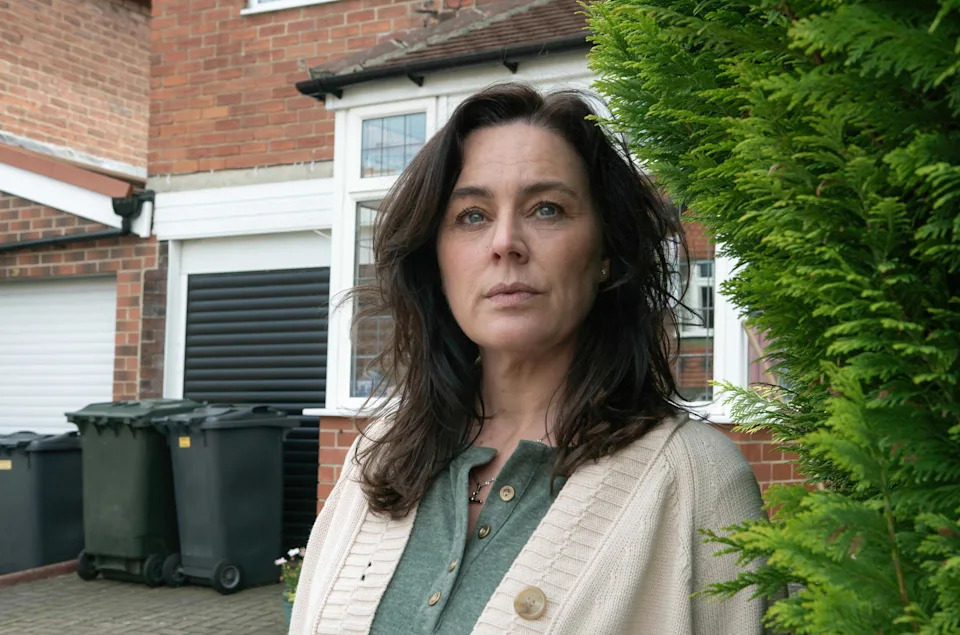
Jill Halfpenny, pictured in The Feud, has used her platform to help others experiencing grief, after her experience with it. (Channel 5)
(Simon Rogers / Lonesome Pine Productions / © Channel 5 Broadcasting Limited)Personal experience has taught me grief is like a stone in your pocket. How would you describe it?
I think the way I’ve heard it described is that the stone, the grief, is so big and so spiky and so all-consuming that there’s only room for the stone. And you just think, ‘This is it. This is how I’ll feel forever. This is so completely consuming my body, there’s nothing else I can feel all the time.’ And as we heal, and as we talk, and as we communicate, and as we connect, then the space around the stone starts to get a bit bigger.
I don’t think the stone necessarily gets smaller; I think the space around it does. Tiny, incremental wins happen, and then you go to bed that night, and you think, ‘Oh, maybe things are going to be alright. ’
The way I talk about it is sometimes the stone is really sharp and it hurts, on other days it’s quite smooth and it almost feels comfortable. You never know what day grief’s going to hit you and, for me, it’s always really unpredictable. But I think we just have to keep remembering that there’s room for so much more as well.
People often don’t want to or aren’t comfortable asking about loss. Is that why it’s important for you to talk about grief publicly?
Yeah, I think the lack of acknowledgement makes you feel desperately lonely, and sometimes all it takes is for someone to say, ‘How are you?’, or ‘How are things?’, or ‘I’m so sorry that you lost whoever you lost’. Just acknowledge it if that’s all you can do; that’s the least you can do.
It’s very strange when people don’t mention it at all. And that made me think, ‘this is bizarre, we’re not very good at talking about this.’
I hear from a lot of people who say, ‘I didn’t want to mention it in case I upset you’ as if you’re not thinking about it all of the time. No, of course you’re not going to upset me by mentioning it! In fact, it’s really touching.
Usually, when people mention it, and you get teary, they think they’ve upset you; they haven’t, they’ve moved you. You’ve actually thought, ‘that’s really lovely, you’re thinking about me’, and it’s just a little moment of connection.
That’s the thing that moves us; it’s not because you’ve been reminded, we always have them in our heads. We just need to get a little bit better and more comfortable at consoling each other.
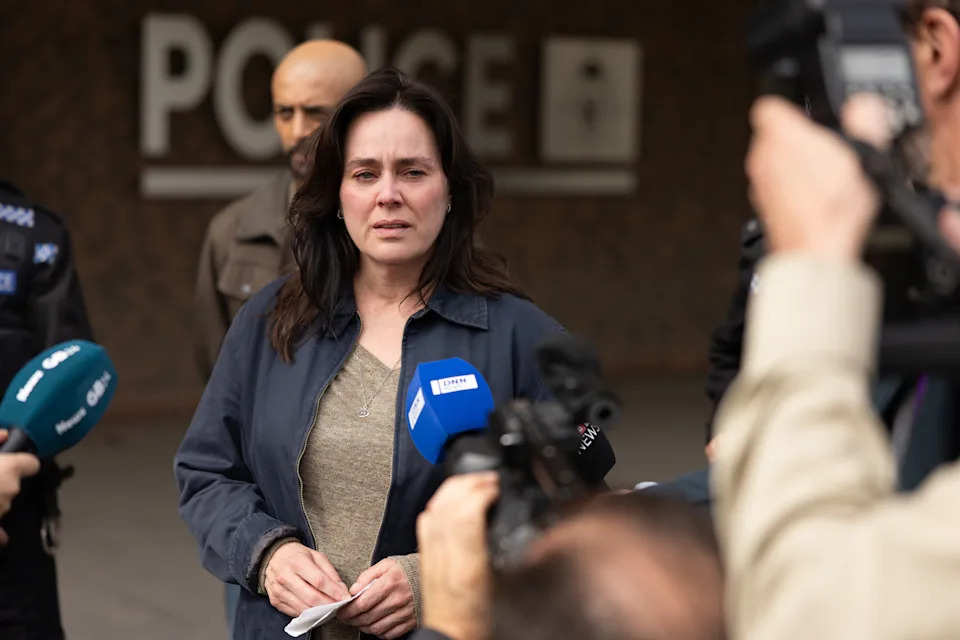
Jill Halfpenny plays Eve in Girl Taken, a mother whose daughter is kidnapped by her teacher and who has to help her navigate her trauma after she escapes. (Paramount+)
(Clapperboard TV/Paramount Global)In Girl Taken, you play Eve, a mother whose daughter is kidnapped by her teacher. What did you learn most from the role?
I find that when you read about something like this happening to someone, I sort of expect that person, in some way, to just kick into gear of, ‘well, I have to find my daughter. I have to be the best person I can. I have to go and do press conferences and interviews and I have to do my own investigation.’ But you forget that we’re all just people. We don’t turn into something else because something like this has happened.
And I think the thing about Eve is she was a very messy and complex person before the abduction and she stays that way. So she does her best and she tries really hard to do the things that she thinks she should be doing, but this was not a person who had a lot of support.
So I think what I learned was that this can happen to any of us, but it doesn’t mean to say we’re going to kick in and be Florence Nightingale. We’re still going to be us, we’re still going to be flawed, we’re still going to be trying to make our way through it.
I’ve noticed there are more realistic depictions of women in TV and film now and less expectation for them to be perfect on screen. Is that something you appreciate getting to do?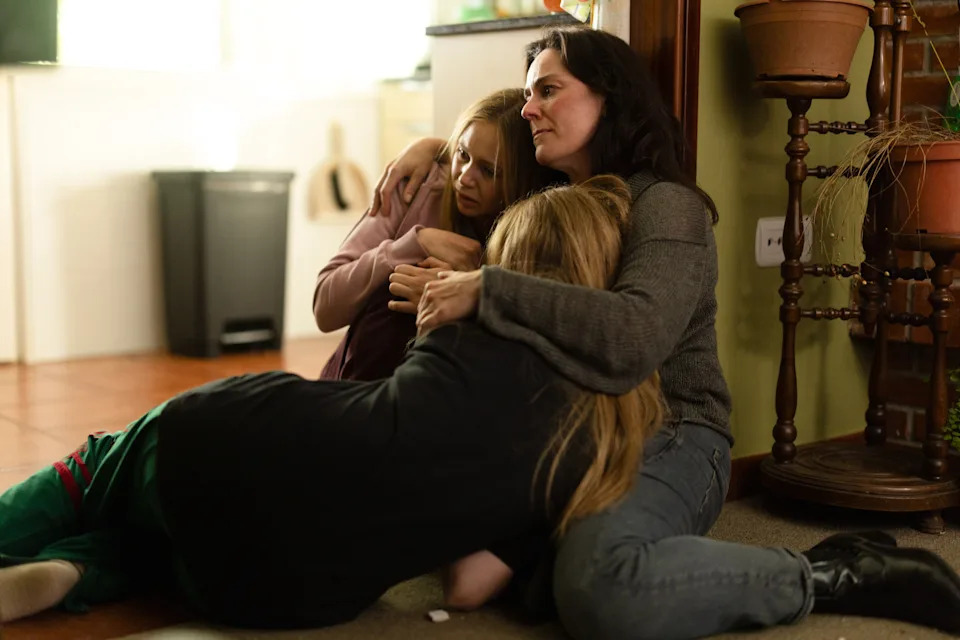
Girl Taken lands on Paramount+ from Thursday, 8 January. (Paramount+)
(Clapperboard TV/Paramount Global)
Yeah, exactly. I think we’re all just human beings at the end of the day, so it’s always nice to be able to show somebody in all of their colours and not just think, ‘well, she’s a mum, so she has to be a certain type of way.’ We’re all really, really different so that’s a relief as an actor to be able to do that.
Girl Taken is available to watch on Paramount+.
This has been edited for length and clarity.