
Most crime dramas don’t even attempt to elevate themselves above their genre. Someone gets killed, suspects abound, the detectives pootle around for a bit, then the culprit is caught and everyone forgets about what they just watched. No harm in that. A select few, however, are so good they break out of their category: the likes of Happy Valley and Line of Duty do have cops collecting clues to try to nail a villain, but are so well made they leave regular crime behind and rise up to mix it with the swankiest prestige dramas.
Then there are the shows that are somewhere in between. Premium genre pieces, you could call them: they stick to the template of sleuthfests that air on weeknights on terrestrial channels at 9pm, and can be enjoyed purely on that level, but they’re pushing at the edges, adding quality where they could easily not bother. Unforgotten is one; in 2024, the first season of writer Mick Ford’s Yorkshire-set series After the Flood was another.
After the Flood’s main trick is simply that there is a lot going on. In season one, its hero, Jo Marshall (Sophie Rundle), was a junior police officer applying her strong morals to a murder case she wasn’t assigned to, without telling her more senior cop husband what she was up to. She did that while heavily pregnant, in a way that exposed deep historic corruption in her department – all this in the aftermath of a flood in her perpetually rained-on home town that enabled the script to make a powerful, but not hectoring, point about the climate crisis and the way communities in the north of England have been left defenceless against rising waters. The finale, which had a second flood, the birth of Jo’s baby, the solution of the murder and the unveiling of the corrupt kingpin’s identity, was a belter.
Now we’re a year on. Jo is a proper detective. She is separated from her baby’s father, Pat (Rundle’s real-life other half, Matt Stokoe), but together they’ve vowed to bring down the bent cop who secretly runs the town. Then a body turns up on the moors, which must be connected either to a chemicals company dumping nasty stuff in the river, or to the burning of heather on the uplands (which, as has shockingly been the case in reality in 21st-century Britain, is done to facilitate grouse shooting, with the loss of vegetation leaving the normal working people who live further down the valley more vulnerable to floods), or to the fly-tipping of commercial waste on farmland, or all three. Oh, and someone is going round town daubing a red X on random buildings, in protest at we know not what.
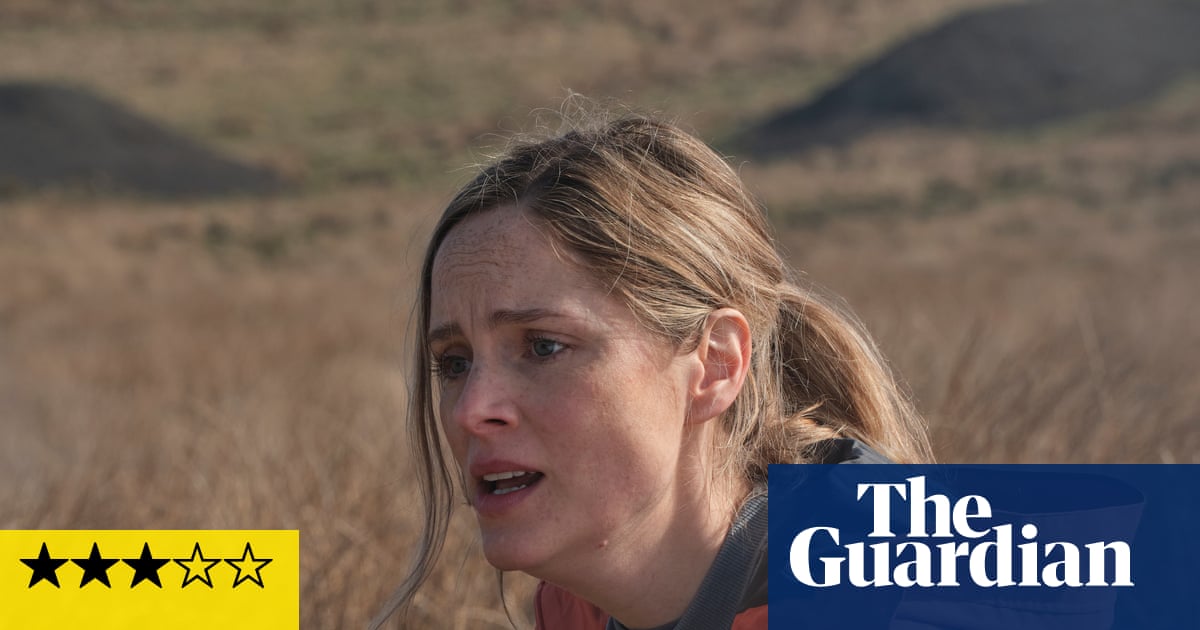
Rundle remains luminous in the lead role, her Jo a beacon of sympathy and curiosity in a place where almost everyone else keeps their head down as either villain or victim. That she now lives with her widowed mother Molly means we get more of the lovely dynamic between Rundle and the star of the supporting cast, Lorraine Ashbourne: Jo and Mo are right at the point in the parent/child relationship where who looks after whom is in flux. Molly’s encyclopaedic knowledge of the whole town’s business going back decades, meanwhile, makes her a neat sidekick when Jo’s investigations stall, and her big mouth and ever-twitching bullshit detector have now propelled her on to the local council, where she allows the show to explore how poorly equipped local authorities are to protect the environment.
After the Flood is still beyond the average crime saga where the discovery of a corpse stirs up buried secrets in a town with sad inhabitants and awful weather, but maintaining a premium genre piece is a delicate business. Indulge those tropes too much and they will pull you back down. Season two retreads similar ground rather than moving its formula on: its subplots are reactions to the darkest surprises of the first run and are less intriguing than the original revelations, while the murder case – which sees Jo working with a friendly, inherently trustworthy new partner, Sam (Jill Halfpenny) – replaces season one’s death in the flood that wasn’t actually a drowning with a body full of shotgun pellets that isn’t actually a shooting. It’s the same again, only less so. Jo is in danger of pootling from clue to clue and from suspect to suspect like any other TV cop.
Also, this may sound churlish but: there’s no flood. The impressive set piece that opened the first run announced that the show was aiming higher, and the lack of an equivalent here signals that those sights have been slightly lowered. After the Flood has begun to drift.