
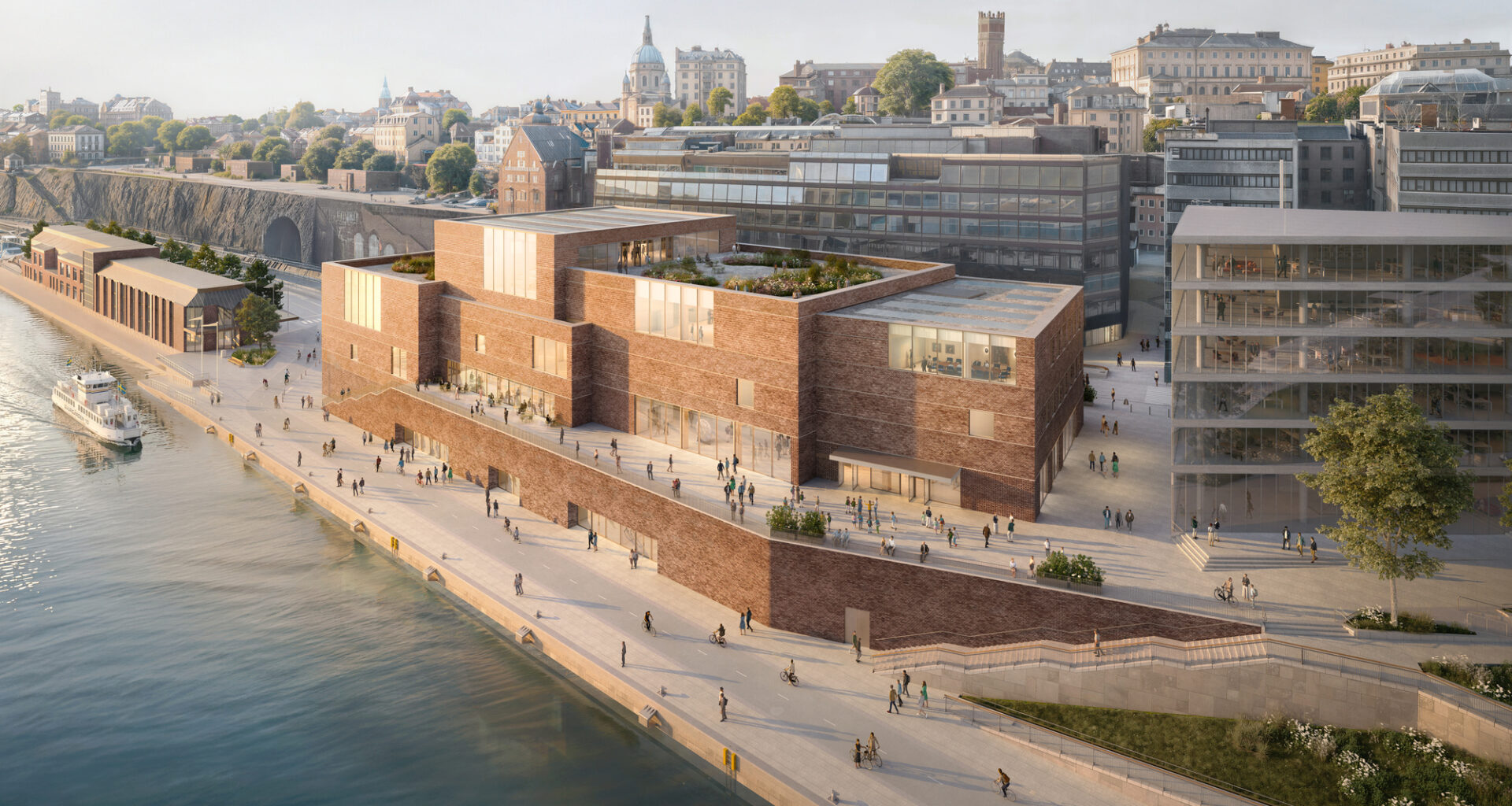
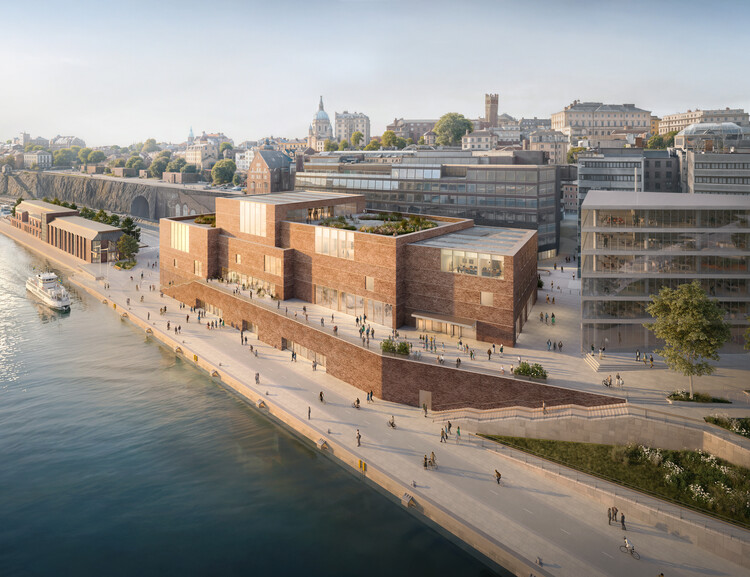
 Aerial view along the waterfront. Image © Onirism/Nobel Prize Outreach
Share
Or
https://www.archdaily.com/1037944/nobel-foundation-reveals-design-for-new-nobel-center-in-stockholm-by-david-chipperfield-architects
The Nobel Foundation has revealed the first design proposal for the new Nobel Center, a public cultural and educational institution dedicated to science, literature, and peace. Designed by David Chipperfield Architects Berlin, the project will be constructed along Stadsgårdskajen at Slussen in Stockholm, with construction scheduled to begin in 2027 and completion planned for 2031. Conceived as a permanent home for the activities surrounding the Nobel Prize, the building aims to make the work of Nobel Prize laureates accessible to a broad public through exhibitions, public programs, and interdisciplinary exchange, positioning the center as both a civic landmark and an international point of reference.


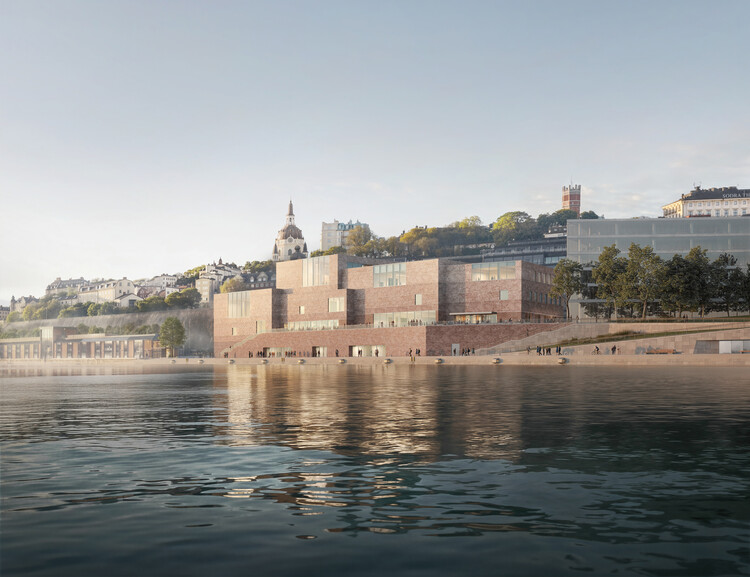 View from the water along the quay. Image © Onirism/Nobel Prize Outreach
Located between Södermalm and Gamla stan, at the meeting point of Lake Mälaren and the Baltic Sea, the Nobel Center occupies a site long shaped by infrastructure, industry, and movement. As Slussen continues to evolve into a network of public spaces, transport links, and cultural destinations, the project is envisioned as a key element within this transformation. The building contributes to a new continuous public route connecting Fotografiska, the Stadsmuseet, and the waterfront promenade, reinforcing the area’s role as a civic and cultural corridor while anchoring the Nobel Center within Stockholm‘s everyday urban life.
 Panoramic view from the north. Image © Onirism/Nobel Prize Outreach
Architecturally, the building is composed of four interconnected volumes that respond to the topography of Södermalm and the scale of the historic waterfront across the water in Gamla stan. Their rhythm and proportions draw reference from the 17th-century merchant townhouses of the Old Town, allowing the project to engage with Stockholm‘s historic context while reading as a cohesive structure. Roof terraces and a new public terrace at the entrance create additional public spaces overlooking Saltsjön and Lake Mälaren.
Related Article The 20 Most Anticipated Projects of 2026
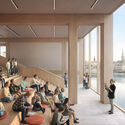
The ground floor is conceived as an extension of the public realm, characterized by permeability and transparency. Public space in front of the building continues into the entrance level, with north and south entrances and a public foyer that includes a shop and restaurant, encouraging a seamless transition between city and interior. Inside, daylight is planned through curated openings framing views of the city and archipelago, while large north-facing windows on the upper floors reveal key interior spaces and activities to the surrounding urban context.
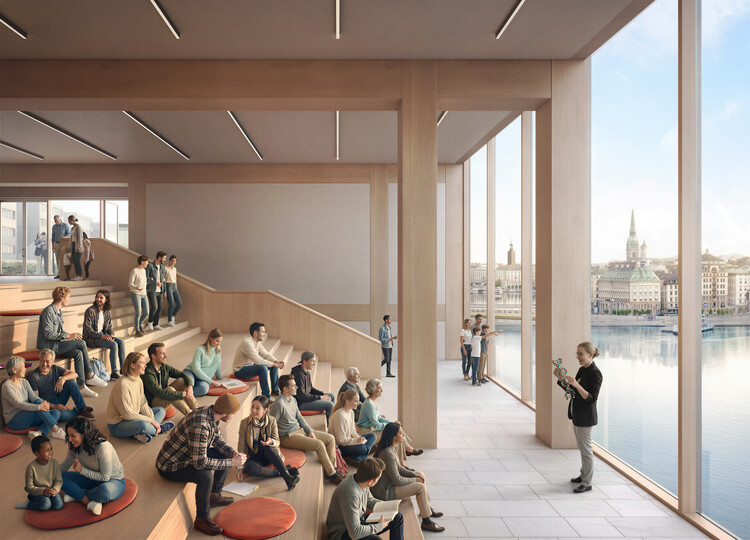 Upper level with framed views towards the archipelago and the city. Image © Onirism/Nobel Prize Outreach
Material choices reflect a focus on environmental responsibility and long-term durability. The building is designed with a primarily timber structural frame, adapted to site conditions to reduce load transfers and embodied carbon. The facade is constructed using reclaimed red brick, referencing Stockholm‘s longstanding brick tradition and prominent civic buildings such as City Hall, while contributing to a sense of permanence appropriate to the institution’s cultural role.
The Nobel Center is conceived as an open civic institution hosting permanent and temporary exhibitions, lectures, workshops, interdisciplinary meetings, and cultural events addressing topics ranging from scientific research and medical advances to literature, peace initiatives, and global social challenges. By 2031, visitors will be able to experience Alfred Nobel’s legacy in new ways, including the permanent public display of his handwritten will for the first time. A new inspiration exhibition presenting the Nobel Center project opened on 15 January at the Nobel Prize Museum in Gamla stan, coinciding with the submission of the building permit application to the City of Stockholm.
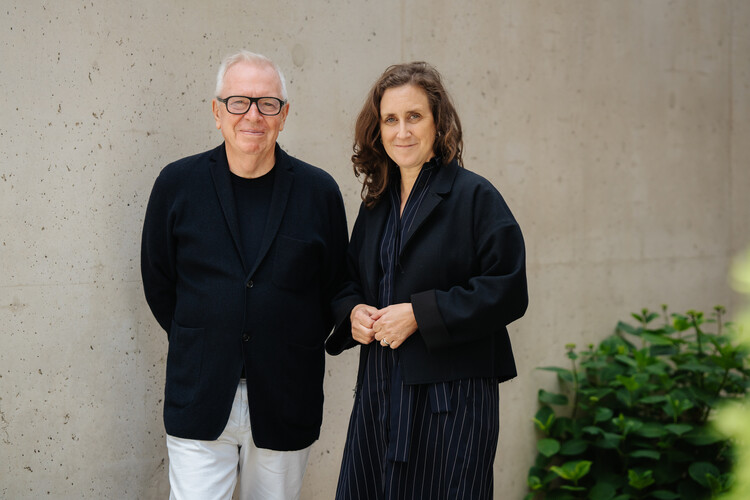 David Chipperfield and Hanna Stjärne. Image © Onirism/Nobel Prize Outreach
In other news from David Chipperfield Architects, Arena Milano in Milan’s Santa Giulia district is designed to host large-scale sports and cultural events for up to 16,000 visitors. The venue will serve as one of the hosts for the 2026 Winter Olympic Games before transitioning to year-round use for concerts and festivals. The studio is also set to open Muzej Lah, a new contemporary art museum in Bled, Slovenia, in the summer of 2026, and has revealed a preliminary proposal for the restoration and adaptive reuse of Verona’s Roman Theatre, which, subject to ongoing archaeological investigations scheduled through 2028, is expected to accommodate up to 1,000 spectators.