
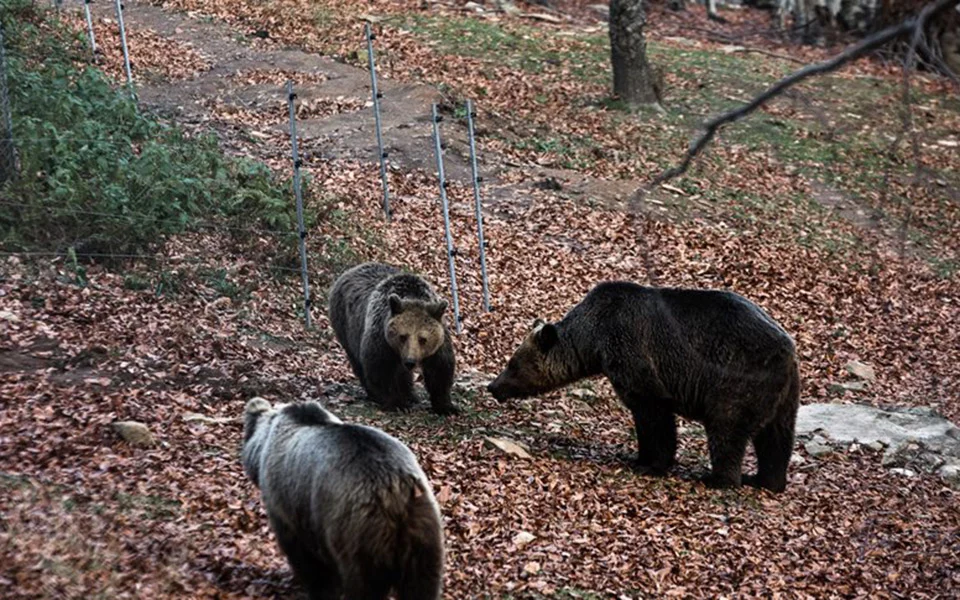
The brown bear population in Greece has nearly doubled in recent years without a rise in damage to livestock, beekeeping or agriculture, according to a study by the environmental organization Arcturos.
Arcturos said its most recent estimate put the brown bear population at about 900 in 2025, up from 450 to 500 in 2019.
The study reviewed 7,067 compensation applications filed with the Hellenic Agricultural Insurance Organization (ELGA) from 1999 to 2020 for bear-related damage, totaling about €4.1 million. Livestock farming accounted for 59.4% of losses, followed by beekeeping at 23% and agricultural production at 17.6%, Arcturos said.
Despite the population recovery and geographic expansion, overall damage did not increase, Arcturos added. Damage claims rose until 2009, then declined and stabilized in 2012 to levels similar to those recorded in 1999.
Arcturos said losses remain stable or decline in areas with a long-term bear presence and preventive measures, while increases mainly appear where bears have recently returned. Damage follows clear seasonal patterns, peaking in September for livestock and agriculture and in June for beekeeping.