

Listen to this article
Estimated 3 minutes
The audio version of this article is generated by AI-based technology. Mispronunciations can occur. We are working with our partners to continually review and improve the results.
Amid a wave of resignations from the Coalition Avenir Québec (CAQ), the party’s four representatives in the Outaouais intend to run again this year, as does the region’s only Liberal MNA.
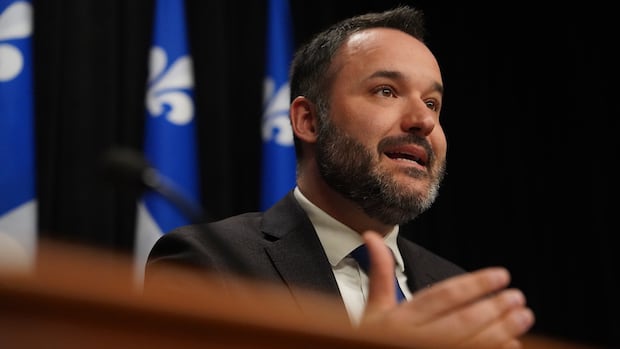
Mathieu Lacombe, the CAQ MNA for Papineau and the minister responsible for culture, communications and for the Outaouais, was the first to reconfirm his intention last week on Radio-Canada’s Téléjournal Ottawa-Gatineau.
In written statements to Radio-Canada on Monday, Chapleau MNA Mathieu Lévesque, Gatineau MNA Robert Bussière, Hull MNA Hull Suzanne Tremblay and Liberal Pontiac MNA André Fortin all confirmed their plans to run again.
It comes as premier and CAQ co-founder François Legault announced his resignation last week. That came after the health and social services ministers stepped aside and before the education and municipal affairs ministers announced they’re not running again this year.
Other Liberal candidates expressed interest in running to Radio-Canada.
One is Sasha Cannon, son of former federal minister Lawrence Cannon and vice-president of the Hull Liberal Association. Another is Alexandre Iracà, the Liberal MNA for Papineau from 2012 to 2018.
That party is also navigating a sudden leadership race after Pablo Rodriguez resigned last month. He faces allegations of vote-buying by party members during his leadership race.
The Parti Québécois (PQ) and Québec Solidaire (QS) are still considering potential “interesting” candidates and had no announcement to make as of Tuesday.
The Conservative Party echoed the same sentiment, stating that its leader, Éric Duhaime, will be in the Outaouais region on Feb. 4 to meet with “potential candidates” from the business and municipal sectors.
A CAQ ‘message of stability’
Thomas Collombat, a professor of political science and director of the social sciences department at the University of Quebec in the Outaouais, said he’s not surprised the CAQ and Liberals are the only parties who have announced candidates.
The Liberals see the CAQ’s declining popularity as an opportunity to reclaim seats, he said.
“The safe haven in the Outaouais, in the face of the CAQ’s dismantling, seems to be the [Liberals],” Collombat told Radio-Canada in French.
On the other hand, CAQ MNAs want to send a “message of stability.”
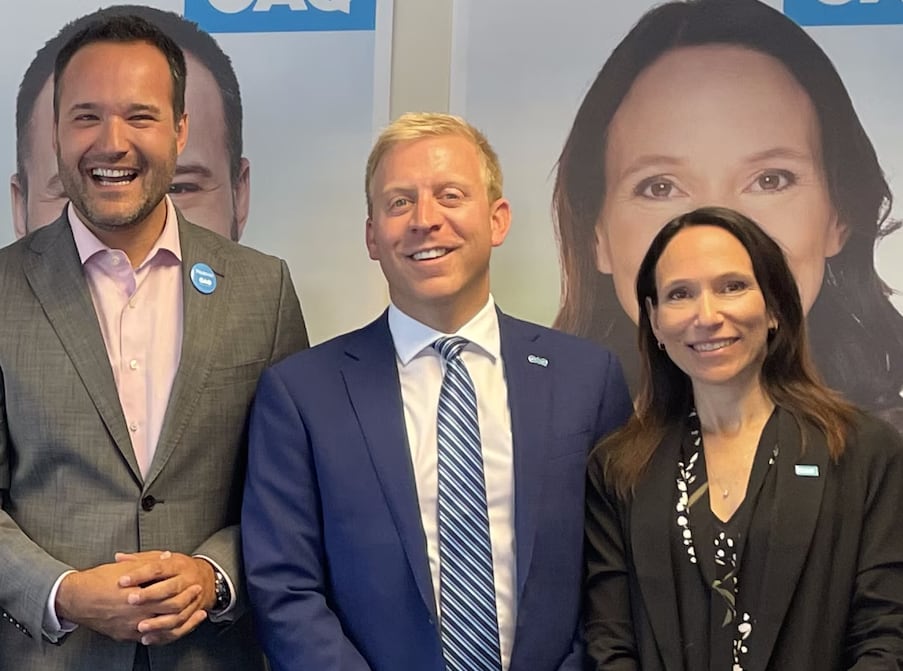 From left, CAQ MNAs Robert Bussière, Mathieu Lacombe, Mathieu Lévesque and Suzanne Tremblay during the 2022 campaign. (Nafi Alibert/Radio-Canada)
Before 2018 the region was considered a Liberal stronghold, notes Geneviève Tellier, professor at the School of Political Studies at the University of Ottawa. It’s still entirely Liberal at the federal level.
Health care will again be the key campaign issue in the region, Tellier said.
“The CAQ was elected in 2018 on the basis that they would resolve the issue. It has not been done and so it will be interesting to see how voters evaluate the performance of the CAQ and also the performance of the past Liberals,” she said.
Quebec’s next provincial election is scheduled for Oct. 5.