

Beginning a New Year with Reflection
It’s 2026, and the year has already begun in several wonderful ways for me; I hope the same is true for you. Although I believe writing about sobering topics like the rise of antisemitism is essential, I’m committed to also writing about the wonderful Peace organizations in the Middle East that I interview for PEACE with Penny. They provide positive examples and hope for our futures. We all need good news.
Our Annual Meditation Retreat
My husband and I started the year with our annual meditation retreat at our temple. Hard to believe it’s been a full decade of guided introspection.
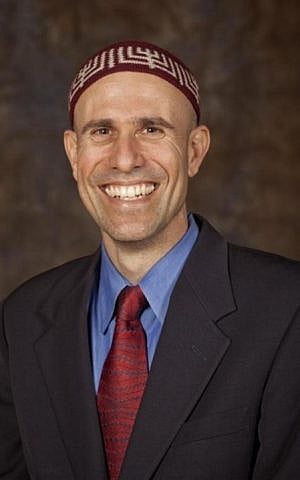
Guidance from Rabbi K’vod Weider.
Rabbi K’vod Weider
Having Rabbi K’vod Weider lead us feels like having a guru or spiritual teacher in our midst. He has served as the rabbi at Temple Beth El of South Orange County since 2011 and has taught meditation and Jewish spirituality since 1997. A lifelong meditator, he brings a depth of insight that enriches the experience, and weaving Jewish understanding into meditation is, for me, the cherry on top. I’ve meditated for many years, but the Jewish perspectives are still new to me—and I love learning them.
The Comfort of Community Meditation
Meditating in community is very different from my daily practice. Even though meditation is an inner experience, being surrounded by others—especially in today’s contentious climate—felt deeply comforting.
Celebrating Seventy
January also brought another milestone: my 70th birthday. I’ve been celebrating with friends and family, grateful to still be “above ground.” Reaching this age is still a shock, even though I pass a mirror every day—though my eyesight helps soften the blow. As we age, more people around us take their final journey, sometimes younger than we are. Some accept this more gracefully; I’m not quite there yet. Hillel’s reminder echoes loudly: If not now, when? Time to get serious about that bucket list before I kick my bucket.
The Atmosphere of the Weekend
Before diving into the sessions themselves, the weekend’s atmosphere stood out most: love, presence, acceptance, and Peace. It showed up in our interactions, our silence, and our learning.
A Story of Shared Humanity
Rabbi K’vod shared a story that captured this spirit, and it made me wonder how many rabbis would choose it —— or imams if the protagonist were Jewish. Below is a recap of the story’s essence, along with a link for those who prefer to read the original.
Wandering Around an Albuquerque Airport Terminal –by Naomi Shihab Nye, posted Apr 26, 2007
Rabbi K’vod shared a story by Naomi Shihab Nye that felt perfectly aligned with the retreat’s themes of presence and compassion and reflected a world that I hope to work toward in 2026.
Nye describes being at an airport when a call went out for anyone who spoke Arabic. She found an elderly Palestinian woman collapsed in fear, believing her delayed flight had been cancelled and that she would miss urgent medical treatment. Nye comforted her with the few Arabic phrases she knew, explaining that the flight was merely behind schedule and the woman immediately softened. They called her son, then her other sons, and even Nye’s father — discovering mutual friends and shared history.
As the delay stretched on, the woman opened a bag of homemade mamool cookies and offered them to every woman at the gate. No one refused. Soon, the entire waiting area — people from different backgrounds, ages, and places — was smiling, dusted with powdered sugar like an impromptu community.
Nye looked around and felt a surge of hope. For a brief moment, everyone at Gate 4‑A lived in what she called “the shared world,” where fear dissolved into connection, and strangers cared for one another.
Reflections on Peace and Shared Humanity
Amen. My heart was full. As you know, I’ve spent the last decade devoted to Peace work, and this retreat felt especially soothing. When we went around the circle to share the weekend’s impact, I found myself unexpectedly emotional.
An Interfaith Couple Who Embodied Peace
As I reflected on the weekend, one couple in particular embodied everything I strive for in my Peace work. Dr. B, a long-time member of our temple, is a chiropractor. His partner of seven years, Dr. AM, holds a PhD in Nursing and works at a Stem Cell Clinical Center specializing in regenerative medicine — in short, they both work in fields focused on healing and helping others thrive.
Jewish–Muslim Love as a Model for the World
Dr. B has attended our retreats before, but this was the first time his partner, Dr. AM, joined him. Why mention them? Because Dr. B is Jewish and Dr. AM is Muslim — and seeing their loving, respectful relationship brought tears to my eyes. They represented the world I wish we all lived in.
Interfaith Courage and Community
Although Dr. AM had attended other temple events, this was her first meditation retreat with us. And it made me think: How many Muslims would feel comfortable spending a weekend with a group of Jews? How many Jewish communities would feel equally at ease welcoming a Muslim guest? How many imams would invite a Jew to their own sacred gatherings? Imagine a world where these questions didn’t even arise. I later learned that others from different faiths were present as well, adding to the richness of the experience.
The Gift of New People
Not everyone knew each other, but many did — and having new faces in the group felt like another gift from the Universe. I love the adventure of meeting new people; not everyone feels comfortable in unfamiliar settings, but I thrive on learning about people, their stories, and what matters to them.
PEACE with Penny and the Work Ahead
Perhaps that’s why hosting PEACE with Penny brings me so much joy. Interviewing Peace organizations comprised of Israelis and Palestinians reminds me what’s possible when people choose connection over conflict. I’ve been doing several pre‑interviews and hope to make PEACE with Penny an even bigger focus this year. Balancing that with writing for the Times of Israel Blogs and having a personal life is still a work in progress. And of course, turning seventy — and celebrating all month long — has added its own delightful chaos.
Shared Roots and Interfaith Wisdom
After the retreat, I asked Dr. AM more about her background. She shared that she was born in Iran and grew up attending many different religious services. Her parents never taught that one faith was superior to another. She even learned to meditate using the Quran — something I found eye‑opening.
Similarities Between Islam and Judaism
She pointed out the many similarities between Islam and Judaism: religious Muslims pray five times a day, religious Jews three; Muslims pray toward Mecca, Jews toward Jerusalem; some worship in mosques, others in synagogues. In my Peace work, these parallels always stand out. Too often, the divide comes from never having met the “other” in a safe, humanizing space. During dialogue sessions, people are frequently shocked by how much they share — and sometimes feel betrayed by what they were taught growing up. It’s easy to fear an enemy you’ve only heard described in hostile terms. But it’s reassuring to see how quickly understanding can grow when people meet with mutual respect.
Shabbat Services and the Power of Familiar Prayer
Because the retreat falls during Shabbat, we attend Friday night and Saturday morning services. Even in silence, the familiar prayers and melodies felt comforting, and the sense of recognition always brings a smile to my face.
The Meaning and Music of a Niggun
A niggun here and there offered gentle vocal relief. A niggun is a wordless melody sung during prayer, and in Hasidic tradition, it’s believed to lift the soul and draw a person closer to God. Although most of us at the retreat were Conservative or Reform, Rabbi K’vod weaves many spiritual traditions into our gatherings — including Hasidic melodies and even practices with Eastern roots, some of which were explored by Charles Chaim Lev during the weekend.
Rabbis often compose their own niggunim, each carrying a unique spiritual “signature.” Singing a rebbe’s melody is traditionally a way to connect with his inner intention. I asked Rabbi K’vod whether any of the niggunim we sang were his, and he told me that the niggun used during the Amidah on Saturday morning was one he composed.
The Amidah and the Intention Behind Rabbi K’vod’s Niggun
During the Amidah, we’re encouraged to step away from the fixed text and silently speak the prayers of our own hearts. It made perfect sense that Rabbi K’vod composed a niggun specifically for this moment. Each niggun carries an intention, and when I asked about his, he said it reflects the idea that true rest comes through God. To me, it felt like another reminder of Shabbat’s wisdom — that rest is sacred for all of us, Jewish or not. And perhaps a gentle wink about my own tendency to try to fit too much into a 24‑hour day. Amen.
The History and Centrality of the Amidah
Historically, the Amidah took shape between 70 and 220 CE, after the destruction of the Second Temple, when prayer replaced sacrificial worship. It is considered the central spiritual prayer of Jewish services and is recited standing, facing Jerusalem, as if speaking directly to the Divine.
On Being Called “Colonizers”
Moments like this make me shake my head at the rhetoric that labels Jews as “colonizers” of Israel. How many thousands of years does a people have to live somewhere before it’s considered home?
Our Teachers: Rabbi K’vod and Charles Chaim Lev
Both Rabbi K’vod and his friend Charles Chaim Lev guided our time together.
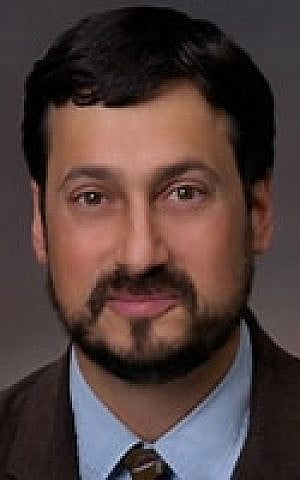
Dr. Charles Chaim Lev and Chinese Medicine
Charles Chaim Lev
Dr. Charles Chaim Lev has practiced Chinese medicine since 1993. He has provided acupuncture and Chinese medicine services at OHSU Family Medicine since 2008 and has spent the last decade teaching and supervising at the National University of Natural Medicine. Chaim integrates his deep knowledge of Chinese medicine into both his professional work and his spiritual life.
A Simple, Powerful Practice: Tapping for Emotional Reset
One of the most meaningful practices he shared was a short, active prayer you can do anywhere when you need a quick emotional reset — one of those “WTF?” moments we all have. It draws from EFT (Emotional Freedom Techniques), a mind‑body method that uses tapping on acupuncture‑related points while focusing on an emotional issue. Many describe it as a blend of psychology, acupressure, and mindfulness.
How the Tapping Practice Works
I included a video before this blog post that shows him demonstrating the technique. You begin with a few deep breaths, then tap your fingers on your body — often near the heart, though some people prefer the side of the hand or other comfortable spots. In his playful way, he encouraged us to “act like a monkey,” tapping on the chest like King Kong, on the top of the head, or even at the “third eye” between the eyebrows. Sometimes he taps vigorously, other times slowly and gently, depending on his mood and intention.
The Three Statements of the Practice
As you tap, you say three things. First: “Even though…” and you fill in the blank. Even though I yelled at my toddler who face‑planted into the cake I foolishly left within reach… Even though my boss promoted his girlfriend into the job I applied for… Even though I yelled at my toddler and then ate the rest of the cake myself… keep tapping.
Self‑Love and Forgiveness
Next, you say, “I still love myself.” It’s a moment of forgiveness and affirmation. If we’ve done something we’re not proud of, we can forgive ourselves first and make amends later. We all make mistakes. And for the record, I don’t have toddlers in the house anymore — and not that I’d know anything about overeating — but let’s just say I’m not giving up my Orangetheory Fitness membership anytime soon. Keep tapping.
Setting an Intention for Next Time
Finally, you set an intention for next time: I know that I can act better, look for another job, or bake a cake in a flavor I won’t be tempted to devour. Keep tapping.
The Map of the Four Worlds
Another session explored the Map of the Four Worlds — a framework developed centuries ago in Jewish mysticism to describe how divine energy flows from the Infinite into creation.
We traveled through the Four Worlds: Assiyah (Body), Yetzirah (Emotions and Energy), Beriyah (Mind/Thought), and Atzilut (Spirit or Presence). This all‑encompassing framework guided our learning as we explored each world through teachings, meditation, Torah, and traditional Shabbat prayers — moving from the physical to the increasingly ethereal. Each world carried its own emphasis and meditative phrase.
During the Shabbat services, we enjoyed many of the traditional services with attention also paid to meditating using the Four Worlds as a guide.
Assiyah: The World of the Body
In Assiyah, the focus was on the body. We were encouraged to notice our breathing — the inhale, the exhale — but also the miracle of how the body breathes: the sensation in the nose, chest, and belly; the grounding of feet on the floor; the support of the chair beneath us. Breathing in security, breathing out anxiety. Even writing this now relaxes me.
Breathing With the Divine
We’ve long been taught that God is not only beyond us but within us. Chaim invited us to imagine that as we breathe in, we receive what God is breathing into us, and as we breathe out, we release blessings back into the world. As I practiced, I thought of all the goodness I hoped to draw in — and all the blessings I wished to send out. Lord knows we need them, given the many tragedies unfolding around us.

Charles Chaim Lev
Seeing the Divine in the Human Form
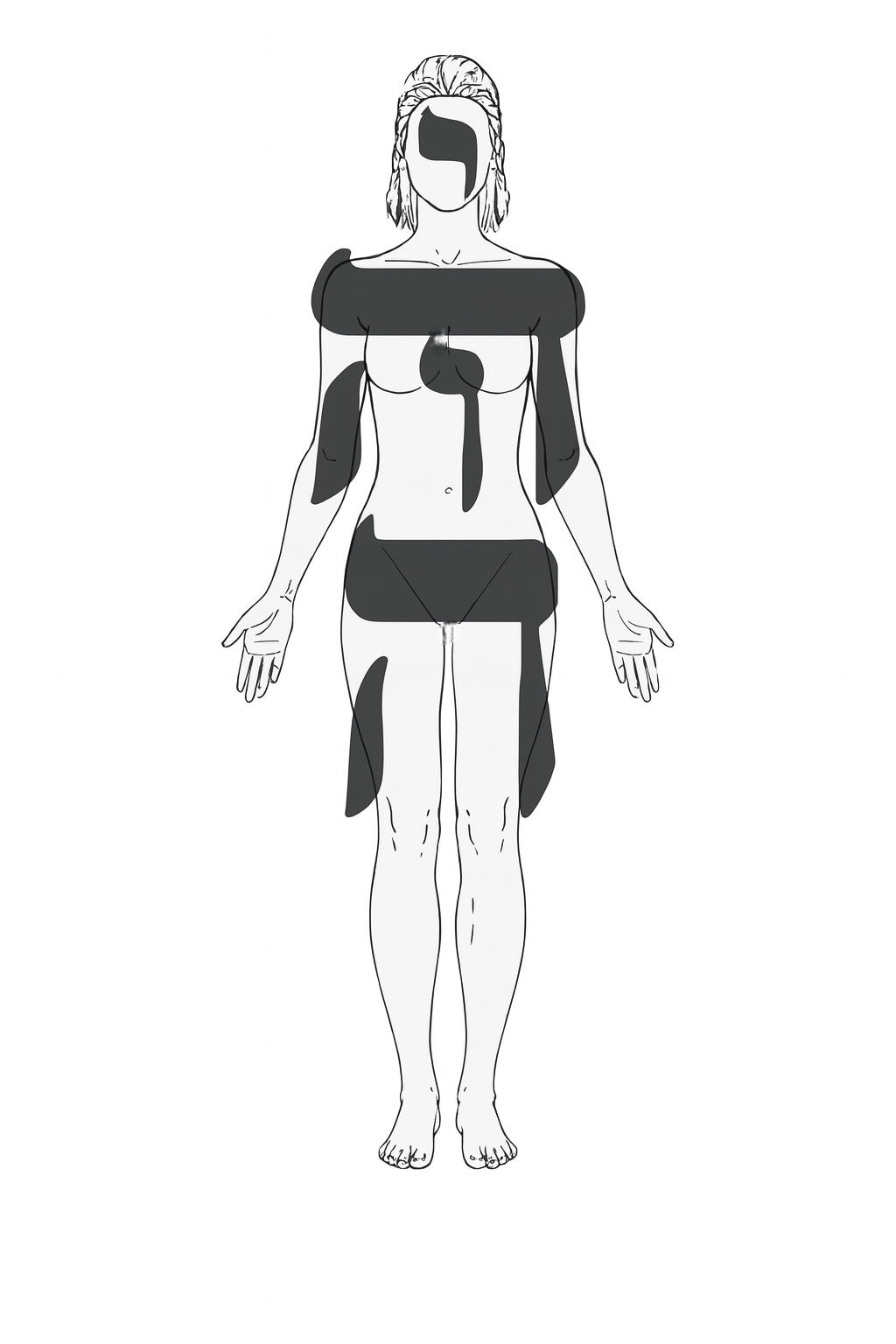
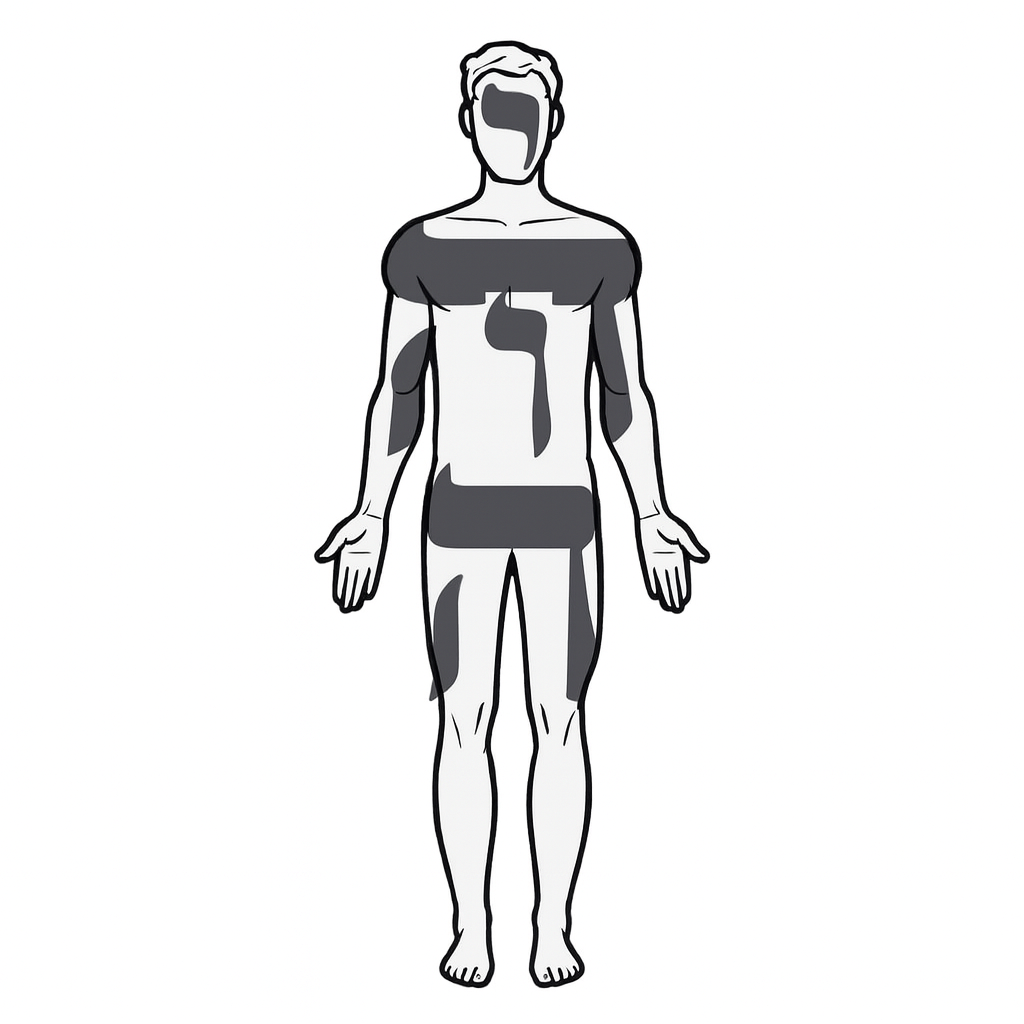
Chaim illustrated this beautifully with a figure of the human body overlaid with the Hebrew name of God, written vertically. It was a powerful visual reminder that the Divine lives within us. I didn’t have a close‑up photo of his model, so I created my own male and female versions below.
Yetzirah (Emotions and Energy)
There was a peaceful, relaxing energy throughout the retreat. It felt healing to step out of our fast‑paced lives and give ourselves permission to simply be.
Beriyah (Mind/Thought)
During Beriyah, several traditional prayers were recited. The Shema always captures our attention — a timeless call to the people of Israel to honor the One God. Covering our eyes helps us stay present and focused. We observed our thoughts within ourselves, within our community, and across the wider world. Knowing that Jews everywhere were celebrating Shabbat at the same time felt deeply comforting.
Atzilut (Spirit/Presence )
Atzilut is the world of Spirit and Presence. I loved the reminder that we are human beings, not human doings. The weekend felt like a celebration of being comfortable in our own skin — very “I’m OK, You’re OK.”
We reflected on ancestors (real or imagined), the forces of nature, birth and death, beauty, silence, gratitude, and what we hope to offer the world. The paradox of the “sound of silence” became its own spiritual practice — a true adventure in staying present.
And of course, Shabbat Shalom: Shalom meaning…Peace, Wholeness, Completeness, and Restoration. Don’t you feel better already?
Musical Instruments
Once again, a variety of unique musical instruments added beautiful layers to our prayers and meditation sessions.
My husband and a friend played the djembe, offering rhythmic grounding, as they often do during services at home. Chaim occasionally played an Arabic instrument called an Oud (it somewhat looks like a guitar that needs to go on a diet),
and sometimes a steel handpan, its resonant tones floating through the room.
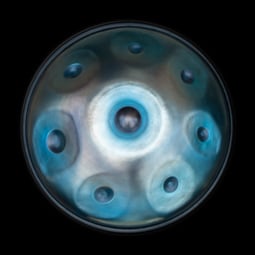
Steel handpan
Sound bowls

Kathy Brook-Wong Playing Sound Bowls
One of the most beautiful elements of the service was the sound bowls — crystal bowls of various sizes played by sound healer Kathy Brook‑Wong. Each bowl resonates in a different key, aligning with specific chakras and filling the room with vibration.
Another favorite was the ocean drum. A dear friend who attended the retreat for the first time surprised me with one for my birthday. I adore the sound of ocean waves and often joke, given my love of snorkeling, that I must have been a sea turtle in another life.
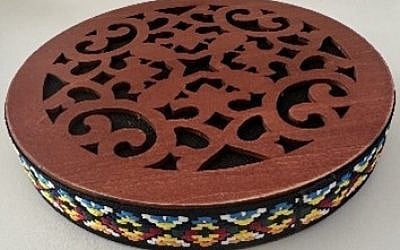
Ocean Drum
Conclusion
So that’s a taste of our special Meditation Retreat — a beautiful way to begin the year. With the constant barrage of news and the pressure to respond instantly, taking time to unwind and disconnect felt essential. I hope you give yourself the gift of introspection: reflect on what nourished you in 2025, and set intentions for an amazing 2026.
May You Live in Peace, שלום and سلام. Amen.