
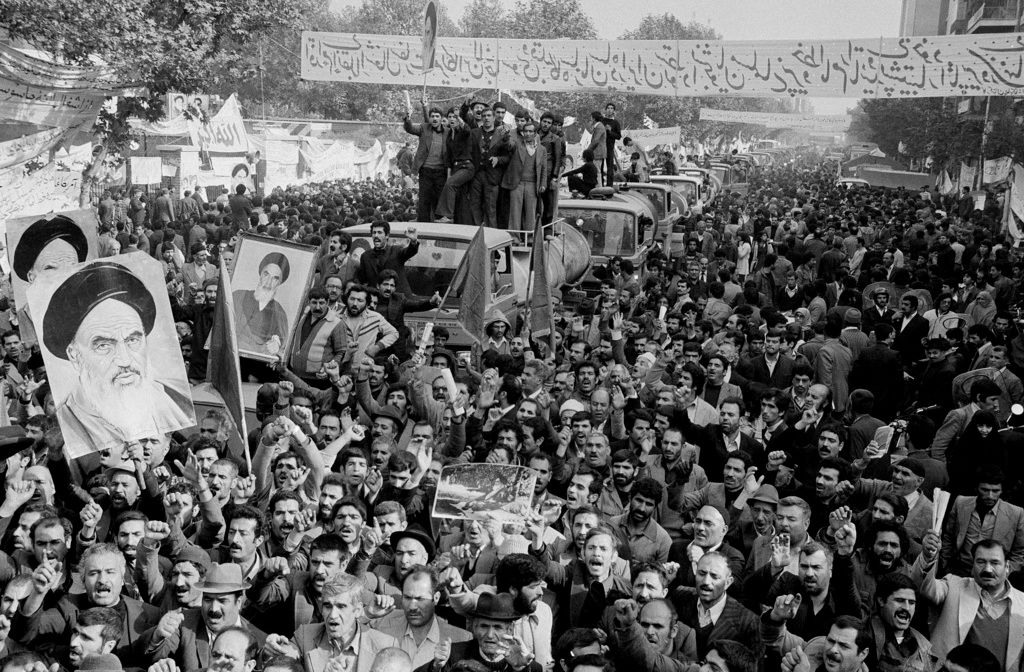
Winter 1979 marked a turning point in Iran- and for Israel’s presence there. As mass protests swept through Tehran and the Islamic Revolution gained momentum, the Shah’s regime collapsed with stunning speed.
Daily life in the capital unraveled, violence spread through the streets, and Israel moved to evacuate its citizens from the Persian capital.
Within weeks, nearly all Israelis had left Iran. Only a small group of 33 diplomats and security personnel remained behind, facing growing danger as the country plunged deeper into chaos.
Brig. Gen. (res.) Itzik Segev, Israel’s last military attaché in Iran, recalled receiving a decisive call in December 1978. Then–Foreign Minister Moshe Dayan ordered the immediate evacuation of the entire Israeli delegation- some 1,500 people.
The process began in early November, but by the time the last commercial flights were still operating, a handful of Israelis were instructed to stay. David Nachshol, a security guard at the Israeli Embassy, said they were told they could not leave as long as El Al continued flying to Tehran. “You don’t leave a Muslim country,” he was told. “You just don’t leave.”
As unrest intensified, embassy security personnel were sent into the streets in civilian clothes to monitor developments. Nachshol described scenes of brutal repression, with Iranian security forces firing directly into crowds from concealed positions.
“You saw people falling,” he said, recalling the peak of the violence in the spring and summer of 1978.
The situation deteriorated further as revolutionary forces consolidated control. At the same time, dozens of Americans were taken hostage at the U.S. Embassy in Tehran, marking the start of what would become the Iran hostage crisis.
Segev recounted a chilling phone call from Iran’s then–Chief of Staff, General Abbas Gharabaghi, who informed him that the Iranian army had decided to remain neutral in the uprising and would withdraw protection from the Israeli Embassy. “You are abandoning us,” Segev replied.
The last Israeli in Iran: how to get out of Tehran alive
As the new revolutionary leadership took shape, offers of evacuation became increasingly limited. Nachshol recalled a call from General Khosrodad, commander of Iran’s special forces, offering him a seat on a plane or helicopter—but only for one person.
Nachshol refused to leave without the others under his responsibility. Shortly afterward, he was informed that revolutionary leaders, including figures close to Ayatollah Khomeini, were on their way to see him. Faced with the uncertainty of what would come next, he chose to confront the situation directly.
More than four decades later, Nachshol reflects on those events with a broader perspective. The forces unleashed during Iran’s revolution, he says, were never confined to Tehran alone. “The winds of revolution do not blow only in the streets of Tehran,” he noted. “They extend far beyond Iran’s borders.” Whether those winds could one day shift again—perhaps even leading to the reestablishment of an Israeli mission on Iranian soil—remains an open question.