
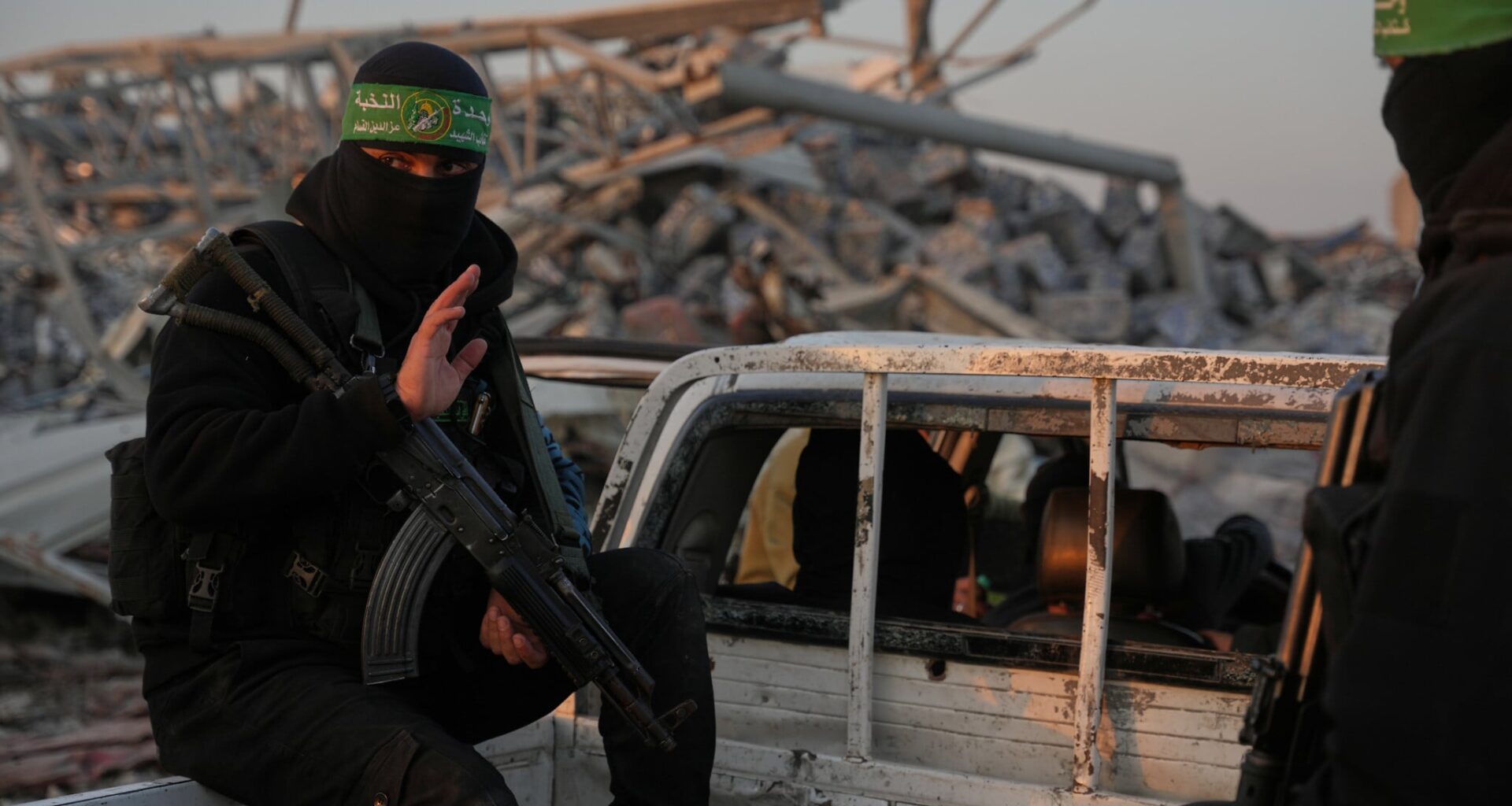
US President Donald Trump said Monday that Hamas helped Israel locate the body of the final Israeli hostage in Gaza, while reiterating his demand for the terror group to disarm.
“They worked very hard to get the body back,” Trump said of Hamas in an interview with the Axios news site. “They were working with Israel on it. “Now we have to disarm Hamas like they promised,” Trump added.
Israeli officials have touted the IDF’s efforts in locating Gvili after the army launched a search over the weekend in a Muslim cemetery in Gaza City, thanks to new intelligence, but they have made no mention of assistance from Hamas.
A US official echoed Trump’s comments during a subsequent briefing with reporters on Monday.
“I will say Hamas was very cooperative in this. They fulfilled the obligation that they signed up for,” the US official said, knocking unidentified “people with hysteria” who accused various parties of harming the effort to retrieve the bodies of the final hostages.
Get The Times of Israel’s Daily Edition
by email and never miss our top stories
By signing up, you agree to the terms
The US official touted the “fusion cell” created at the start of the October 2025 ceasefire that saw Israel work with mediators Egypt, Qatar and Turkey to locate the remaining bodies of deceased hostages in the Gaza Strip.
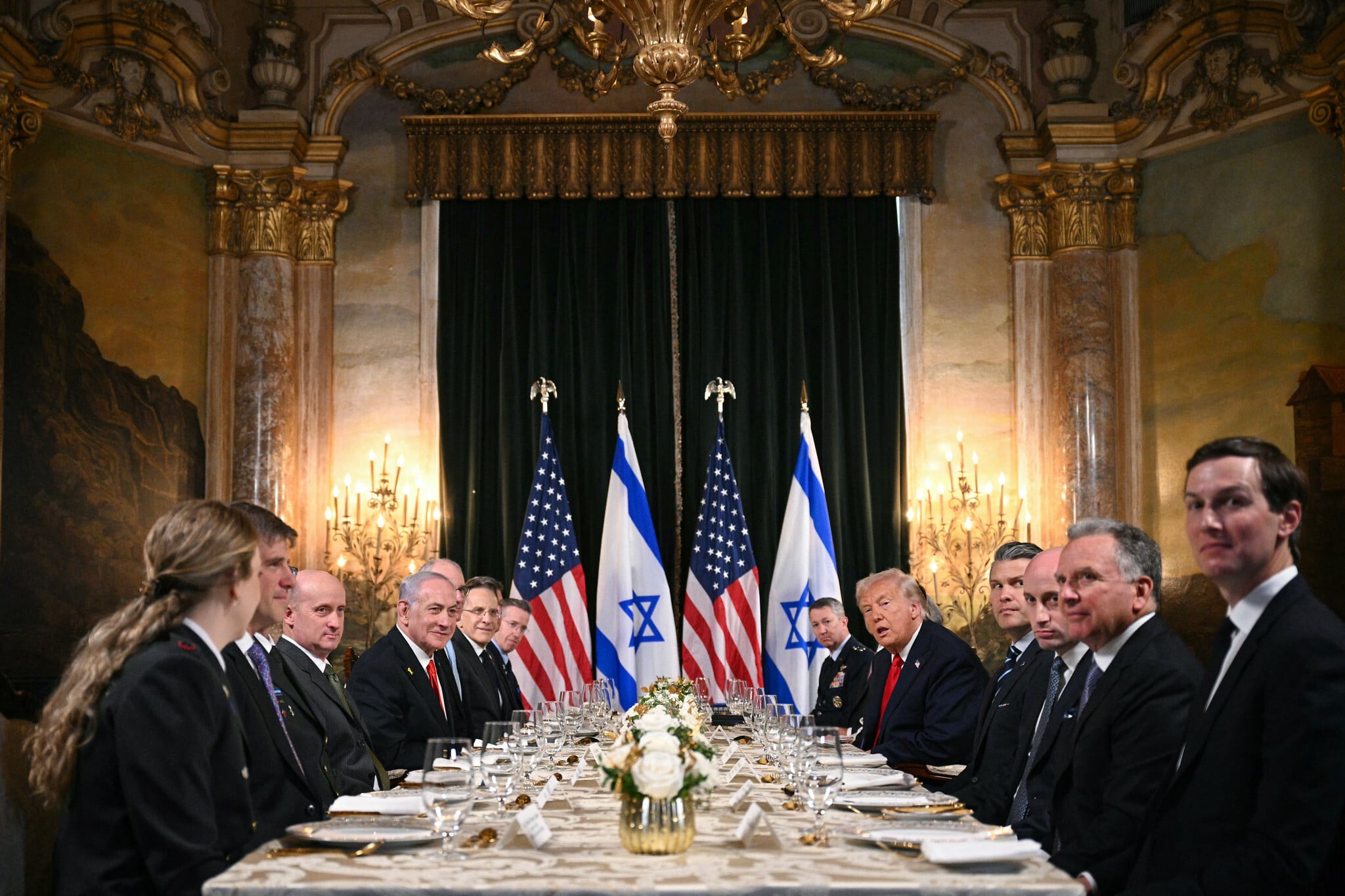
US President Donald Trump (center R) meets with Israeli Prime Minister Benjamin Netanyahu (center L) during a bilateral meeting at Trumps Mar-a-Lago residence in Palm Beach, Florida, on December 29, 2025. Pictured alongside Trump are, L/R, Chairman of the Joint Chiefs of Staff Dan Caine, Defense Secretary Pete Hegseth, Deputy Chief of Staff Stephen Miller, White House Special Envoy Steve Witkoff, and Trump’s son-in-law Jared Kushner. (Photo by Jim WATSON / AFP)
Earlier Monday, Trump’s top aide and son-in-law Jared Kushner touted the coordination between the US, Israel, Egypt, Turkey, Qatar and “many cooperative Gazans” who helped locate and return the bodies of all deceased hostages from Gaza.
He did not elaborate on those efforts, but Ynet reported on Friday that a Palestinian informant retrieved the body of Staff Sgt. Oron Shaul from a locked refrigerator in January 2025, wrapped it in a rug and carried it on his shoulder for 1.5 kilometers to IDF troops in Gaza.
“There are a lot of people who are in a war mindset for the last couple of years, but the reality is that the Middle East can only get better if people start working together,” the US official said, adding that Gvili’s return “is just an example of what can happen when Israel works with Egypt, Turkey and Qatar.”
The US official said Kushner and fellow Trump envoy Steve Witkoff spoke on the phone earlier Monday with Gvili’s parents
The official acknowledged that the administration was not sure whether it was actually going to succeed in retrieving every last hostage and may have had to move forward with Trump’s Gaza plan, knowing that some captives may have been left behind.
“Thank God we [didn’t] have to make that decision because we achieved that objective,” the US official said.
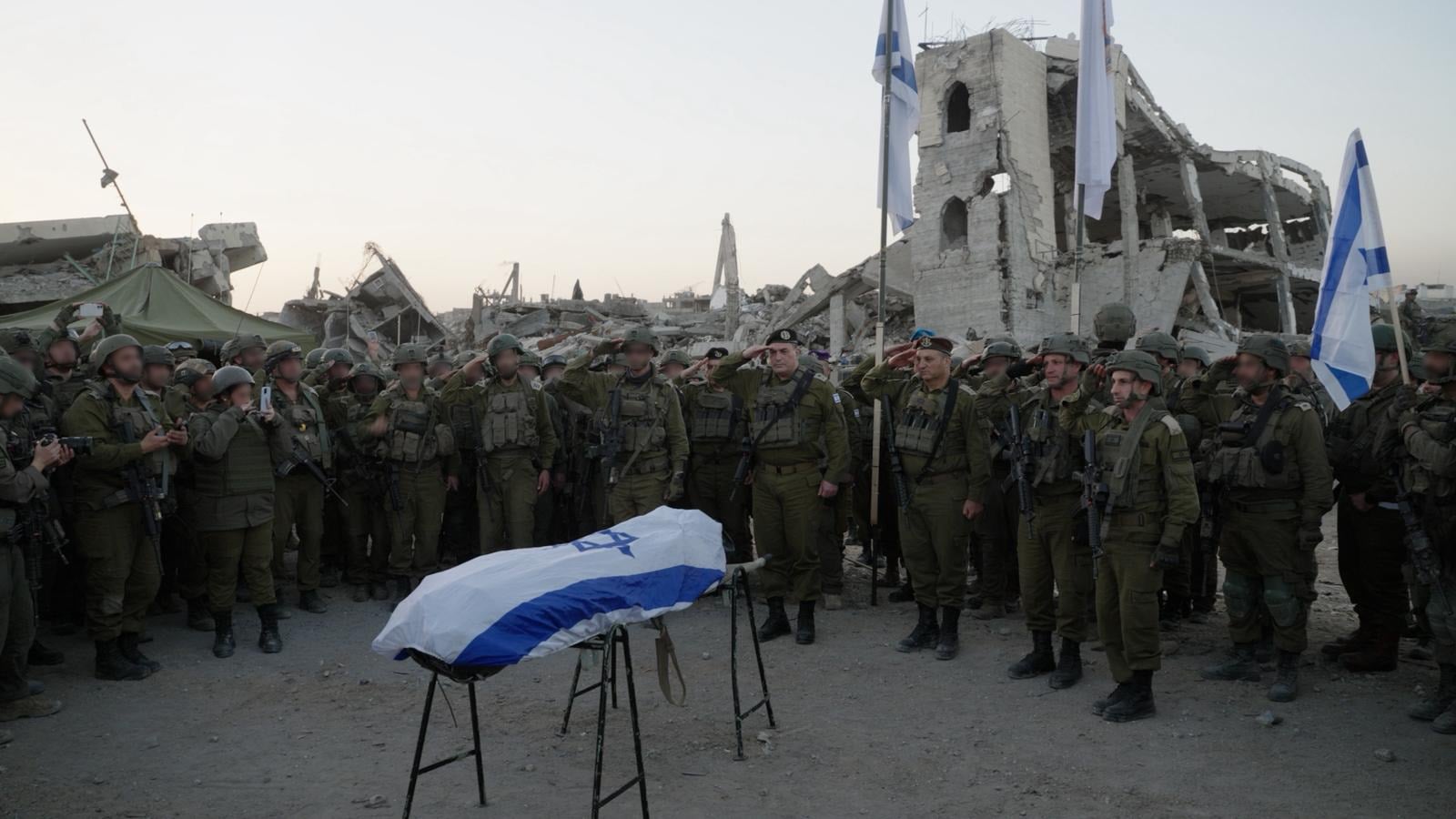
IDF Chief of Staff Lt. Gen. Eyal Zamir (center) and Southern Command chief Maj. Gen. Yaniv Asor (right), salute the body of Master Sgt. Ran Gvili, after it was located in eastern Gaza City, January 26, 2026. (Israel Defense Forces)
US official: Amnesty for those in Gaza who disarm
The US official reiterated the Trump administration’s stance that those in Gaza who agree to give up their weapons will be granted amnesty
“We think disarmament comes along with some sort of amnesty, and candidly, we think we have a very good program to disarm. We’re in contact, or people representing us, are in contact with [Hamas], and we expect it to happen,” the US official said.
The amnesty-for-weapons offer to Hamas fighters was laid out in a 20-point plan for ending the Gaza war unveiled by US President Donald Trump’s administration in September. It was verbally welcomed by Prime Minister Benjamin Netanyahu, whose coalition partners criticized elements of the proposal that spoke of the creation of a pathway for a Palestinian state. For their part, Hamas officials have rejected the parts of the plan that called for the terror group to disarm.
The ceasefire deal Israel and Hamas actually signed only focused on the first phase of the agreement, which covered a hostage-prisoner swap, Israel’s initial pullback from the Strip and humanitarian aid provisions.
But the US official briefing reporters insisted that Hamas had agreed to a proposal that also included the terrorist organization giving up its weapons.
“They signed an agreement… if they decide to play games, then obviously President Trump will take other actions,” the US official said.
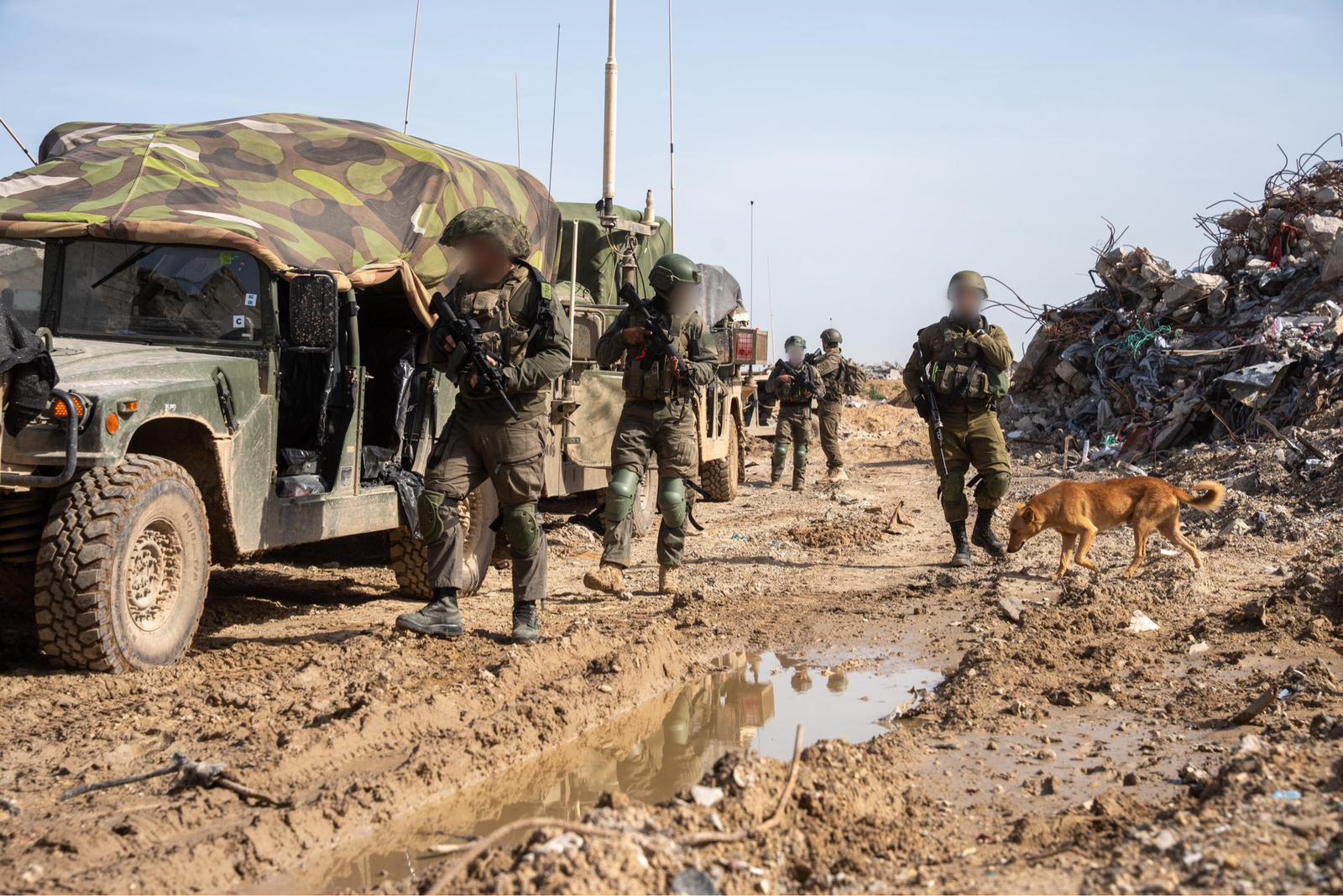
IDF troops operate at a cemetery in Gaza City during a search for the body of Master Sgt. Ran Gvili, in a handout photo issued on January 26, 2026. (Israel Defense Forces)
Hamas has vowed to hold onto its weapons, and officials familiar with the negotiations have told The Times of Israel that the mediators are pushing for a gradual handover of its arms — a framework Israel opposes.
The US official said Washington is working on a disarmament program with Israel and the other Gaza ceasefire mediators, and that announcements on the matter will hopefully be made in the coming weeks.
Turkish Foreign Minister Hakan Fidan met earlier Monday with a Hamas delegation headed by Khalil al-Hayya in Ankara in a sit-down ostensibly aimed at advancing the decommissioning of Hamas’s weapons.
The Turkish foreign ministry publicized pictures from the meeting but did not provide additional information.
The US official reiterated his belief that potential donors will not be willing to contribute funds to the reconstruction of Gaza absent the Strip’s demilitarization.
“President Trump is fully aligned with Prime Minister Netanyahu with [the] statement that the rebuilding will not occur until there’s a demilitarization and a disarmament of Hamas,” the US official said.
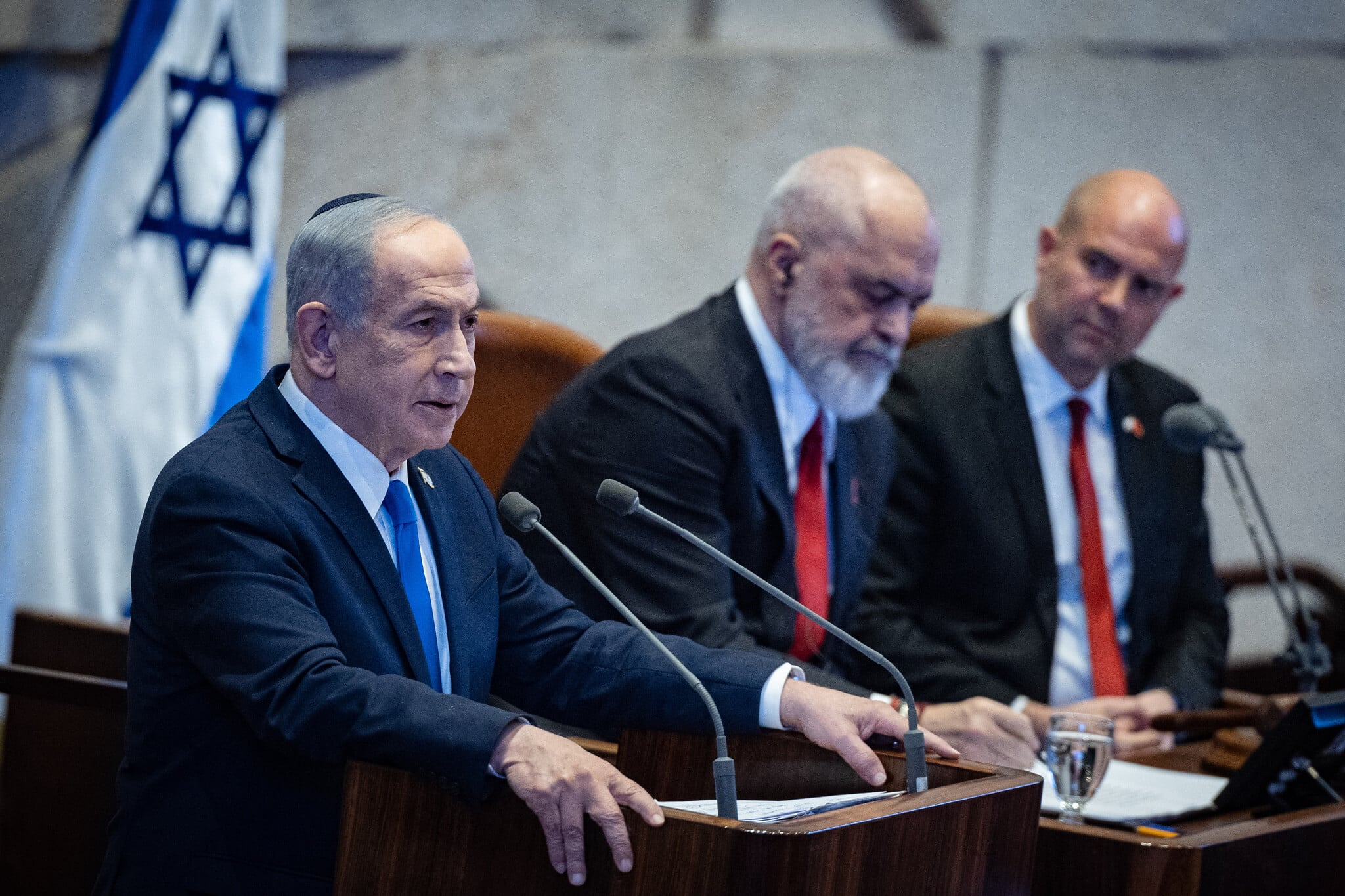
Prime Minister Benjamin Netanyahu (left) speaks at a special session in honor of Albanian Prime Minister Edi Rama (center) at the Knesset, in Jerusalem, January 26, 2026. (Yonatan Sindel/Flash90)
Asked whether Israel is prepared to fully cooperate with the transition to the second phase of the Gaza plan announced earlier this month, the US official insists that Jerusalem is on board.
“Israel is looking to give space and to try and help support the people of Gaza who want to see it rebuilt,” the US official said, adding that this includes Israel withdrawing to the Gaza perimeter as Hamas disarms. “The ball is in the court of Hamas… They’re the ones standing in the way of Gaza being rebuilt and the people of Gaza living a better life.”
US official: Board of Peace will first focus on Gaza
The US official said that more than 25 countries have agreed to join the Board of Peace. Earlier Monday, White House press secretary Karoline Leavitt claimed “20 additional countries” had agreed to join Trump’s board, seemingly suggesting that this new group was on top of the roughly 20 that had already agreed to join last week.
A Times of Israel tally of official announcements from countries confirming decisions to join the Board of Peace stands at 26, including the United States itself. The other countries that have agreed to join are Argentina, Albania, Armenia, Azerbaijan, Bahrain, Belarus, Bulgaria, Cambodia, Egypt, Hungary, Indonesia, Israel, Jordan, Kazakhstan, Kosovo, Morocco, Mongolia, Pakistan, Paraguay, Qatar, Saudi Arabia, Turkey, the United Arab Emirates, Uzbekistan and Vietnam.
Nearly a dozen countries have indicated or explicitly rejected invites to join the Board of Peace, including, France, Germany, Greece, Italy, Norway, Slovenia, Sweden, the United Kingdom and Ukraine
Others have yet to respond to the invitation, including China, Croatia, Cyprus, India, the European Union, Russia and Singapore. The US has said some countries need to receive parliamentary approval before joining.
Asked about the scope of the Board of Peace, the US official briefing reporters said the first focus of the panel will be Gaza.
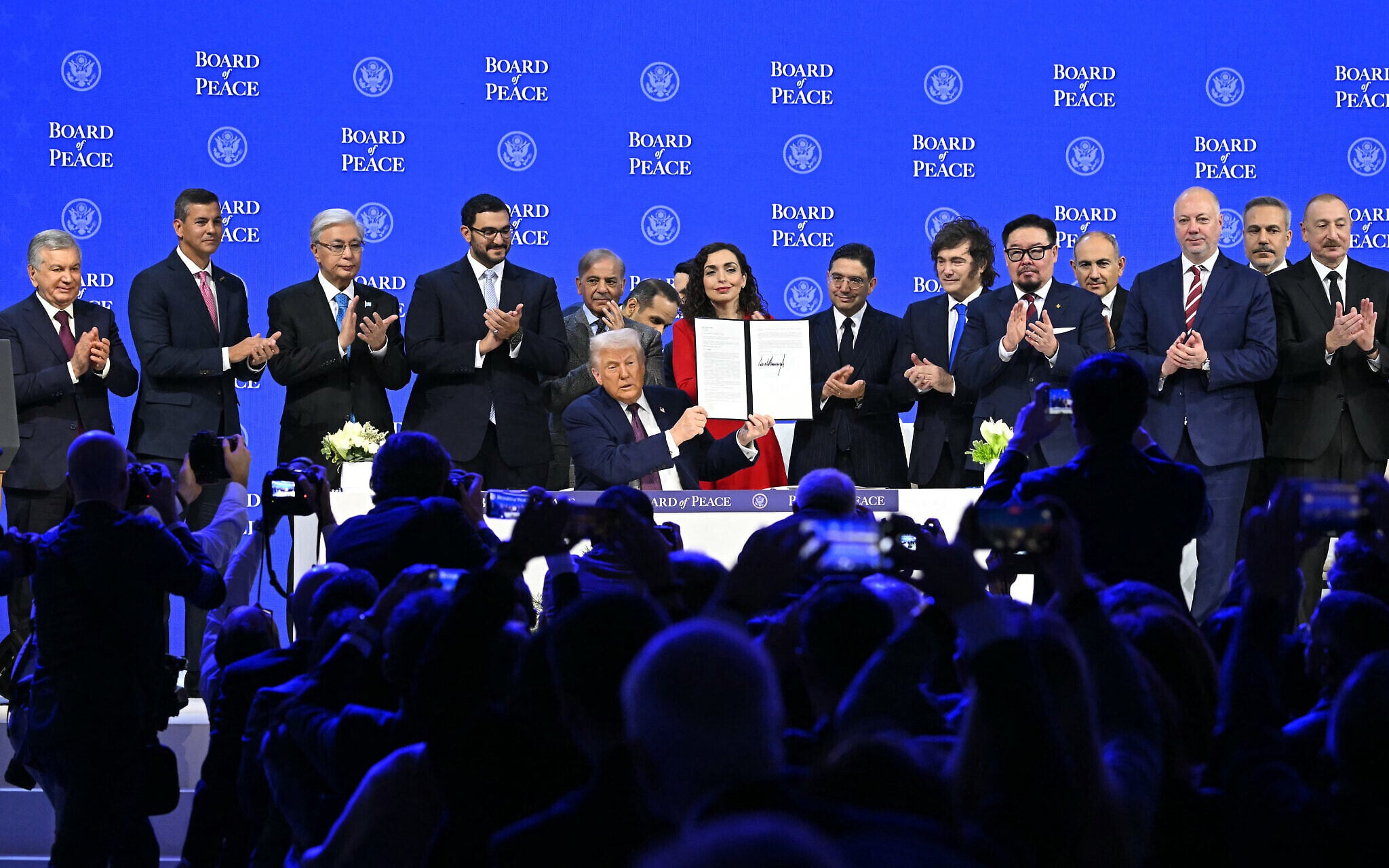
Paraguay’s President Santiago Pena (second from left), Pakistan’s Prime Minister Shehbaz Sharif (fifth from left), Kosovo’s President Vjosa Osmani (center right), Argentina’s President Javier Milei (sixth from right), Armenia’s Prime Minister Nikol Pashinyan (fourth from right), Bulgaria’s former Prime Minister Rosen Zhelyazkov (third from right), Turkey’s Foreign Minister Hakan Fidan (second from right) and Azerbaijan’s President Ilham Aliyev pose with US President Donald Trump (center) holding a signed founding charter at the ‘Board of Peace’ meeting during the World Economic Forum (WEF) annual meeting in Davos, Switzerland, on January 22, 2026. (Fabrice Coffrini / AFP)
While the UN Security Council gave the Board of Peace a two-year mandate to oversee the postwar management of Gaza, the Trump-led body’s charter makes no mention of the Strip and indicates a desire to usurp the UN in global conflict resolution.
“If more opportunities arise for [the Board of Peace] to add value and try and achieve outcomes that are different from [what has been] achieved before… then that’s something that President Trump will consider,” the US official said.
US official: Rafah crossing will reopen ‘with security coordination between US, Israel and Egypt’
The US official also said the Rafah Border Crossing between Gaza and Egypt will reopen “with very good security coordination between the US, Israel, and Egypt.”
The US official did not give an exact timeline for the reopening of the border gate, but a different US official told The Times of Israel on Sunday that Washington expects it to happen by the end of this week, consistent with announcements from the head of the National Committee for the Administration of Gaza (NCAG) and the Board of Peace’s high representative for Gaza during the Board of Peace’s signing ceremony last week.
Netanyahu’s office said Sunday that it would reopen Rafah once Israel completed an operation to retrieve the remains of the last remaining hostage in Gaza, which it succeeded in doing on Monday.
“We’re now building a local Palestinian police force that can start policing themselves. Ultimately, it’s going to be up to the government of Gaza and the people of Gaza to make sure that Gaza is secure,” the US official said on the briefing.
“The more that they can show that it’s secure and not going to pose a threat to its neighbors, the more that they can help themselves by having a lot of these materials come in,” he added.
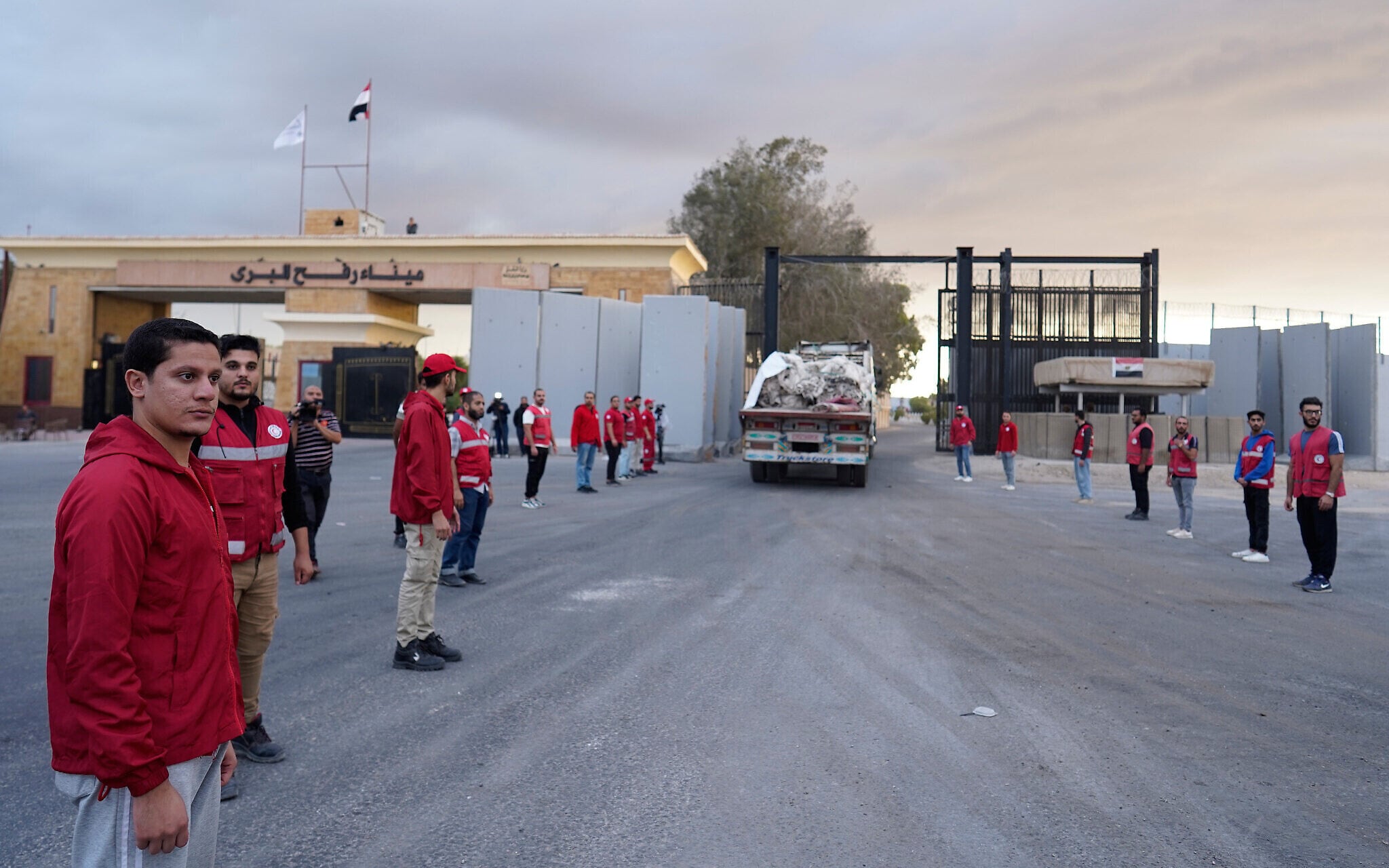
Egyptian Red Crescent members monitor a truck carrying humanitarian aid as it enters the Rafah crossing between Egypt and the Gaza Strip, following a ceasefire agreement between Israel and Hamas, October 12, 2025. (AP Photo/Mohamed Arafat)
Asked about the potential for including a Palestinian representative on the Board of Peace, the US official said that the Palestinian Authority “has an observer status” with NCAG.
He did not elaborate as to what that means but said the Trump administration has been engaging with the PA and “been having good conversations with them.”
“They’ve been supportive of these efforts. Let’s see where that progresses with them,” the US official added.
The PA had hoped to play a more substantial role in the postwar management of Gaza, but this demand was nixed by the US and Israel, which have demanded that Ramallah implement longstanding reforms.
The PA argues that it has begun instituting many of those reforms but that it is hamstrung by Israel’s continued withholding of several billion dollars of its funds.
After taking a more combative approach during US President Donald Trump’s first term as president, which saw Ramallah cut ties with Washington, the PA has sought to come to terms with the limited role being offered to it this term, as its leverage is limited.