
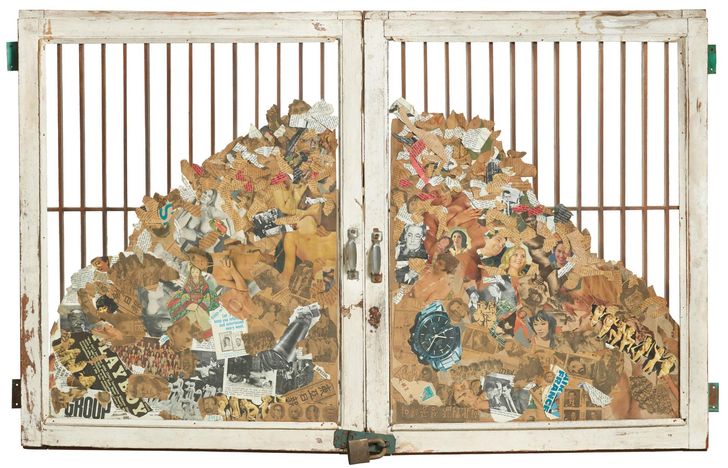
Yeo Un’s “Work74” (1974) / Courtesy of the artist and SeMA
A weathered window frame hangs on the wall of the Photography Seoul Museum of Art (Photo SeMA). But instead of glass, scraps of newspapers and periodicals are packed into a dense mound. Nude female bodies torn from cheap pulp magazines press against the faces of political figures; luxury watch ads gleam beside grim headlines.
The images come across as both a mass grave and a landfill, a place where politics and consumerism rot together. In artist Yeo Un’s “Work 74,” this claustrophobic pile becomes a portrait of 1970s Korea under Park Chung-hee’s authoritarian rule — an era when reality was distorted into sensational fragments by the state-controlled print media.
In another corner of the museum, the giant letters “DMZ” glow softly. Only upon stepping closer does the true nature of this typography come into view: a mosaic of 180 portraits of nameless U.S. soldiers once stationed in Korea with Korean women posed beside them.
Kim Yong-tae’s “DMZ,” short for Demilitarized Zone, takes shape from hundreds of abandoned photographs the artist collected from portrait studios near U.S. military bases in Dongducheon and Uijeongbu in northern Gyeonggi Province, images that were never claimed by those who sat for them.
By spelling out DMZ with these discarded portraits, Kim overlays the most rigid symbol of national division with the ordinary lives shaped by it. The work reframes the military buffer zone not merely as a Cold War legacy separating the two Koreas, but as a human archive of lived experiences affected by its presence.
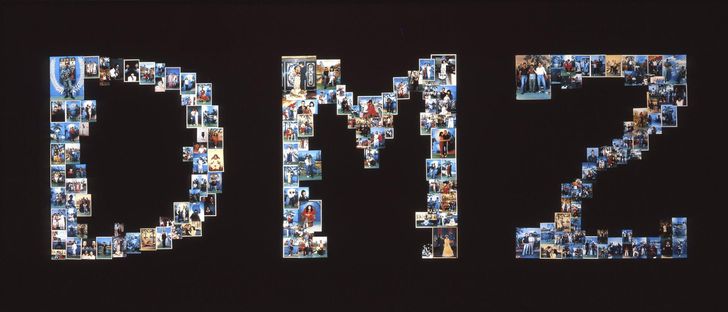
Kim Yong-tae’s “DMZ” / Courtesy of the artist and SeMA
Works like these give a sense of what animates Photo SeMA’s exhibition, “All That Photography.” Its Korean title, translated to “All That Photography Can Do,” speaks even more directly to the show’s ambition, shifting the focus from what photography is to what it is capable of doing.
Featuring 36 artists, many now regarded as heavyweights, the large-scale show brings together pieces that have used photography and photographic imagery as an avant-garde mode of creation since the late 1950s. Tracing decades of experimentation, it reveals how photography has functioned as a force that opened new horizons of post-modernist expression in the country.
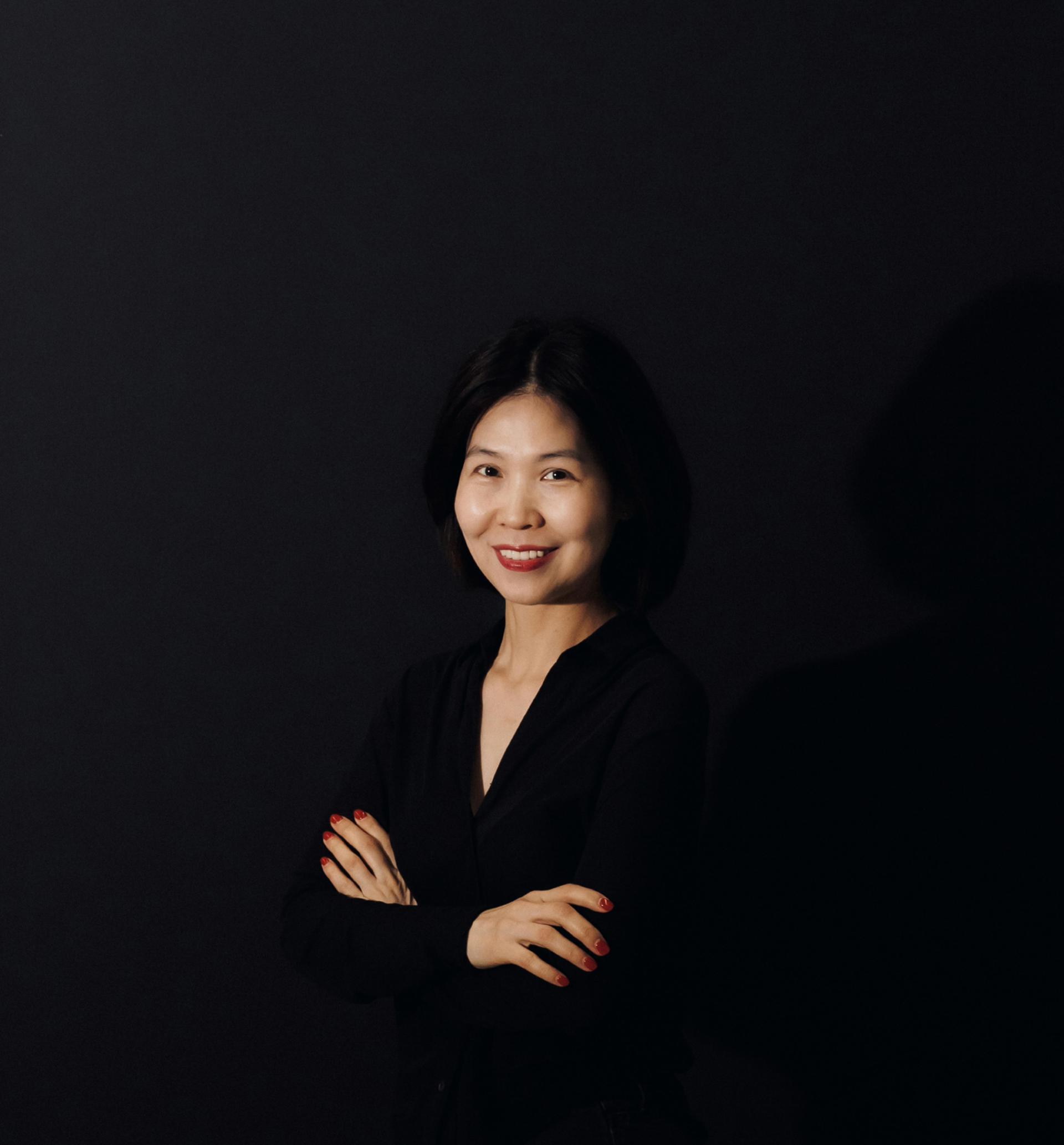
Han Hee-jean, curator at the Photography Seoul Museum of Art / Courtesy of SeMA
Han Hee-jean, the exhibition’s curator, underscores how vital the homegrown acts of creative appropriation and reinvention were to the formation of modern Korean art. What mattered was not the borrowing itself, but what artists did with what they borrowed.
“Working with mediums that came in from abroad — photography, printmaking, collage and even ‘Life’ magazines — artists confronted the dark, abrasive realities of their times,” she told The Korea Times. “They bent those materials into new forms of expression and resistance. It was a beautifully charged moment.”
Simple imitation was never the goal. These provocateurs took imported styles and visual languages and recontextualized them toward distinctly local concerns: life under military dictatorship, the violence of breakneck industrialization and the long struggle for democratization.
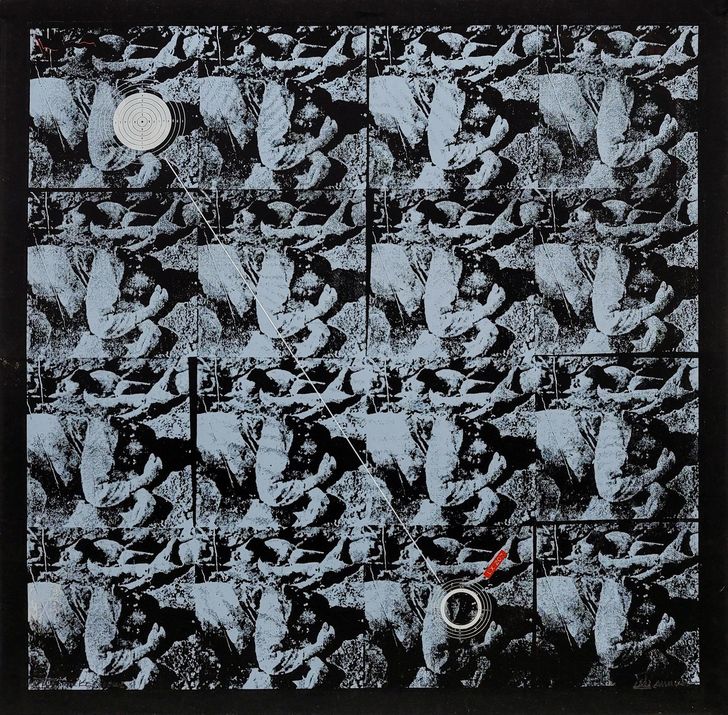
Song Burn-soo’s “Take Cover I — Human and Violence” (1973) / Courtesy of the artist and SeMA
One of the show’s conceptual starting points, Han explained, can be traced back to her master’s thesis on American artist Barbara Kruger, whose use of mass media imagery as a critical tool prompted her to ask whether similar strategies had emerged independently in Korea.
“What I found were artists who were far more ahead of their time than I had previously known. It was a genuine eureka moment,” she said.
“The deeper I looked, the clearer it became just how radical their experiments were. That led me to ask why — why this urgency, why these strategies? I came to realize that their experimental stance was their own way of containing, and responding to, a period of compressed modernization and profound sociopolitical instability.”
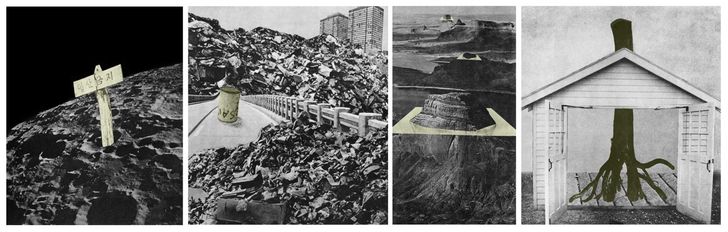
Kim Ku-lim’s “Art of Incomprehensibility” (1970) / Courtesy of the artist and SeMA
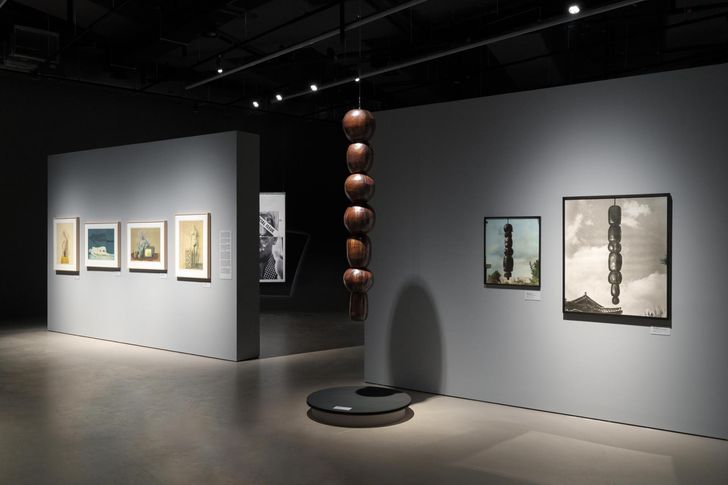
Installation of “All That Photography” at the Photography Seoul Museum of Art / Courtesy of SeMA
Works that unsettle and provoke fill “All That Photography.”
Among them is “Hanging Stars” by nonagenarian Lee Seung-taek, whom curator Han describes as “an eternal outsider.”
Long before Photoshop entered the artist’s toolkit, Lee was already constructing distinctly Korean worlds through photomontage. In this early piece, he layered images of traditional red clay vessels onto a photograph of a distant mountain landscape, then rephotographed the composite to produce one unified image. The result is an uncanny scene in which earthen bowls appear to hover in the sky like stars.
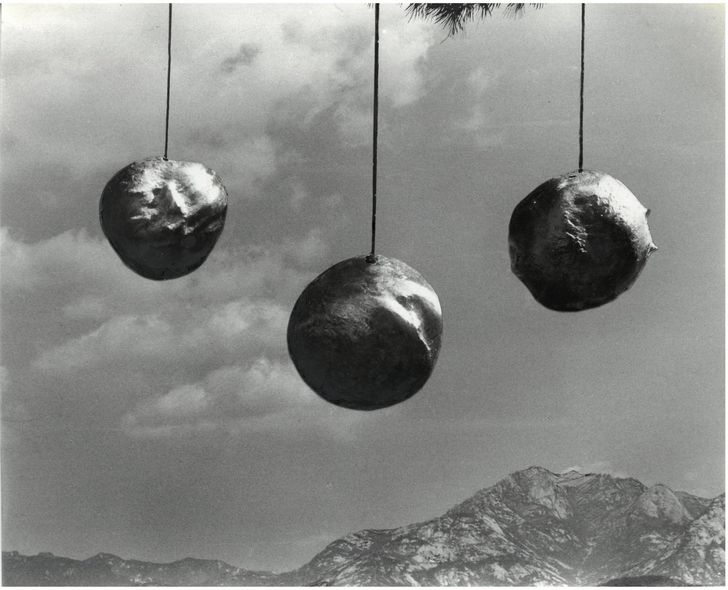
Lee Seung-taek’s “Hanging Stars” (1962) / Courtesy of the artist and SeMA
Elsewhere, artists turned to newspapers as a site of experiment and a charged medium through which to confront political reality.
Under Park Chung-hee’s regime in the 1970s, the press was systematically suppressed. Journalists at major dailies attempted to resist state interference by asserting editorial independence, but the government ultimately dismissed 134 reporters. In 1974, authorities tightened the screws further by pressuring advertisers, leading to the infamous “blank ad” incident at Dong-A Ilbo, where entire advertising pages remained empty for seven months.
Against this backdrop, Sung Neung-kyung staged a pointed act of resistance. In 1976, he performed “Reading Newspaper,” where he read out loud the paper every day and cut out the sections he had read with a razor blade. His blaze to the printed page became the state’s coercive censorship.
In “Photo·Painting — Reading the Newspaper, Throwing Away the Newspaper,” Kim Yong-chul likewise turned his body into a language of dissent. Performing on the rooftop of a high-rise apartment building, he read the Hankook Ilbo, crumpled it and cast it into the air.
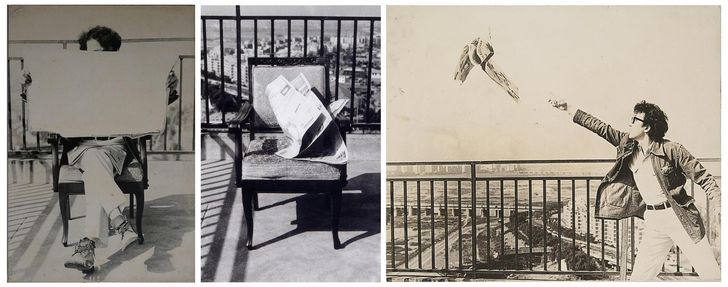
Kim Yong-chul’s “Photo·Painting — Reading the Newspaper, Throwing Away the Newspaper” (1977) / Courtesy of the artist and SeMA
Chung Dong-suk, the only photographer included in the exhibition, brings a different kind of tension. While working as a photojournalist in the early 1980s, he regularly passed the government publicity boards installed around Gwanghwamun, each labeled with the name of a province.
One day, he encountered the boards completely empty and instinctively pressed the shutter. The resulting series, “In Seoul,” captures the atmosphere of the period under military rule, defined by pervasive control and enforced silence.
One image captures two police officers passing in front of the South Jeolla Province board, an unintended but potent reminder of the May 18 Gwangju pro-democracy uprising of 1980. Chung later applied paint onto the printed photograph with a spray gun, a gesture that confronts the armed force’s violence against civilians. Suppressed for more than four decades, the work is being shown publicly for the first time at this show.
“In some ways, these masters were even more radical and avant-garde than many young artists working today,” Han said.
“All That Photography” runs through March 1 at Photo SeMA.
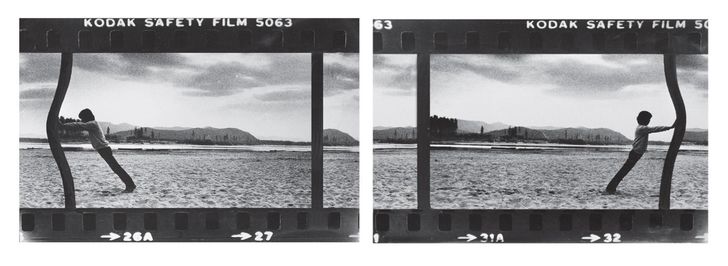
Lee Kyo-jun’s “Untitled” (1981) / Courtesy of the artist and SeMA